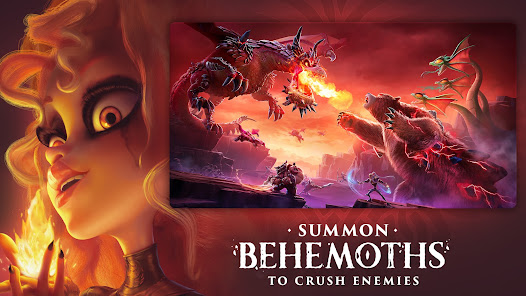
Quick answer: If you want games like Call of Dragons, look for mobile fantasy strategy games built around a city, an alliance and map control. The closest matches are Rise of Kingdoms, Evony and Total Battle for the same structure, and War Dragons for the creature focus. Choose by whether you want alliance war, beast units, or a simpler base-building loop.
Call of Dragons sits in a crowded genre, and most alternatives share its skeleton: a city to develop, troops to train, an alliance to join and events to compete in. The differences that matter are in pacing, theme and how much the map itself is part of the game.
Which games are closest in structure?
Rise of Kingdoms is the nearest match. It uses the same city-plus-alliance-plus-events structure with a strong emphasis on commander progression.
Evony applies the formula with a broader set of systems and a longer history of content updates.
Total Battle takes a similar approach with a different aesthetic and a slightly faster early game.
All three ask for the same routine: queue buildings, keep research moving, join an alliance, attend events.
On this page
Which games have creatures?
War Dragons is the obvious one, built around breeding and commanding dragons rather than conventional armies.
It is a different game mechanically, more focused on the creature side than on city management.
That makes it a good choice if the beasts were what attracted you to Call of Dragons.
If you wanted the alliance war more than the creatures, the other titles suit you better.
Which is best for map play?
Call of Dragons gives the map a lot of weight, and Rise of Kingdoms is close behind in how much territory matters.
Both reward alliances that hold good ground, and both make position part of your account’s prospects.
Games with a lighter map layer focus more on internal development and less on who controls what.
Decide whether you want the map to be the game or just the backdrop.
What should you avoid?
Games that gate progress behind a shop rather than behind waiting. If the only route to a usable account is spending, it is not the game you want.
Games that demand constant attendance. A title that punishes an evening away becomes a job.
Dead servers. Check that the game has active players in your region before committing months.
And anything marketed purely on theme. The setting is the cheapest thing to copy.
How should you choose?
Decide what drew you in. If it was the creatures, play War Dragons. If it was the alliance war, play Rise of Kingdoms or Evony.
If it was the map, Call of Dragons itself is a reasonable answer, and staying is a legitimate choice.
If it was the fantasy setting specifically, pick whichever title’s art you find least tiring, because you will look at it for months.
And check the alliance activity before committing. The group matters more than the game.
What do these games have in common?
They all run on timers, so progress happens while you are offline and the skill is in what you queue.
They all require a group. Solo play is possible everywhere and inefficient everywhere.
They all run event cycles that reward preparation, which means holding resources is usually correct.
Knowing that, the choice between them is mostly about theme, population and how much map play you want.
One practical difference between these titles is how much of the game happens on the map rather than in the city. In Call of Dragons the map is where alliances distinguish themselves, so a player who enjoys positioning has more to do than one who prefers internal development.
That distinction matters more than the theme. A player who likes city building will find the map-focused titles frustrating, and one who likes manoeuvring will find the city-focused titles dull.
Decide which of those describes you before choosing a game, because the genre split runs along exactly that line.
It is also the line along which players tend to switch games after a few months, once they realise which half they actually enjoy.
Knowing it in advance saves that detour.
Another consideration is how generous each game is with early progression. Titles that give new players a fast first week retain them; titles that gate everything behind slow timers lose them.
That is worth checking before you invest, because the first week is where most players decide whether to stay.
Read recent reviews for pacing complaints rather than for feature lists. Pacing is what people actually notice.
And if a game feels slow in the first week, it will feel slower later, not faster. The timers lengthen rather than shorten.
So judge the pace early and trust that judgement.
Finally, remember that all of these games are long commitments. None of them is a game you finish, and the ones you enjoy are the ones whose routine you do not mind repeating.
That is the honest test, and it applies to every title in this list.
It also helps to check how each game handles a returning player. Alliances in these games run on attendance, and a title where a week away costs you your place is harder to stay with than one that keeps a slot open.
Ask in a community forum before you commit. Existing players will tell you honestly whether the game punishes absence, and that answer predicts your experience better than any marketing.
Weigh it seriously, because the game you can leave and return to is the game you will still be playing in a year.
That, more than any feature, is what makes a long-term choice work out.
Frequently asked questions
Is Rise of Kingdoms better than Call of Dragons?
They are close. Rise of Kingdoms has a longer history and larger population; Call of Dragons has a stronger map and creature focus.
Are any of these playable without spending?
All of them, though progress at the top of a server usually requires spending or a strong alliance.
Which has the shortest early game?
Total Battle and similar smaller titles reach a usable state faster than the largest war games.
Do I need an alliance?
In the alliance war titles, yes. Most content and rewards are gated behind membership.
Which is best for a returning player?
An established game with catch-up mechanics. Newer titles often have harsher early pacing.
For the game itself, read the gameplay overview, or return to the Call of Dragons hub.
Official game information: callofdragons.farlightgames.com.