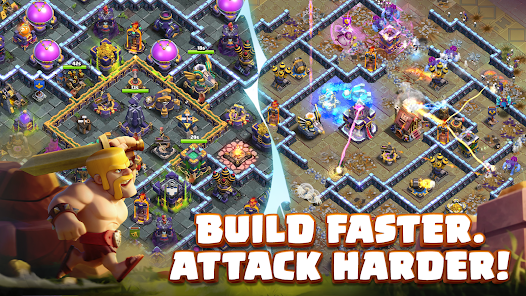
This guide covers clash of clans vs rise of kingdoms with practical steps for mobile players.
Quick answer: Clash of Clans is a base-building game with a battle system attached, while Rise of Kingdoms is a strategy game where the map matters as much as your city. Clash of Clans keeps you focused on one village and short, readable attacks. Rise of Kingdoms asks you to hold territory, move armies across a shared world and coordinate with an alliance at a scale Clash of Clans never reaches. Pick Clash of Clans for a compact, single-base loop; pick Rise of Kingdoms if you want the wider map to be the game.
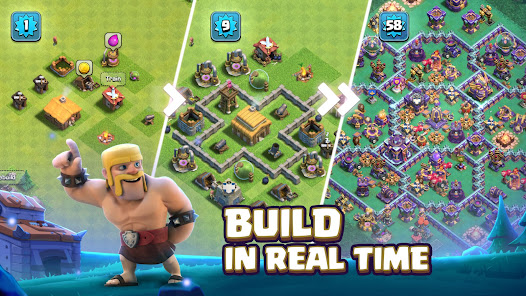
What is the core loop in each game?
Clash of Clans is built around one village. You spend resources, start upgrades, defend the layout and attack other players for loot, then repeat.
Rise of Kingdoms is built around a city plus a world map. The city produces, but much of the meaningful activity happens outside it, on territory you and your alliance contest.
That means Clash of Clans has a tighter loop that resolves faster, while Rise of Kingdoms has a slower loop that depends on other people being online.
Both are patient games, but Clash of Clans lets you be patient alone, and Rise of Kingdoms rarely does.
If you want a game you can open, act in, and close, Clash of Clans fits that shape almost exactly.
If you want a game where opening it means checking what your alliance is doing, Rise of Kingdoms is the one that supplies that.
The difference sounds small in a description and feels enormous in practice.
On this page
How does combat compare?
Clash of Clans combat is a deployment puzzle. You see the enemy base, choose troops, place them around the perimeter, and the battle plays out.
Rise of Kingdoms combat is march-based at the map level and commander-based in detail. Armies travel, meet, and fight with hero abilities affecting the outcome.
That makes Clash of Clans battles self-contained and repeatable, while Rise of Kingdoms battles are shaped by positioning that happened before the fight started.
A Clash of Clans attack can be practised against the same layout until you get it right. A Rise of Kingdoms engagement rarely repeats the same conditions twice.
Players who like mastering a fixed puzzle gravitate to the first. Players who like adapting to a moving situation gravitate to the second.
Neither rewards carelessness, but only one of them lets you rehearse.
Which game demands more of your time?
Rise of Kingdoms demands more, and it does so structurally rather than by being harder. Territory has to be held, and holding it requires presence.
Clash of Clans can be played in three short visits a day without falling meaningfully behind. Its timers are the pacing, and they do not care whether you are watching.
Rise of Kingdoms also runs events on schedules that reward showing up at particular hours, which is a different kind of obligation.
That is not a flaw, but it is a commitment. A player with an unpredictable schedule will feel it immediately.
Clash of Clans is more forgiving of a missed day, and noticeably more forgiving of a missed week.
If your time is fixed and generous, Rise of Kingdoms will use all of it. If your time is scattered, Clash of Clans will fit around it.
How do alliances work in each?
Both games make clans or alliances central, but they mean different things by it.
In Clash of Clans an alliance is mainly a donation network and a war roster. You give troops, you receive troops, and you fight arranged wars.
In Rise of Kingdoms an alliance is a territorial power. It holds ground on the map, and losing that ground has consequences that a Clash of Clans clan never faces.
That makes Rise of Kingdoms alliances feel more like organisations, with leadership, scheduling and diplomacy.
Clash of Clans alliances can be casual without collapsing. Rise of Kingdoms alliances generally cannot, because passivity costs territory.
A player who wants company without obligation will find Clash of Clans comfortable and Rise of Kingdoms exhausting.
A player who wants the group to be the point will find the reverse true.
Which is easier to learn?
Clash of Clans is easier, because it introduces one system at a time and every system serves the village.
Rise of Kingdoms front-loads more. Commanders, equipment, territory, marches and events all arrive early, and none of them can be safely ignored.
That density is not accidental. The game is designed for players who want depth, and it assumes you will learn by doing rather than by tutorial.
A new player in Clash of Clans can be useful to a clan within a week.
A new player in Rise of Kingdoms spends longer being a passenger before contributing meaningfully to a war.
Both are learnable, but only one of them is comfortable to learn alone.
Which should you choose?
Choose Clash of Clans if you want a single village to shape, attacks you can plan in full, and an alliance that tolerates a quiet member.
Choose Rise of Kingdoms if you want the world map to be the game, a group that operates like an organisation, and depth you are willing to spend months learning.
Both reward patience and neither is short of content. The deciding question is whether you want your progress to depend mostly on you or partly on other people.
Clash of Clans leans toward the first. Rise of Kingdoms leans hard toward the second.
If you are unsure, start with Clash of Clans. It is easier to leave if it does not fit, and it teaches habits that transfer if you later move on.
The reverse move is harder, because Rise of Kingdoms sets expectations that Clash of Clans will not meet.
Frequently asked questions
Is Rise of Kingdoms harder than Clash of Clans?
It is broader rather than harder. It has more systems competing for attention, which is demanding if you try to optimise all of them and manageable if you accept doing some things badly.
Can you play Clash of Clans entirely solo?
You can progress alone, but you will miss donations and clan wars, which are where a large share of the value sits. A quiet clan is the usual compromise.
Do both games require daily logins?
Clash of Clans rewards daily logins without punishing gaps much, while Rise of Kingdoms is considerably less forgiving of absence, especially during organised events.
Which has better base building?
Clash of Clans, without question. Its layouts are the game’s central puzzle, whereas Rise of Kingdoms treats the city more as a production hub than a defensive design problem.
Which is better for a returning player?
Clash of Clans. Its progression is forgiving enough that a returning account catches up reasonably, while Rise of Kingdoms has moved on in ways a long absence makes harder to re-enter.
Browse the whole set at our Clash of Clans hub, or start with how to compare upgrade priorities and how to complete clan games.
Official game information: supercell.com.