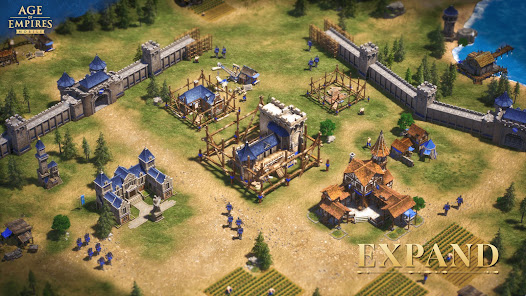
This guide covers age of empires mobile gameplay overview with practical steps for mobile players.
Quick answer: Age of Empires Mobile is a mobile strategy game where you build a city, train an army, develop heroes, and fight alongside an alliance. It borrows the series’ civilizations and units but runs on a free-to-play timer model with resource production, research queues, and alliance systems. Expect a long-term daily habit rather than a campaign you finish.
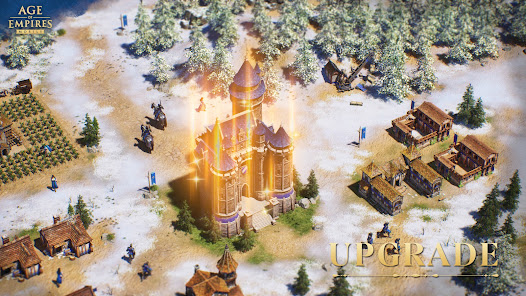
What is the core loop?
You produce resources, spend them on buildings and research, train troops, and use that power to fight or gather on the world map.
Everything feeds the Town Center level, which unlocks the rest. Progress is measured in what you have built rather than in levels earned from fighting.
The pace is set by timers. Buildings, research, and training all run on schedules, so the rhythm of play is queue, wait, collect, spend.
That makes the game fit short sessions. A few minutes of queueing and collecting is a complete and productive interaction.
Longer sessions help, but they are not required in the way a PC strategy game would demand.
They are introduced gradually, and none is complicated alone. The difficulty is holding several of them in mind as the account grows.
On this page
What are the main systems?
City building, resource production, research, hero development, troop training, alliances, and the world map. Each interacts with the others, which is why a problem in one area often shows up somewhere else.
Heroes are the largest single source of power. Their levels, skills, and equipment multiply everything else you build.
Alliances provide help, gifts, and shared technology that solo players cannot access at all.
Events run continuously and supply resources, items, and reasons to log in daily.
Understanding how these fit together is most of the learning curve.
| System | What it does | Failure symptom |
|---|---|---|
| City building | Unlocks content and capacity | Town Center stalls on requirements |
| Resources | Funds everything | Storage capped, production stopped |
| Research | Permanent bonuses | Queue idle for days |
| Heroes | Multiplies army power | Strong troops underperform |
| Alliance | Help, gifts, technology | Everything is slower |
The practical implication is that your account is never finished. There is always another level, another branch, another hero to develop.
How does progression work?
Two tracks run in parallel. Town Center level gates buildings and troop tiers, while your account grows through research and hero development.
Neither is bought directly. You cannot purchase your way to a higher Town Center level; you have to meet the requirements and wait out the timer.
Premium currency speeds things up but does not replace the underlying progression, which is why patient players can reach the same content.
That said, spending compresses months into weeks. The gap between free and paying players is real, though it is a gap in speed rather than in access.
The honest framing is that the game is free to play and slow to play well.
It also means the leaderboard is not a fair comparison. A player who has spent is not necessarily better, only further along.
Is it pay to win?
It gives spending players a speed advantage, which in a competitive alliance game translates into a power advantage. That is the model, and it is not disguised.
What it does not do is lock content behind payment. Everything is reachable eventually without spending.
The practical consequence is that free players should compete where power matters less, such as gathering and coordination, rather than trying to match spenders in raw combat.
Alliance technology and participation are the most level parts of the game, which is why joining a good group matters so much.
Judged honestly, spending buys time rather than exclusive access.
It rewards consistency over intensity, which suits people who check in during a commute rather than sitting down for an evening.
What kind of player enjoys it?
Players who like planning and routine rather than action. The appeal is watching an account become efficient over weeks.
It suits short sessions and consistent check-ins. A player who logs in twice a day for ten minutes will outperform one who plays for two hours once a week.
It also suits players who enjoy social coordination, since alliances are where most of the interesting decisions happen.
It does not suit players who want immediate feedback, a story, or a game they can finish.
Patience is the main requirement, more than skill or spending.
That is worth knowing before you start, because it is the one expectation the game will not manage for you.
That is a deliberate design choice rather than a limitation. Mobile strategy games are built around asynchronous play, and the timers exist to support that.
How does it differ from the PC games?
It is a different genre built on the same theme. The PC games are real-time strategy with matches that start and end; this is a persistent base builder with timers.
Combat is resolved by army composition and power rather than by micro-management, which removes the skill expression the PC series is known for.
Civilizations and units are recognisable, but the systems around them are built for mobile play.
Expecting a portable version of a PC Age of Empires will lead to disappointment. Expecting a well-made mobile strategy game will not.
Judged on its own terms, it is a competent example of its genre.
If you are considering it, the question is not whether it is as good as the PC games but whether you want a long-term mobile strategy habit. That is the decision it actually asks you to make.
The most useful way to think about the game is as three tracks running at once. Your city produces, your heroes grow, and your alliance opens doors. Neglect any one of them and the other two stall, because each depends on something only the others can supply.
It also helps to decide early whether you want to be the player who fields a strong march or the one who keeps the alliance running. Both are needed, both progress at different speeds, and knowing which you are stops you spreading effort thin across everything.
Frequently asked questions
Is it free to play?
Yes, with optional purchases. Everything is reachable without spending, more slowly.
Can I play offline?
Timers continue, but the game is built around being online for alliances and events.
Is it the same as the PC games?
No. It shares the theme but is a different genre with different systems.
How long does it take to progress?
Months. It is designed as a long-term daily habit rather than a campaign.
Do I need an alliance?
Yes, practically. Alliance help, gifts, and technology are advantages solo players do not have.
For systems in detail, see the Age of Empires Mobile hub.
Official game information: www.ageofempires.com.