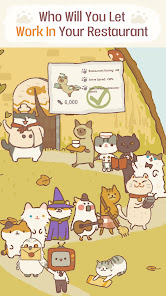
This guide covers animal restaurant beginner guide with practical steps for mobile players.
Quick answer: Animal Restaurant is an idle management game where you run a small restaurant staffed by animals. Your job is to unlock dishes, serve customers before their patience runs out, hire and upgrade staff, and decorate the place so more animals want to visit. Progress comes from short active sessions plus earnings that accumulate while you are away, so the game rewards checking in regularly rather than playing for hours at a time.
The loop is simple to learn and easy to underestimate. A dish that is not upgraded earns very little, a staff member who is too slow loses customers, and a restaurant with no atmosphere attracts fewer animals regardless of how good the food is.
This guide covers the first stretch of the game: what to spend on, how the currencies work, and which upgrades actually change your income rather than just looking like progress.
What should you do in your first sessions?
Serve customers, collect what they leave, and put the money straight back into the things that increase how many customers you can serve. That means dish upgrades and staff capacity before decoration.
Follow the early tasks and letters as they appear, because they hand out unlocks that would otherwise take a long time to reach. They are effectively a guided tour of the systems, and skipping them leaves you with a restaurant that works but grows slowly.
Do not spread spending across everything at once. A single upgraded dish and one competent staff member will outperform a little investment in six different directions.
Watch what happens in the first ten minutes with some attention. You will see customers arrive, order, wait, and either pay or leave. That cycle is the whole game in miniature, and the first thing worth noticing is where it breaks. If customers are leaving before they pay, your problem is capacity or speed rather than money.
Resist the urge to spend on anything that does not serve more customers or earn more per customer. Early currency is small enough that a single wasteful purchase sets you back several sessions, and the things that look like progress in a shop menu are often the least useful purchases available.
On this page
How do the currencies work?
The game uses more than one currency, and confusing them is the most common early mistake. The everyday currency comes from serving customers and is what you spend on upgrades, furniture and staff.
Premium currency is scarcer, arrives from events and rewards, and should be saved for things that cannot be bought any other way rather than spent on convenience.
| Currency | Where it comes from | Best use |
|---|---|---|
| Standard earnings | Serving customers, tips | Dishes, staff, furniture |
| Premium currency | Events, rewards, purchases | Permanent unlocks, not speed-ups |
| Event tokens | Limited-time activities | Event-exclusive items before they expire |
Treat event currency as use-it-or-lose-it. Anything left when an event ends is usually wasted, so spend it on something you will actually use rather than hoarding it.
Premium currency deserves particular discipline because it is the one resource you cannot earn back quickly. Treat it as reserved for permanent unlocks that change how the restaurant works, and ignore anything that merely saves you a few minutes of waiting. The convenience purchases are priced for impatience, and impatience is not a strategy.
Event currency behaves in the opposite way. It is only useful during the event that issued it, so spending it early and completely is almost always right. Anything left in the bank when the event closes is usually lost, which makes hoarding the worst option available.
Why do customers leave unhappy?
Because patience runs out. Every customer arrives willing to wait a certain amount of time, and if they are not served before that runs down, they leave without paying and the visit is wasted.
The usual cause is capacity rather than speed. If dishes take too long, or there are not enough staff to cover the tables, customers queue and the queue drains patience.
The fix is to upgrade the bottleneck rather than everything. Watch where customers are waiting and improve that specific thing: a faster dish, another staff member, or a facility that keeps them occupied while they wait.
Stand back and watch the queue for a minute rather than reacting to the first unhappy customer. If the queue is long and moving, your problem is throughput. If it is short and customers still leave, your problem is speed on individual orders. Those two diagnoses lead to completely different fixes.
The trade-off between patience and speed is worth understanding. A customer who waits a long time should still tip if they are eventually served well, so a slow but functioning restaurant is not a disaster. A restaurant where customers leave unserved is, because that visit produces nothing at all.
What should you upgrade first?
Dishes, then staff, then decoration. Dishes determine what each customer is worth, staff determine how many you can serve, and decoration determines how many arrive.
That order reflects leverage. An upgraded dish multiplies every customer’s value, while decoration adds customers who then leave unhappy if you cannot serve them.
Decoration becomes the priority once you can comfortably serve everyone who turns up. At that point more visitors are pure profit, and atmosphere is what brings them.
Diagnose before you spend. If customers are queuing, buy capacity. If customers are served quickly but pay little, buy dish upgrades. If customers rarely arrive at all, buy decoration. Each of those is a different problem and each has a different answer, and confusing them is why players spend heavily and see no improvement.
Decoration is the most commonly over-bought thing in the early game, because it is visible. A prettier restaurant feels like progress, but it only converts into income once you can serve everyone who walks in. Before that point, every decoration is an invitation to an unpleasant visit.
How does idle income work?
The restaurant keeps earning while you are away, up to a limit. That limit is what makes the game an idle game rather than a pure management game, and extending it is one of the most valuable long-term upgrades.
Collect before the cap is reached. Letting it sit full means the restaurant has stopped earning, which is the same as being closed.
If you know you will be away for a long time, do the upgrades that extend the cap and improve offline earnings before you close the game. That single habit is worth more than an hour of active play.
Prioritise whatever extends the cap over whatever raises the rate. A longer cap means a longer window in which the restaurant earns, which matters more for a player who checks in a few times a day than a small increase in hourly earnings. For most players the cap is the binding constraint, not the rate.
Get into the habit of collecting before you close the game rather than when you open it. The two are different: collecting at the end of a session means the pool starts filling again immediately, while collecting at the start means it has been sitting full and earning nothing for hours.
What should you avoid early on?
Spending premium currency on speed-ups. It feels efficient and it is almost always the worst use of a scarce resource.
Buying decoration you cannot support. More customers than you can serve is worse than fewer customers served well.
Ignoring events. Limited-time content hands out things that do not come back.
Playing in one long session. The design rewards regular check-ins, not marathon play.
It also helps to understand what the game is actually asking of you. It is not a test of reflexes or a puzzle to solve; it is a set of small optimisation decisions made repeatedly. The players who progress fastest are the ones who log in briefly, spend what they earned on the current bottleneck, and close the game again.
Try to keep one dish clearly ahead of the rest in upgrade level. Customers order across your menu, but the strongest dish tends to be the one that pays for the next round of improvements, and a menu of evenly upgraded dishes spreads your money too thinly to build momentum.
Finally, pay attention to what the game is nudging you towards. New features appear as you level, and each one usually comes with a task that explains it. Following those tasks is the fastest route through the early game, because they reward the behaviour the systems are built around.
Another trap is playing in one long session and then disappearing for a day. The game is balanced around regular short visits, and a player who checks in three times briefly will out-progress one who plays for an hour and then forgets the game for a week.
The better habit is to make each visit purposeful: collect, spend on the current bottleneck, start any upgrade that will finish while you are away, and close. That routine takes a couple of minutes and compounds far faster than unfocused play.
Treat the first week as a tutorial you are paying for with your own mistakes, and keep the decisions small. A restaurant that grows slowly but correctly will pass one that expanded too fast and spent the next month recovering.
Once you can serve every customer who arrives, the game changes character. From that point forward the question stops being how to cope and starts being how to attract more visitors, and decoration moves from waste to strategy.
Frequently asked questions
Do I need to spend money to progress?
No. Progress is slower without spending, but the game is playable. Premium purchases mostly accelerate rather than unlock.
How often should I check in?
Often enough to collect before the offline cap fills. Several short visits beat one long one.
What happens if customers leave?
You lose that visit’s earnings. Repeated losses mean a capacity problem rather than bad luck.
Are events worth doing?
Yes. They offer items and currencies that are not available afterwards.
Should I upgrade everything evenly?
No. Find the bottleneck and fix it. Even spending produces a restaurant that is mediocre at every stage.
For more on the systems in this guide, see dish unlocks and staff hiring. More coverage is on the Animal Restaurant hub.
Official game information: www.dhgames.com.