This guide covers animal restaurant how to hire restaurant staff with practical steps for mobile players.
Quick answer: hire staff when customers are leaving unserved, not before. Each hire adds a permanent wage, so a large team in a small restaurant drains the income you need for dishes. Start with enough to cover your busiest period, check which role is actually the bottleneck, and upgrade existing staff before adding more. A small, upgraded team usually beats a large, untrained one.
Staffing is where most players overspend. Hiring feels like progress, and the immediate effect, more hands, is satisfying, but the wage bill arrives every session whether or not those hands are busy.
The right question is not how many staff you can afford, but which specific task is failing and whether a person is the answer to it.
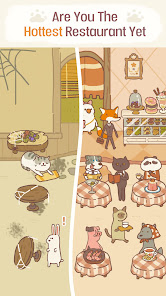
When should you hire someone?
When you can see work not being done. Customers waiting too long, tables not cleared, orders unserved. That is the signal, and it should come before the hire rather than after.
Hiring pre-emptively is the classic mistake. A new staff member costs currency every session, and if the restaurant is not busy enough to need them, that cost buys nothing.
The opposite failure is trying to solve every problem with staff. If the queue is caused by a slow dish, an extra server will not help.
Diagnose first, then hire the role that addresses the diagnosis. That order is the whole discipline.
Think about what a hire costs across a week rather than in the moment. A wage that looks small per session becomes a significant share of your income over several days, and that is the money which would have funded the dish upgrade that makes the restaurant busier. Staff are an operating cost that buys capacity, and capacity you do not use is a loss.
On this page
Which role should you hire first?
The one that matches your bottleneck. If orders are taken but not delivered, you need serving capacity. If tables stay dirty and customers avoid them, you need cleaning. If the kitchen is the limit, no front-of-house hire will help.
| Symptom | Likely need |
|---|---|
| Orders waiting to be delivered | Serving staff |
| Tables left uncleared | Cleaning capacity |
| Dishes slow to produce | Kitchen upgrade, not a hire |
| Customers leave before ordering | Capacity or layout |
Watch a busy period rather than guessing. The bottleneck is usually visible within a minute of watching.
Should you upgrade staff or hire more?
Upgrade first, most of the time. An upgraded staff member handles more work per shift, which means fewer wages for the same output.
Hiring adds capacity; upgrading adds efficiency. A restaurant that is slightly short of capacity usually needs one more person, while one that is broadly fine but slow needs better people.
The costs differ too. Hiring commits you to a recurring wage, while an upgrade is often a one-time cost that raises the ceiling of someone you already pay.
For a small restaurant, upgrading one good staff member is almost always better value than hiring two average ones.
It helps to watch a single busy minute rather than the whole session. Look at where the pause is: are orders stacking at the pass, or are customers waiting to be greeted. That one observation tells you which role to hire, and it is more reliable than any general advice about staffing ratios.
How many staff do you actually need?
Enough to cover your busiest period without customers leaving. Quiet periods will have staff standing around, and that is fine, because the alternative is losing customers when it is busy.
Judge by the peak rather than the average. Staffing for the average means failing every time the restaurant fills.
If you find the peak is unpredictable, staff slightly above what you usually need and accept some idle time as the cost of not losing customers.
Revisit the number after any upgrade that changes throughput. A faster kitchen reduces the serving capacity you need.
Consider also what happens when you are away. Staff who are idle during your absence still cost wages, which means a restaurant that is overstaffed loses money while you are not watching. That is the strongest argument for hiring just enough and upgrading instead.
How does the wage bill affect progression?
Wages are the largest recurring cost in most restaurants, and they compound. Every hire reduces the currency available for dishes, which are what actually raise income.
That is why over-hiring stalls progress. You end up working to pay staff who are standing idle, with nothing left to spend on the thing that would make the restaurant busier.
The healthy pattern is to hire just enough, upgrade dishes with the surplus, and let the increased income fund the next hire.
If you are ever unsure whether you can afford a hire, you probably cannot yet.
If you are deciding between a hire and a dish upgrade, take the dish upgrade when the queue is short. A better dish raises every customer’s value, while a hire only matters when there are customers waiting. The two solve different problems and should not be treated as interchangeable.
What are the common staffing mistakes?
Hiring before diagnosing. The most common and most expensive.
Hiring instead of upgrading. More wages for less efficiency.
Staffing for the average. Failing at every peak.
Never reviewing. Keeping staff after the restaurant changes shape.
Finally, review your team after every major change. A kitchen upgrade can make a server redundant, and an event that ends can leave you with capacity you no longer need. Staffing is a number that should move, not a decision you make once.
One reliable rule is to hire only after you have watched a customer leave unhappy and identified exactly which task was not done. That single practice prevents almost every wasted wage in the game, and it turns staffing from a guess into a response.
Kept that way, your team stays small, effective and affordable, and the currency you save goes into the dishes that bring people through the door.
Frequently asked questions
Do staff need training?
Upgrading them improves output per shift, which is usually better value than another hire.
Can I fire staff?
Yes, and you should when the wage bill exceeds what the work justifies.
Do more staff mean more customers?
No. Staff serve customers; decoration and reputation bring them.
What if customers still leave with enough staff?
The bottleneck is elsewhere, likely dish speed or layout.
Should I hire for events?
Temporarily, if event traffic exceeds your capacity. Review afterwards.
For related systems, see facilities and customer patience. More coverage is on the Animal Restaurant hub.
Official game information: www.dhgames.com.