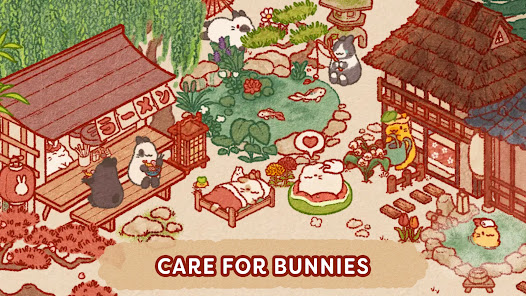
This guide covers usagi shima how to manage island space with practical steps for mobile players.
Quick answer: island space in Usagi Shima is limited, and managing it well means leaving room rather than filling every tile. Group items into areas, keep paths between them, and remove things you do not like before buying more. An island with space in it stays workable for months, while a full one becomes impossible to extend.
Space is the only real constraint in the game. Carrots accumulate and bunnies arrive on their own, but the island does not grow, so every item you place is a decision about what you will not be able to place later.
That makes space management the closest thing to strategy the game has.
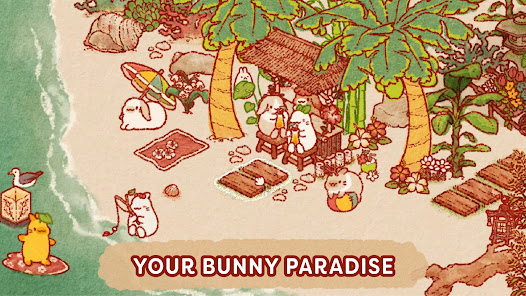
Why does space run out so quickly?
Because the island is small and the shop is generous. There is always something new to buy, and each purchase takes up room that another item might have used.
Players who fill every tile in the first week find themselves unable to add anything without removing something, which is the least enjoyable position in the game.
The problem is not that the island is too small. It is that filling it completely is the wrong approach.
Leaving gaps keeps the island extendable, and extension is what keeps the game interesting over months.
Think of empty ground as reserved space rather than as wasted space.
That reframing is genuinely useful. A player who sees empty ground as a problem will fill it, and a player who sees it as potential will leave it.
The second player is still decorating months later. The first has a finished island and nothing left to do with it.
It is the same instinct that makes people fill every shelf in a house and then wonder why the room feels cramped.
On this page
How much should you leave empty?
More than feels comfortable. A rough guide is that most items should not touch anything else, and none should be surrounded.
That sounds sparse and it looks generous. The island reads as a place with room in it rather than a shelf with objects on it.
It also makes each item more visible, which matters because the bunnies interact with individual things rather than with the mass.
Try it in one area first. Most players find that removing a few items makes the whole island feel larger.
The instinct to fill is strong and it is worth resisting deliberately.
What should you remove first?
The things you placed because they were cheap rather than because you liked them. Those are the items that make an island feel cluttered without adding anything.
After that, look for duplicates. Three identical benches do less than one bench, one lamp and one plant.
Then look at anything blocking a path or crowding a corner. Those items are costing you more in layout than they add in decoration.
Removing is not failure. It is the same skill as placing, applied in reverse.
Players who clear regularly keep their islands workable for far longer than those who only add.
Do paths cost space?
They use ground, yes, but they earn it back by making the rest of the island readable.
A path tells the eye where to go and turns scattered items into areas. Without one, even a well-decorated island reads as a collection rather than a place.
They also give you a structure to build around, which makes future placement decisions much easier.
Start with one main route and branch from it. That uses a small amount of space and organises everything else.
It is the highest-value use of ground on the island.
There is a practical way to lay one out. Start at the entrance, walk to the far side, and place path tiles along the route you would naturally take.
Then branch off wherever you want an area. That produces a layout that feels like somewhere rather than a grid with things on it.
If you are unsure, do this before placing any decorations at all. It gives you a structure to fill rather than a blank space to fear.
Should you plan before placing?
A little, yes. You do not need a drawing, but knowing roughly where your areas will be prevents the drift that fills an island randomly.
Decide where the main path runs, where you want seating, and where you want something taller. That is enough structure to build on.
Planning also stops you buying things that have nowhere to go, which is the most common source of wasted carrots.
It does not need to be rigid. The plan can change as you find items you like.
But having one at all keeps the island coherent as it grows.
What are the common space mistakes?
Filling every tile. Buying before clearing. Placing duplicates. Ignoring paths. And treating empty ground as a problem to solve.
The underlying mistake is thinking of the island as a container to be filled rather than a place to be arranged.
If you want one habit, clear a little space before every shopping trip. That single rule keeps the island extendable indefinitely.
Do it consistently and you will never face the position of having nowhere to put something you love.
It is also worth accepting that clearing is permanent progress rather than a loss. The item you remove is not gone; it is in your inventory, ready to be placed again when you have room.
That makes clearing low-risk, which makes it easy to do.
Frequently asked questions
Does the island get bigger?
Space is limited, which is why leaving room matters more than buying more.
Should you fill every tile?
No. Empty ground keeps the island workable and makes items readable.
What should you remove first?
Items you placed for price rather than preference, then duplicates.
Do paths waste space?
They use ground but organise everything else, which is worth the cost.
Should you plan the layout?
A rough plan helps, though it can change as you find items you like.
Leave space, clear before you shop, and let paths organise what remains. You can also start from the Usagi Shima hub.
Official game information: usagishima.net.