This guide covers usagi shima how to organize island paths with practical steps for mobile players.
Quick answer: paths in Usagi Shima are the decoration that organises everything else. Lay one main route from the entrance to the far side, branch off where you want areas, and build decorations along them rather than scattering items evenly. Paths use ground but they make the island readable, which is worth more than the space they cost.
A path is the cheapest way to make an island look designed rather than decorated. It costs little, it uses a modest amount of ground, and it changes how the whole place reads.
It is also the thing players skip most often, because it does not look like a decoration.
Why do paths matter?
They tell the eye where to go. Without one, a collection of items reads as objects on a surface; with one, the same items read as places along a route.
That difference is entirely perceptual and it is the most powerful tool you have for making the island feel intentional.
Paths also give you a structure for future decisions. When you buy something new, you know which area it belongs in because the areas are defined.
And they make the island easier to extend, because a route can grow at either end.
For a small cost they solve several problems at once.
On this page
How should you lay them out?
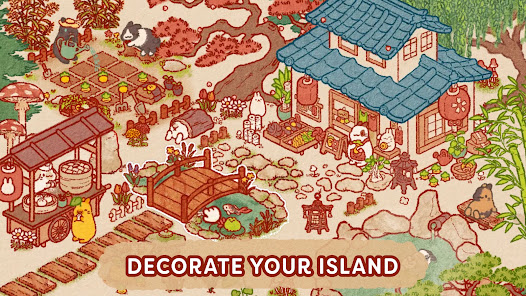
Start with one main route from the entrance to the far side. That single line gives the island a spine and something to build against.
Then branch off wherever you want an area. Each branch becomes a small place rather than a random cluster.
Keep the main route fairly straight. Winding paths look charming and make the island confusing, and you want the main line to be obvious.
The branches can curve as much as you like, because they are meant to feel like side places.
That contrast between a clear spine and looser branches is what makes a layout readable.
Do paths cost too much space?
They use ground, yes, and on a small island that matters. But they earn the space back by making everything else work harder.
A path tile organises the items around it, while an extra decoration tile only adds one more object.
Per tile, paths are the best value on the island.
Think of it this way: a decoration adds one nice thing to look at, but a path tile improves the look of every item it touches. It gives a flower bed a border, it turns a lonely bench into a destination, and it tells the eye where to travel next. That knock-on effect is why a layout with paths feels finished while a layout without them feels like a pile of objects.
The only time paths are a poor spend is when they wander with no purpose, doubling back and eating ground for no reason. Keep the routes functional and the branches short, and the space cost stays fair.
If you are short of room, cut a decoration before you cut a path.
The path is what makes the remaining things look deliberate.
Should paths connect everything?
No. Connecting every item produces a grid rather than a place, and it uses far more ground than you need.
The goal is a main route with branches to the areas that matter, and a few items reached without a path at all.
That informal quality is what makes an island feel lived in rather than planned.
Leave a corner unconnected and let it be a spot you wander to.
Not everything needs a reason to be reachable.
That said, there is a practical limit. If an area is completely walled off by decorations with no path access, the bunny behaviour there can feel disconnected from the rest of the island. A single path tile joining it back to the spine is usually enough to fix that without turning the whole place into a grid.
Aim for a layout where every area can be reached in one turn off the main route. That keeps the island coherent without making it rigid, and it gives each corner a clear relationship to the centre.
What should go along the paths?
Things that reward walking past them: lamps, benches, small plants, anything that gives the route character.
Toys work well beside a path because a bunny using one is visible from the route.
Larger items belong at the end of a path or in the middle of a branch, where they act as a destination.
That arrangement gives the island rhythm: small things along the way, something worth arriving at.
It also tells you where to put new purchases without thinking about it.
What are the common path mistakes?
Not laying any. Connecting everything. Making the main route wind unnecessarily. Letting paths end nowhere. And treating path tiles as wasted space.
The underlying mistake is thinking of paths as a floor rather than as a structure. They are the skeleton the rest hangs on.
If you want a rule, lay the main route before you place any decoration at all.
That single order of operations prevents most layout problems later.
It also saves carrots. Players who decorate first and add paths afterwards usually find they need to move half the decorations to make room, and moving is free but tedious.
Doing the route first means every purchase afterwards has a home waiting for it.
Frequently asked questions
Do paths attract bunnies?
Indirectly, by making the island readable and the layout deliberate.
How many paths should you place?
One main route plus branches to the areas that matter.
Should every item be reachable by path?
No. A few informal spots make the island feel lived in.
Do paths waste space?
They use ground but organise everything around them, which is worth more.
When should you lay them?
Before placing decorations, so the layout has a structure from the start.
Lay a main route first, branch to your areas, and build along the lines rather than scattering. You can also start from the Usagi Shima hub.
Official game information: usagishima.net.