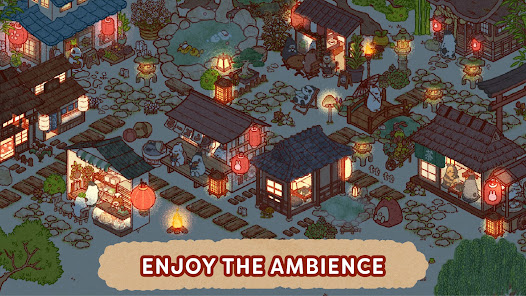
This guide covers usagi shima gameplay overview with practical steps for mobile players.
Quick answer: Usagi Shima is a cozy idle game about decorating a small island so that rabbits come to visit. You place items, wait for bunnies to arrive, collect carrots, and spend them on more decorations. There is no combat, no timer and nothing to lose by being away, and the appeal is a small place that slowly becomes yours.
The game sits in the cozy corner of the idle genre. It is not about optimising a system so much as about tending a place, and the difference shows in almost every design decision.
Understanding that framing is what stops the game from feeling empty and starts it feeling restful.
What do you actually do?
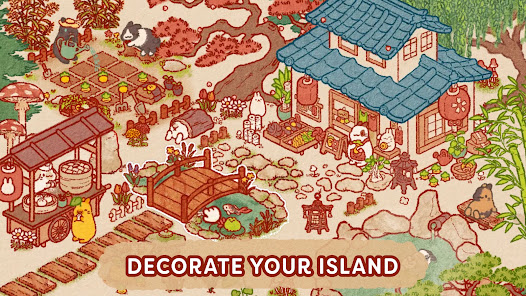
You arrange an island. Decorations, paths, toys and buildings all take up space, and where you put them determines who visits and what happens.
You collect carrots from the bunnies who come, and spend them on more things to place.
That loop is short and it repeats indefinitely, which is the shape of most idle games.
What makes this one different is that the output is a place rather than a number.
You are not watching a figure climb; you are watching an island fill in.
That is a meaningful difference in how the game feels. A number going up is satisfying for about a week, while a place filling in stays interesting because you keep changing it.
It also means the game is never really finished. You can always rearrange something, and rearranging is free.
So the progression is less a ladder and more a hobby.
That suits some people enormously and leaves others looking for a goal.
On this page
How does progression work?
Through accumulation rather than levels. More decorations, more bunnies, more carrots, more decorations.
The bunny book records who you have met, and mementos mark the relationships that have developed.
None of that is measured against a target. There is no completion percentage and no score.
That makes progression a matter of what your island looks like rather than what your account says.
For some players that is liberating; for others it is the reason they stop playing.
What are the main systems?
Decorating, which is the core. Carrots, which are the currency. Bunnies, which are the reward. And the smaller systems that support them: the bunny book, mementos, daily tasks, toys, buildings and paths.
Each one is simple on its own and they interlock without much complexity.
There is nothing here that requires a guide to understand, which is part of the appeal.
The depth comes from taste rather than from mechanics.
You get better at the game by getting better at arranging things.
That is worth unpacking, because it explains why experienced players can make a better-looking island with the same items available to everyone.
They have learned what groups well, how much space an item needs and where a path should run. None of that is taught by the game and all of it comes from trying things.
It is the same skill you use when arranging a real room, applied to a small island with rabbits on it.
Which is quietly the most interesting thing about the game.
Is it pay to win?
There is nothing to win, which makes the question slightly odd. There is spending, and it accelerates progress the way most idle games allow.
What is notable is that the core loop is entirely playable without paying. Carrots come from bunnies and bunnies come from decorations, neither of which requires money.
Free players progress steadily by checking in and decorating, and the game does not appear to gate content behind purchases.
That makes it unusually generous for the genre.
Whether the pace suits you is a personal question.
There is also a practical note about how the game presents its own systems. Very little is explained, and the shop, the bunny book and the paths are all discoverable rather than tutorialised.
That is either charming or frustrating depending on your tolerance for figuring things out.
If you like being taught, this will feel opaque for the first week.
If you like exploring a small system, it will feel generous.
How does it compare with similar games?
It is gentler than most. Games like Neko Atsume are purer collections, while management-style idle games demand far more attention.
This one sits between them, with more to do than a pure collection and less pressure than a management game.
That middle position is where its appeal lives.
If you want more systems, look elsewhere. If you want less, there are simpler options.
If you want somewhere in between, this is a good fit.
There is one more comparison worth drawing. This game has no fail state at all, which is rarer than it sounds in the genre.
Most idle games find some way to punish absence or reward constant attention. This one does neither.
That makes it the gentlest option available, and the one most likely to still be on your phone in a year.
Who is it for?
Players who enjoy decorating, collecting and gentle progress. People who want something to check on rather than something to play.
It is less suited to anyone wanting challenge or narrative. The game offers neither and does not pretend to.
If you have ever enjoyed tending something over time, this will likely hold you.
If you need constant engagement, it will not.
Both responses are reasonable, and the game is honest about what it is.
Frequently asked questions
Is there any combat?
No. There is no combat, no timer and no fail state of any kind.
Do you need to spend money?
No. The core loop is entirely playable without purchases.
What is the goal?
There is no ending. You decorate an island and collect bunnies over time.
How long does progress take?
Weeks and months, which is normal for the genre.
Is it playable offline?
The island keeps working while the game is closed, which is the point of an idle game.
It is a game about making a small place nice and seeing who turns up. You can also start from the Usagi Shima hub.
Official game information: usagishima.net.