This guide covers age of empires mobile how to use scouting with practical steps for mobile players.
Quick answer: Use scouting in Age of Empires Mobile before committing troops to anything you cannot see. Send scouts to reveal enemy compositions, resource nodes, and alliance objectives, then adjust your army to counter what you find. Scouting costs a march slot and some time, but it prevents the far more expensive mistake of attacking into a hard counter.
What does scouting actually reveal?
It shows what is in a target: the defending troops, their approximate strength, and often the hero leading them. That information is what lets you choose a composition rather than guess.
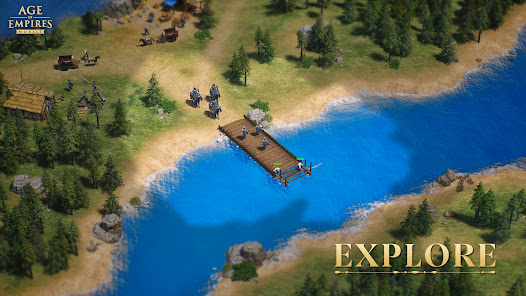
It also reveals the map around the target, including resource nodes and terrain, which matters for planning a route or a gathering trip and can turn one scout into two useful pieces of information.
What it does not do is guarantee a win. Knowing the enemy composition tells you whether to attack, not that you will succeed, and overconfidence after a good scout is its own kind of mistake.
A useful habit is to scout as part of your first action each session, before committing marches to anything. It costs one slot and often changes the whole plan for the day.
On this page
When should you scout?
Before any attack on a target you have not fought recently. Compositions change as players rebuild, so yesterday’s information is not reliable today.
Before gathering in a contested area, to check whether hostile marches are nearby.
Before an alliance event that requires hitting specific targets, so the group can plan rather than scatter.
When you are unsure whether a target is worth the march time at all. A quick scout can save a wasted trip.
Do not scout targets you already know are trivial. The march slot is better used elsewhere.
Save the slot for something with a decision attached, where the answer could change what you do next.
| Situation | Scout? | Reason |
|---|---|---|
| Attacking an unfamiliar target | Yes | Composition decides the outcome |
| Gathering in contested ground | Yes | Checks for hostile marches |
| Alliance event targets | Yes | Lets the group plan |
| Known weak target | No | Wastes a march slot |
| Defending your own base | No | You already know your layout |
It also helps to be honest about your own limits. A counter you cannot field is no use, and realising that before the fight is exactly the point of scouting.
How do you use what you learn?
Adjust your composition to counter what you saw. If the target is heavy on cavalry, bring infantry; if it is infantry-heavy, bring ranged.
Check the hero leading the defence. A strong defensive hero changes the calculation, and a target that looks weak on troop count may still be a bad fight.
Compare the information against your own army honestly. Knowing the enemy composition is only useful if you can actually field the counter.
If the scout reveals something you cannot beat, do not attack. That is the entire value of the system.
Share what you find with your alliance. One scout’s information can save several members from the same mistake.
Fast cavalry makes the best scouts in most situations, because speed matters more than combat strength for a unit that should never fight.
How do you scout efficiently?
Use a cheap, fast march rather than your main army. Scouts are not meant to fight, and losing a valuable army on a reconnaissance trip defeats the purpose.
Scout several targets in one session rather than one at a time. The information is more useful when you can compare options.
Keep notes if you are planning a campaign. Remembering which targets are soft and which are not saves repeated scouting.
Scout during quiet periods when your marches would otherwise be idle. It costs nothing but the slot.
If scouting is limited by items or cooldowns, prioritise the targets you are most likely to attack, since information about a target you will never engage is worth very little.
It also tells you when to move your gathering to a quieter area, which prevents losses you would otherwise never see coming.
Does scouting help defensively?
Indirectly. Knowing what your neighbours field tells you what to build and which troop type to prioritise in research and training.
It also warns you about aggressive players nearby, which is useful when deciding where to gather or which alliance to align with.
Repeated scouting of the same area builds a picture over time, and that picture is more valuable than any single report because it shows how your neighbours change and who is becoming strong.
If you are being attacked regularly, scouting the source tells you whether to retaliate or relocate, and either answer is better than continuing to absorb losses without understanding them.
Defensive scouting is underused because it produces no immediate reward, but it prevents losses that are far more expensive.
The sixth is scouting but not writing anything down, so the information is forgotten by the time it matters.
What are the common scouting mistakes?
Attacking without scouting is the first, and it is how armies are lost to counters they could have avoided. The second is scouting with a valuable army instead of a cheap one.
The third is scouting once and relying on old information, when compositions change as players rebuild. The fourth is ignoring what the scout found and attacking anyway.
The fifth is never sharing information, so the alliance repeats the same mistakes individually.
Treated as a routine step rather than an optional extra, scouting turns guesses into decisions and saves far more than it costs.
Frequently asked questions
Does scouting cost resources?
It costs a march slot and time, and sometimes scouting items. The information is usually worth far more.
Can scouts be attacked?
Yes, which is why you send cheap fast units rather than your main army.
Does scouting reveal hero levels?
It typically shows the defending hero and troop composition. Exact detail varies.
Should I scout before every attack?
Before any target you are unsure about. Known weak targets do not need it.
Is scouting useful in peacetime?
Yes, for finding resource nodes and understanding your neighbours.
For army planning, see the Age of Empires Mobile hub.
Official game information: www.ageofempires.com.