This guide covers hay day how to earn coins with practical steps for mobile players.
Quick answer: Coins in Hay Day come from three main places: the roadside shop, truck orders, and boat orders, with the shop being the most reliable because you choose what to sell and when. Produce goods your buildings can make continuously, sell the surplus in the shop rather than letting storage fill, and complete orders that reward coins without consuming materials you are saving for an upgrade.
How does the roadside shop actually earn?
You place goods in the shop at a price you choose, and visitors buy them over time. The shop is passive income: once the goods are listed, you can close the game and the coins arrive when someone buys.
That makes it the best use of surplus. Anything you can produce faster than you consume it belongs in the shop, because storage space is worth more than the goods sitting in it.
Price matters less than turnover for cheap goods. Selling wheat at a modest price repeatedly beats holding it for a better price you may never get, because the coins from the first sale buy capacity for the next.
On this page
Are truck orders worth more than the shop?
Truck orders pay coins and experience together, and they often ask for goods you already have. Completing them is efficient when the requirement is something in surplus and inefficient when it consumes an ingredient you need for a recipe chain.
The order board is also how you unlock progress, because experience unlocks buildings that make higher-value goods. A slightly lower coin return on an order can still be the better choice if it moves you toward a new machine.
Read the requirement rather than the payout. An order asking for three of a slow product is very different from one asking for a single cheap crop, even if the coins look similar.
| Source | Effort | Best for |
|---|---|---|
| Roadside shop | Low, passive | Converting surplus into coins |
| Truck orders | Medium | Coins plus experience |
| Boat orders | High | Large coin rewards for big batches |
| Town visitors | Medium | Coins alongside reputation |
| Events | Variable | Bursts of coins and materials |
Which goods give the best return?
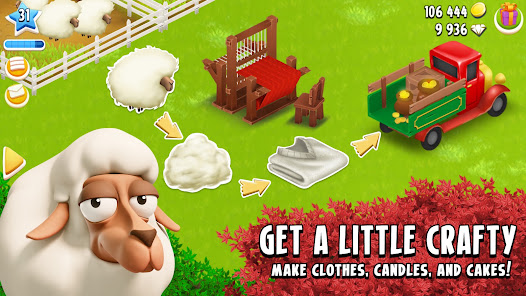
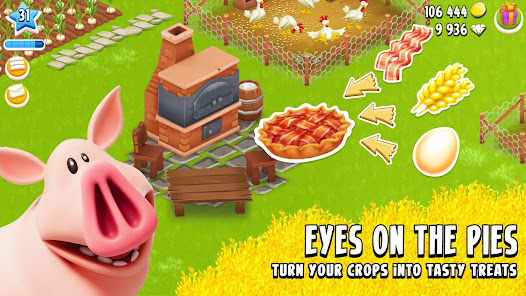
Processed goods are worth more than the crops they are made from, and goods that take longer to produce are generally worth more again. The trade-off is that slow recipes tie up a machine for hours.
The practical answer is to run a mix. Keep cheap, fast recipes moving constantly for steady coins, and use one or two machines for the slow, valuable goods that fund the bigger purchases.
Watch which goods your orders keep asking for. If the board consistently wants the same item, producing it is both an income source and a way to keep orders flowing.
Why does saving coins feel so slow?
Because early purchases are large relative to early income, and because storage limits cap how much you can produce at once. Both of those improve as you upgrade, which is why the first stretch feels slower than later progress.
Materials also compete for your attention. Coins buy buildings and animals, but building materials gate storage, and spending coins on decorations early delays the upgrades that would raise your income.
The fix is to treat coins as capacity rather than as a score. Every coin spent on a machine, an animal, or an upgrade increases future income; coins spent on decoration do not.
Should you sell building materials for coins?
Rarely. Building materials are the harder constraint, and coins can almost always be earned another way while a plank cannot. Selling materials to fund a purchase usually trades a slow problem for a slower one.
The exception is a genuine surplus of one material type while another blocks you. In that case trading a spare item for coins, and using the coins to buy the missing item, can unblock progress faster than waiting.
Do the arithmetic before assuming. If the trade lets you upgrade storage this week instead of next month, it is probably worth it; if it merely adds coins to a healthy balance, it is not.
What are the common coin mistakes?
Hoarding instead of selling is the first. A full silo earns nothing, and the goods in it are not increasing in value while your fields sit unharvested.
The second is chasing expensive recipes before you can supply them, which leaves machines idle and ingredients exhausted. The third is spending coins on decoration while storage is the bottleneck.
The fourth is ignoring the shop entirely and relying only on orders. Orders are limited by what is posted; the shop converts whatever surplus you have whenever you have it.
Frequently asked questions
What is the fastest way to earn coins?
The roadside shop, because it converts surplus continuously and works while you are away.
Should I sell crops or processed goods?
Processed goods, when you can make them. They are worth more than the raw ingredients.
Do boat orders pay better than trucks?
They often pay more in total but demand larger quantities, so they suit players with surplus production.
Is it worth selling building materials?
Usually not, unless you are trading a genuine surplus for an item you urgently need.
Why am I always short of coins?
Likely storage limits capping production, or coins going into decorations instead of capacity.
For the wider economy, see the Hay Day hub.
Official game information: supercell.com.