This guide covers mini motorways how to manage road tiles with practical steps for mobile players.
Quick answer: Road tiles in Mini Motorways are a limited resource, so the skill is spending them where they shorten trips rather than where they fill space. Build short connections between housing and destinations, avoid parallel duplicates, and demolish roads that serve almost nothing. Every tile you save is a tile you can spend later when a new district appears.
Road tiles are the constraint that makes the game a puzzle rather than a sandbox. You never have enough to connect everything the obvious way, which forces choices about which routes matter. Players who treat the budget as unlimited build a beautiful network and run out exactly when they need to expand.
How does the road budget work?
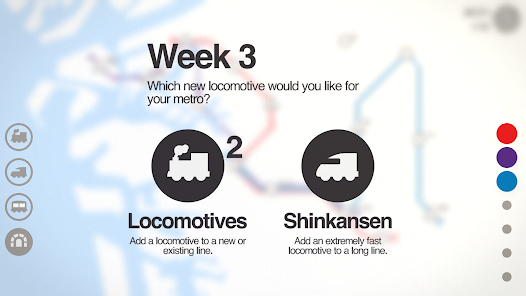
You receive a limited number of road tiles, replenished as a weekly reward alongside other upgrades. The supply grows slowly relative to the city.
That means the network has to be efficient rather than complete. You are not trying to connect every house to every destination; you are trying to keep trips short within a budget.
The budget also means early decisions matter. A wasteful layout consumes tiles you cannot recover, and later districts inherit the problem.
Treating tiles as scarce from the first minute is the habit that separates long runs from short ones.
On this page
Where should tiles be spent first?
On connections that shorten the most trips. A road between a dense housing cluster and its matching destination serves many vehicles.
On the spine that carries traffic between districts. Without it, every local road has to reach the destination itself.
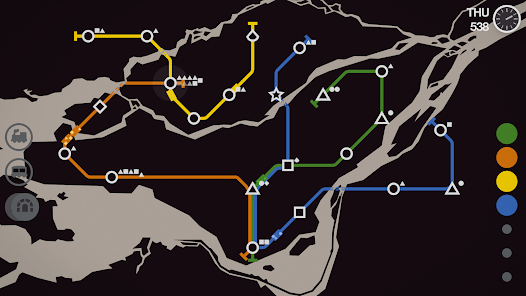
On crossings, when water or terrain forces them. A bridge is expensive but it unlocks a whole district.
Not on roads to individual houses. A branch serving five houses is efficient; five separate roads are not.
Not on decorative loops. A road that exists to make the map look tidy is a tile you will want back.
How do you avoid wasting tiles?
Never build a parallel duplicate. Two roads between the same two points split traffic without adding capacity where it matters.
Remove dead ends when you find them. A dead end forces traffic back through the same junction and serves only the houses at its tip.
Avoid long routes to isolated houses. If a single house is far from everything, connecting it may cost more than it returns.
Rebuild rather than patch. A section that has grown tangled usually consumes fewer tiles when redesigned than when repaired.
Count before you build. A moment spent asking how many houses a road serves prevents most waste.
How do you plan for future districts?
Keep a reserve. Spending every tile as it arrives leaves nothing for the district that appears next week.
Leave gaps in the network where a future road could go, rather than filling the space with branches.
Build the spine first and add branches as housing appears. That order uses fewer tiles than connecting houses as they arrive.
Watch the map’s growth direction and extend toward it rather than around it.
Accept that some houses will be poorly served. In a tile budget, perfect coverage is not achievable and chasing it costs you elsewhere.
How do tiles interact with upgrades?
They compete with bridges, tunnels, junction controls and motorways for the same weekly choice.
That makes the choice situational. A map with a river needs bridges; an open map needs tiles.
Taking road tiles when you already have spare ones is usually a mistake. Take the upgrade that addresses your current bottleneck.
Taking tiles when a bridge is what the map needs delays the failure rather than preventing it.
Read the map and your own queue before choosing, rather than defaulting to more road.
What are the common tile mistakes?
Building parallel duplicates is the first, and it is the most common waste.
Connecting every house individually is the second, which consumes tiles for little benefit.
Ignoring dead ends is the third, which quietly wastes both tiles and junction capacity.
Spending the whole budget immediately is the fourth, leaving nothing for the next district.
Taking road tiles when a crossing was needed is the last, and it is the mistake that ends runs on water maps.
One habit that saves more tiles than any other is to build the spine before the houses. When housing arrives first, players connect each new house to whatever is nearby, and the resulting tangle costs far more than a planned main road would have.
It also helps to keep a mental note of how many tiles you have left. A player who knows the budget is nearly spent makes different choices than one who discovers it when a district appears.
Finally, do not fear the demolition. A road that seemed sensible at week five can be actively harmful at week twenty, and removing it costs nothing but the click.
Frequently asked questions
Do road tiles run out permanently?
No. They arrive as a weekly reward, but the supply is slower than the city’s growth.
Should I always take road tiles?
No. Take the upgrade that solves your current bottleneck, which is often a bridge or a junction control.
Can I reclaim tiles by demolishing?
Where the game allows removal, yes. Removing a redundant road frees space for a better one.
How do I connect isolated houses?
With the shortest branch possible, and only if the house is worth the tiles. Some are not.
What wastes tiles fastest?
Parallel duplicates and individual connections to scattered houses.
For the network side, read how to separate road networks, or return to the Mini Motorways hub.
Official game information: dinopoloclub.com.