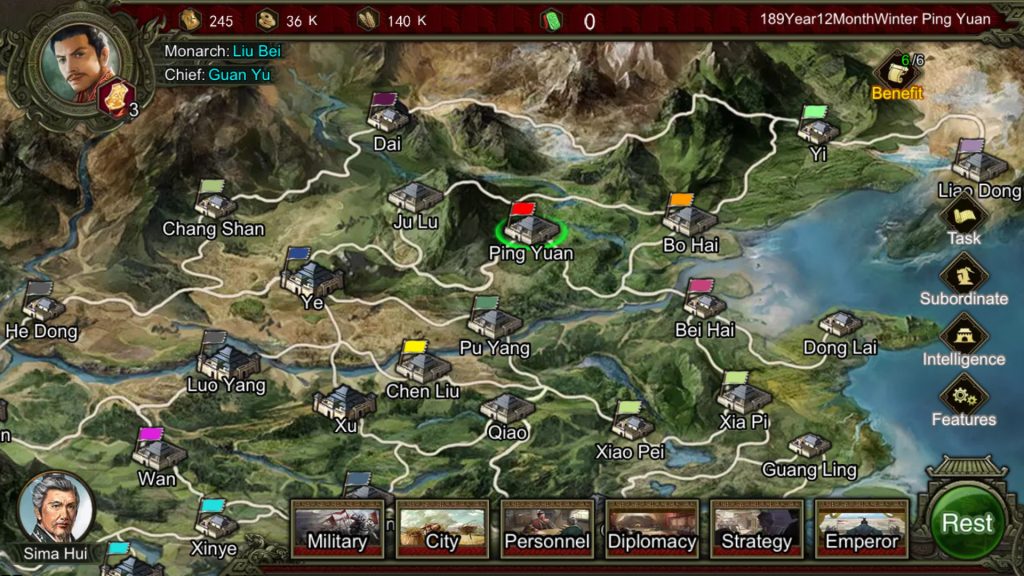
This guide covers rise of kingdoms beginner guide with practical steps for mobile players.
Quick answer: Rise of Kingdoms is a mobile strategy game where you grow a city, research technology, train troops and fight alongside an alliance. The three things that decide your progress are your City Hall level, your research queue and your alliance. Join an alliance on day one, keep every building and research queue busy, and spend your action points on gathering rather than on random attacks.
The game looks like a city builder and is actually a scheduling game. Almost everything you do is gated behind a timer, and the players who advance fastest are the ones who never leave a queue idle and who understand which upgrade unlocks the next tier of everything else.
That is the frame for everything below. City Hall is the spine, research is the multiplier, troops are the currency you spend in wars, and the alliance is the structure that makes all of it worthwhile.
What should you focus on in your first week?
City Hall above everything else. Almost every other building has a level cap tied to your City Hall, and the same is true of troop tiers and many research nodes. Raising City Hall is what unlocks the rest of the game, so it should be the building you are always working toward.
Keep your secondary buildings levelled just enough to meet City Hall requirements and no further. New players often spread upgrades evenly across the city because it feels tidy, and then discover they cannot raise City Hall because a prerequisite building is behind.
Research should run continuously from the moment the Academy exists. Economic research pays back slowly and military research pays back in fights, but an idle Academy pays back nothing at all, which is the only genuinely bad outcome.
Resource buildings are the exception to the rule about not spreading upgrades. Farms, lumber yards, quarries and gold mines produce passively, and their output scales with their level, so they pay for themselves over a long run. Levelling them is rarely wasted effort even though it feels less exciting than levelling an army building.
The practical scheduling habit is to look at your City Hall’s next-level requirements, work backwards to see which prerequisite buildings you still need, and queue those. Everything else can wait until the prerequisites are done. That single habit removes most of the frustration new players experience when they discover a wall between them and the next tier.
On this page
Which civilization should you start with?
Pick one whose bonus matches how you actually want to play rather than the one a tier list recommends. The civilizations differ mainly in which troop type they strengthen, how fast they build or research, and how quickly their troops train.
If you intend to fight a lot, choose a civilization that strengthens the troop type you enjoy commanding. If you intend to grow quietly and support an alliance, choose one that speeds construction or research, because those bonuses compound across the whole game.
You can change civilization later, so the first choice is not permanent. That lowers the stakes considerably and means you should pick something reasonable rather than agonising over it.
What actually distinguishes the civilizations in practice is which resource they save you. Construction speed saves you time on buildings, research speed saves you time in the Academy, and training speed saves you time replacing troops. Since time is the real currency of the game, any of those bonuses is genuinely useful.
Troop-type bonuses matter more once you are fighting regularly, because a bonus to a troop type you never field is worthless. If you are unsure which troop type you will end up using, choose a civilization with an economic or construction bonus instead, since those never become irrelevant.
How should you spend action points?
Gathering, mostly. Action points regenerate over time and are consumed by gathering, attacking barbarians and similar field actions, which makes them the real limit on how much you can do in a day.
Early on, send your marches to gather the resource you are shortest of rather than the one that is furthest away. Travel time is part of the cost, and a nearby node you can fill quickly usually beats a distant one with a richer yield.
Attacking barbarians is worth doing for the rewards and for commander experience, but it should not consume all your points. A player who spends everything on barbarians has no resources coming in, and resources are what fund the upgrades that matter.
There is a rhythm worth learning: send gatherers out, let them fill, recall them, spend the resources on an upgrade, and repeat. That loop is the engine of the early game, and anything that interrupts it should have a clear payoff.
Keep an eye on your action point cap. Points stop regenerating once you hit the ceiling, so time spent at maximum is value permanently lost. Logging in briefly to spend points before they cap is one of the highest-value habits in the game, and it costs almost nothing.
Why does the alliance matter so much?
Because it is the difference between playing alone and playing the actual game. Alliances provide territory you can teleport into, help with construction and research timers, shared gifts, rallies against powerful targets and protection that a solo player simply does not have.
Alliance help alone is worth joining for. Every time you start a long upgrade, alliance members can shave time off it, and across dozens of upgrades that adds up to days of saved time.
Beyond the mechanics, alliances are where knowledge lives. The fastest way to learn what to research or which commander to invest in is to ask people who have already done it, and that is only available if you are in an active alliance.
Choose an active alliance over a prestigious one. A top-ranked alliance that never speaks is worse for a new player than a mid-ranked alliance where people answer questions, run rallies and share advice. Activity is what you are actually buying into.
Contribute to alliance donations and alliance technology whenever you can. Those contributions are cheap individually and they strengthen the whole group, which in turn protects you. Being the player who contributes is also how you earn a reputation that gets you into better alliances later.
How should you train and use troops?
Train continuously but do not over-train early. Troops cost resources and take time, and low-tier troops become obsolete as you unlock higher tiers, so filling your entire capacity with the cheapest troops is a waste of resources you will need for buildings.
Keep enough troops to gather and to defend, and invest heavily only once you have reached a troop tier you expect to keep. The hospital matters here: wounded troops can be healed rather than lost, so a defended city loses far less than an undefended one.
Use your troops for gathering primarily in the early game. Combat is expensive, and losing a march of troops costs you both the troops and the resources you would have gathered with them.
When you do fight, fight with a purpose. Attacking a player who is stronger than you achieves nothing except feeding their hospital and giving away your position. Attacking barbarians and joining alliance rallies achieves rewards at a fraction of the risk.
Healing is cheaper than retraining, which is why the hospital deserves upgrades. Troops that are wounded rather than killed can be recovered, so a well-developed hospital effectively doubles the value of every army you send out.
What are the most common beginner mistakes?
Spreading upgrades evenly instead of pushing City Hall. Leaving research idle. Spending all action points on barbarians. Joining no alliance or joining a dead one. And training troops so heavily that there is nothing left to spend on buildings.
There is also a subtler one: refusing to use speedups. New players hoard them for a rainy day that never comes, while the players ahead of them use them to keep queues moving. A speedup sitting in your inventory is doing nothing.
Finally, many players ignore the event calendar. Events hand out rewards for doing things you were going to do anyway, and aligning your upgrades with an event is free value.
The deeper habit behind all of these is simple: think in terms of what a decision unlocks rather than what it costs today. Upgrading a building you do not need yet is a delay, even if it feels like progress, because the resources could have gone into the path toward City Hall.
That mindset also protects you from the biggest trap in the game, which is spending to feel productive. A player who holds resources until the right upgrade is available will overtake one who spends constantly on whatever is affordable.
Frequently asked questions
Do you have to spend money to progress?
No, but paying accelerates things considerably. Free players progress fine by keeping queues busy and joining an active alliance.
How often should you log in?
Enough to keep queues running. Two or three short sessions a day beats one long one.
Should you attack other players early?
No. Early combat is expensive and you will usually lose to players who have been playing longer.
What is the most important building?
City Hall, because it gates nearly everything else.
Can you change civilization later?
Yes, so the starting choice is not permanent.
Start by pushing City Hall, joining an alliance and keeping research running, and the rest of the game opens up from there. You can also start from the Rise of Kingdoms hub.
Official game information: rok.lilith.com.