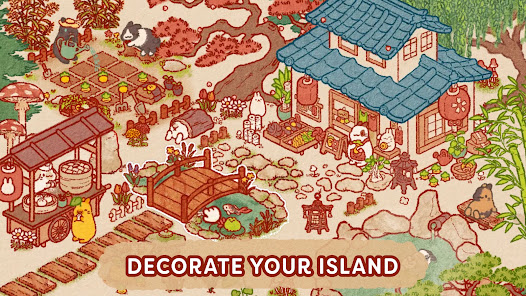
This guide covers usagi shima how to decorate a themed area with practical steps for mobile players.
Quick answer: decorating a themed area in Usagi Shima means choosing one idea and committing to it within a defined part of the island. Pick a colour or a purpose, keep the items consistent with it, and let the area read as its own place. Themed areas are the fastest way to make an island look designed rather than decorated.
A theme is a constraint, and constraints make decoration easier. Instead of choosing from everything in the shop, you are choosing from the subset that fits your idea.
That narrowing is the whole benefit. Most players who feel stuck are not short of items; they are short of a reason to pick one.
How do you choose a theme?
Pick something concrete rather than abstract. A colour, a season, a purpose like a picnic spot or a reading corner. Concrete themes are easy to shop for.
Colour is the simplest starting point because it makes the choice automatic. If the area is green, you buy green things.
Purpose works well too, and it has the advantage of producing areas that feel usable rather than merely pretty.
Either is fine. The important thing is that you can say what the area is for in one sentence.
If you cannot, the theme is not decided yet.
There is a useful shortcut for the undecided. Open the shop and look for the item you like most, then ask what area that item belongs in. The inventory often suggests a theme more reliably than thinking does.
That approach also avoids the common failure of choosing an idea the shop cannot supply. If the items exist, the theme is viable, and you find that out before committing.
Build the area around one anchor piece and add supporting items that clearly belong with it.
Most good themed areas start from exactly one object somebody liked.
On this page
How big should a themed area be?
Smaller than you think. A corner with five or six items reads clearly as a place; half the island devoted to one idea reads as repetitive.
Small areas also let you have several themes without them competing.
And they are easier to complete, which matters because a finished area feels different from an unfinished one.
Start with one corner and see how it looks before expanding.
You can always add to it later, and you will have a better sense of what it needs.
Small also helps because a themed area competes with the rest of the island for attention. One bold corner surrounded by quieter space reads as a feature, while a large themed zone makes everything else look like leftover space.
Restraint here is what makes the theme land at all.
Give it a border too, a path edge or a line of plants, so the area has a clear boundary rather than fading into the surroundings.
A boundary is what turns a cluster into a place.
How do you keep an area coherent?
By saying no to things that do not fit, even if you like them. Coherence comes from exclusion more than inclusion.
That is the hardest part of decorating and the part that makes the difference. An area with one off-theme item looks accidentally assembled.
If you have something you love that does not fit, put it in its own area rather than forcing it in.
Every item can belong somewhere; not every item belongs everywhere.
That distinction is what separates a designed island from a collection.
Do themed areas attract different bunnies?
They contribute to variety, and a themed area is by definition a concentration of one kind of thing rather than a spread.
That means a themed area may attract the rabbits that like that theme strongly, while a varied island attracts more rabbits weakly.
Both are useful. A few themed areas plus a varied base gives you both depth and breadth.
That combination is what most developed islands end up looking like.
Specialise in corners, diversify in general.
What themes work well?
Ones the game gives you items for. A garden, a seating area, a small market, a reading corner, a picnic spot.
Seasonal themes are popular because they are easy to shop for and they change how the island feels.
Colour themes are the easiest of all, and they produce a striking result with minimal effort.
Try one and see what the shop offers. The inventory often suggests a theme you had not considered.
If you are stuck, buy a single distinctive item and build around it.
That approach works better than planning on paper, because the shop is the real constraint. You cannot theme an area around items that do not exist.
Buy the anchor, place it, and let the area grow outward from there.
What are the common theme mistakes?
Making the area too large. Including items that do not fit. Changing the theme halfway. And choosing an abstract idea with no items to support it.
The underlying mistake is treating a theme as a rule rather than as a tool. It exists to make your choices easier, and if it is making them harder you have chosen the wrong one.
If you want a rule, choose something the shop can actually supply.
That single constraint prevents most abandoned themes.
And if a theme does not work out, changing it is cheap. Move a few items, keep the anchor, and try a different supporting palette.
Nothing here is permanent, which is the same freedom the rest of the game gives you.
Frequently asked questions
How big should a themed area be?
Small. A corner with a handful of items reads more clearly than half the island.
Can you have several themes?
Yes, and small areas let them coexist without competing.
Do themed areas attract specific bunnies?
They concentrate one kind of appeal, which can draw the rabbits that like it.
What if an item does not fit?
Put it in its own area rather than forcing it into the themed one.
Which themes are easiest?
Colour themes, because the choice becomes automatic.
Pick one idea, keep the area small, and exclude anything that does not fit. You can also start from the Usagi Shima hub.
Official game information: usagishima.net.