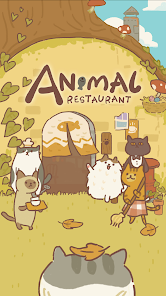
This guide covers animal restaurant gameplay overview with practical steps for mobile players.
Quick answer: Animal Restaurant is a slow, gentle management game about running a small restaurant staffed by animals. You unlock dishes, serve customers before they lose patience, hire and upgrade staff, decorate the room, and collect earnings while you are away. There is no failure state and no pressure to play for hours, which makes it a game about small regular visits rather than long sessions.
It sits in the idle-management space rather than the competitive one. The restaurant earns while you are gone, customers are patient enough to forgive a slow start, and the worst outcome is that a visitor leaves without paying.
That gentleness is the appeal. You are not fighting a clock or an opponent, you are nudging a small business along and watching the numbers improve.
The systems still reward attention, though. A player who understands what each upgrade does will progress noticeably faster than one who spends on whatever looks appealing.
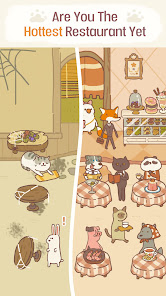
What do you actually do in Animal Restaurant?
The core loop is serve, collect, spend. Customers arrive, order dishes, wait to be served, and pay when they are happy. The money you collect funds upgrades that let you serve more customers more quickly.
Around that loop sit supporting systems: recipes to unlock, staff to hire, facilities to build, decoration to place, and a story delivered through letters that introduces new characters and content.
Each system feeds the others. Better dishes raise income, income funds staff, staff let you serve more customers, and more customers make everything else arrive faster.
Understanding that chain is more useful than memorising any individual upgrade, because it tells you what to do when progress stalls.
On this page
How does the idle side work?
The restaurant earns while you are away, up to a cap. The cap is the important part: once it fills, the restaurant stops earning until you collect.
That design choice is what makes the game suit short, frequent visits. Checking in briefly several times a day collects more than one long session, because each visit restarts the earning window.
Upgrades that extend the cap or improve the offline rate are quietly valuable for exactly this reason, even though they are less exciting than a new dish.
If you can only play occasionally, prioritise those upgrades. They convert your absence into progress rather than wasted time.
Is there any pressure or failure?
Very little. Customers who are not served leave, which costs you that visit’s income, but nothing collapses and nothing is permanently lost.
That makes the game unusually forgiving. You can experiment with layout, spend on something frivolous, or ignore it for a week and come back to a restaurant that still works.
The absence of pressure is deliberate. It is a game to check with coffee rather than one to grind through, and the pacing reflects that.
The trade-off is that progress can feel slow if you play intensively, because the systems assume you will spread your attention.
What should a new player focus on?
Dishes first, then staff, then decoration. Dish upgrades raise what every customer pays, staff let you serve more of them, and decoration brings more through the door.
Follow the letters as they appear. They are the guided path through the content, and they hand out unlocks that would otherwise take much longer to reach.
Collect regularly and spend what you collect. A large balance sitting in the bank is not helping, while an upgrade applied before you close the game works while you are away.
Keep one dish clearly ahead of the rest. A menu of evenly upgraded dishes spreads your money too thinly to build momentum early on.
How does it compare with other restaurant games?
It is gentler than most. Games in this genre often add timers, competitive pressure or heavy monetisation, and Animal Restaurant keeps all three mild.
| Aspect | Animal Restaurant | Typical alternative |
|---|---|---|
| Pace | Slow and forgiving | Faster, more demanding |
| Failure | Minimal | Frequent or costly |
| Session length | Short check-ins | Longer sessions |
| Monetisation | Present but mild | Often aggressive |
That makes it a good first management game and a good low-pressure one to keep installed alongside something more demanding.
Players who want constant decisions and escalating challenge will find it too relaxed, which is a matter of taste rather than a flaw.
Who is it for?
Players who like watching numbers improve without being punished for looking away. People who enjoy decorating a small space and reading short character moments.
It also suits anyone who wants a game that fits into a few minutes rather than demanding an evening.
It is less suited to players who need a clear goal to chase or who find idleness frustrating. The game will not push you, so you have to enjoy pushing yourself.
If that sounds appealing, the first hour will tell you everything. The loop does not change much afterwards, it simply deepens.
Frequently asked questions
Is Animal Restaurant free?
It is free to play, with optional purchases that speed up progress rather than unlocking the game.
Can I play offline?
The restaurant earns while you are away, so checking in periodically is the intended rhythm.
Is there a story?
Yes, delivered through letters and character moments rather than a campaign.
How long does progress take?
Steady but slow. The game rewards regular short visits over long sessions.
Do I need to spend money?
No. Spending accelerates progress but the game is playable without it.
For more on the systems, see earning cod and unlocking recipes. More coverage is on the Animal Restaurant hub.
Official game information: www.dhgames.com.