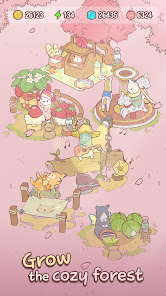
This guide covers cats and soup gameplay overview with practical steps for mobile players.
Quick answer: Cats and Soup is an idle cooking game where cats prepare dishes at stations in a forest clearing while you collect the output and reinvest it. You upgrade facilities, unlock recipes, develop cats and decorate mini rooms. It is designed for short check-ins rather than long sessions, and its appeal is the combination of gentle progress and a forest full of cats you assembled yourself.
The game sits in a category often called idle or incremental. You are not really playing it so much as maintaining it, and the pleasure comes from watching a small operation grow into a large one over weeks.
Understanding that framing early stops the game from feeling slow and starts it feeling like what it is.
What do you actually do?
You collect finished dishes from stations, spend the gold on upgrades and unlock new recipes with the points you earn. Around that core sit cooking facilities, cat development systems, fishing, decoration and a rotating set of events.
The session length is short by design. You open the app, collect, spend, check the reward systems and close, all within a couple of minutes.
Longer sessions are possible but pointless, because production is timer-based and there is nothing to grind. The game gives you nothing to do with extra hours.
That is a deliberate choice rather than a limitation, and it is why the game fits into odd moments rather than demanding an evening.
It is worth understanding how unusual that is. Most games compete for long sessions because long sessions are easier to monetise and easier to design around. This one asks for two minutes and then gets out of the way.
That design only works if the two minutes are satisfying, which is why the collecting and spending loop is so tight. Every tap does something visible.
If you find yourself wanting to play longer, the game will not accommodate you. That is not a flaw, it is the shape of the thing.
On this page
How does progression work?
Through upgrades that compound. Better stations produce more, better recipes make that production worth more, and better cats make the stations run more efficiently.
Each of those systems is developed with a different resource, which means they do not compete with each other. You can push all of them at once without choosing.
The pace is measured in weeks and months rather than hours. A new player will see rapid early progress and then settle into a slower rhythm.
That shift is normal and it is where most players either fall in love with the game or drift away from it.
The players who stay tend to be the ones who find the later pace restful rather than slow. They are not waiting for progress, they are enjoying the forest they have built while progress happens.
The players who leave are usually the ones who wanted the early pace to continue. It does not, and no amount of play changes that.
Knowing which you are is the single most useful thing you can work out in your first week.
What role do the cats play?
They are both your workforce and the reason the game exists. Mechanically they staff stations and their skills affect output; emotionally they are the collection you are building.
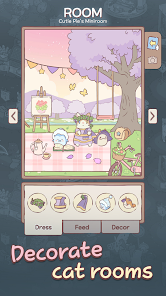
Each cat can be dressed and given a mini room, which is where most of the game’s personality lives. None of it affects income, and all of it is why people stay.
New cats arrive gradually as you progress, which means the collection grows alongside your forest rather than in a separate grind.
The two systems reinforce each other. More cats means more workers, and more workers means a forest worth decorating.
How does the decoration side work?
Through furniture coins, a separate currency earned from missions and events rather than from your cooking stations. That separation is what lets you decorate without harming your income.
You furnish mini rooms and arrange the forest, choosing themes and pieces that suit each cat. There is no mechanical benefit, which is exactly why it is relaxing.
The parallel economy is worth understanding because it removes the guilt that usually accompanies cosmetic spending. You are not diverting resources from progress, you are using a currency that was provided for this.
Players who ignore decoration entirely can still progress fine. Players who embrace it tend to stay longer.
Is it pay to win?
There is no winning, which makes the question slightly odd. There is spending, and it accelerates progress in the way most idle games allow.
What is notable is that the reward systems, cat collection and decoration are largely accessible without paying. The main thing money buys is speed, not exclusive content.
Free players progress steadily by keeping the routine going, and the compounding nature of the game means a consistent free player will eventually have a substantial forest.
Whether that pace suits you is a personal question rather than a judgement about the game.
Who is it for?
Players who enjoy gentle progress, collecting and arranging things. People who want something to check on rather than something to play.
It is less suited to anyone wanting challenge, competition or a narrative. The game asks for patience and gives back a pleasant forest, and that exchange either appeals or it does not.
If you have ever enjoyed tending something over time, the game will likely hold you. If you need engagement to be constant, it will not.
Either response is reasonable, and the game is honest about what it offers.
What it offers, in the end, is a small place that gets slowly nicer. That is either enough or it is not, and no amount of feature description will change which side of that line you fall on.
Frequently asked questions
Is it a game you play actively?
Only briefly. It is designed for short check-ins several times a day.
Do you need to spend money?
No. Free players progress steadily by keeping the routine going.
What is the main goal?
There is no ending. You build a forest and a cat collection over time.
Does decoration affect progress?
No, it uses a separate currency and has no mechanical effect.
How long does it take to progress?
Weeks and months, which is normal for the genre.
It is a game about tending something small until it becomes something you are fond of. You can also start from the Cats and Soup hub.
Official game information: www.hidea.co.kr.