This guide covers good pizza great pizza gameplay overview with practical steps for mobile players.
Quick answer: Good Pizza, Great Pizza is a pizza shop game where customers describe what they want in ordinary language and you build it exactly. You earn money, expand your menu, upgrade the shop and follow a story across chapters. There is no combat and no timer that can fail you, and the appeal is the daily rhythm of serving people and slowly growing the business.
The game is best understood as a reading game wearing a cooking apron. The pizzas are simple; the interpreting is not.
That is what separates it from other cooking games, and it is why people remember individual customers years later.
What do you actually do?
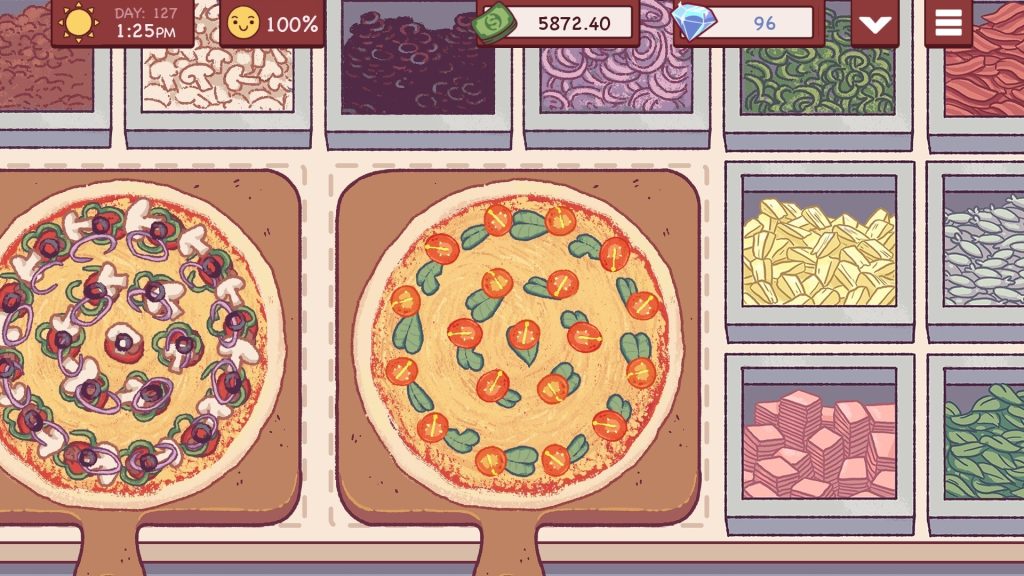
You take orders, build pizzas to match, bake them and serve them. Money from each sale funds toppings, upgrades and decoration.
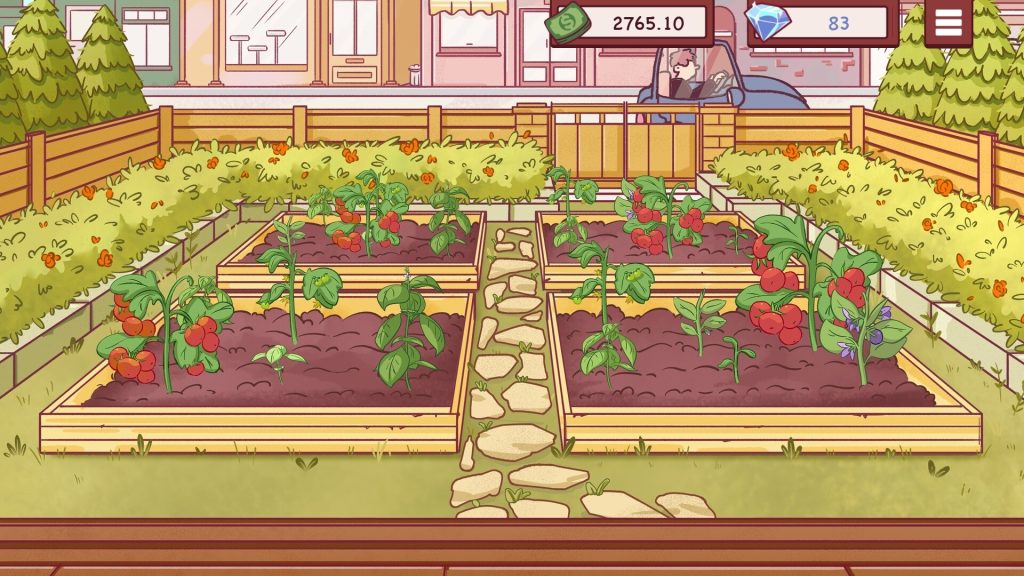
Around that core sit a garden that supplies ingredients, delivery orders, story chapters and a rival shop.
None of it is complicated, and all of it interlocks.
The skill is in reading orders accurately rather than in any reflex.
There is no time pressure that punishes you for thinking.
That is an important detail. The game has a rhythm and customers do not wait forever, but it is nothing like the knife-edge timing of arcade-style cooking games. You are given room to read an order, consider it and build.
For players who find speed-based cooking games stressful, that alone makes this one worth trying.
For players who want that stress, it may feel slow.
Either reaction is fair.
On this page
How does progression work?
Through money and story. Money buys toppings and upgrades; the story advances as you serve and meet characters.
The two feed each other. A broader menu lets you serve more people, which moves the story, which brings new requests.
That loop is the game, and it is paced to last.
There is no score and no ranking.
Progress is measured by what your shop can do.
That is a quieter kind of progression than a level number, and it takes some getting used to. You cannot look up your rank or compare yourself to anyone.
What you can do is notice that orders which used to be refusals are now routine, and that your shop looks different from how it did a month ago.
Those are the only progress markers available, and they are enough.
What makes it different from other cooking games?
The customers. They describe orders the way people actually talk, with preferences, moods and the occasional contradiction.
Most cooking games give you a recipe card. This one gives you a sentence and trusts you to work it out.
That is a harder and much more memorable design.
Getting an order right feels like understanding someone rather than executing a sequence.
It is the whole reason the game has a following.
There is something specific happening when you get an order right. You read a sentence, worked out what the person meant, built it, and they were pleased. That is a small complete loop of understanding, and it is more satisfying than clearing a level.
It is also why players talk about the customers rather than the pizzas. The pizzas are the medium; the people are the content.
Very few cooking games manage that, and it is the thing worth copying from this one.
Is it pay to win?
There is nothing to win, which makes the question awkward. There is spending, and it accelerates the usual things.
The core loop is playable without paying, and the story does not appear to be gated behind purchases.
Free players progress by serving customers consistently.
Whether the pace suits you is a personal question rather than a judgement about the game.
It is a generous design for the genre.
That is worth noting because cooking games are often aggressive about monetisation, with energy systems and timers designed to interrupt.
This one mostly stays out of the way. You serve, you earn, you expand.
The absence of friction is part of why it feels calm.
How does it compare with similar games?
It is gentler than most cooking games and more narrative than most management games.
Games like Good Coffee, Great Coffee share the reading-the-customer idea, while Cooking Fever leans much harder on speed.
This one sits between them, with more story than a pure time-management game and more pressure than a pure cozy game.
That position is where its appeal lives.
It is neither the fastest nor the calmest cooking game available, and that is deliberate rather than accidental.
The middle is where most people actually want to be.
If you want faster, look elsewhere; if you want calmer, there are simpler options.
Who is it for?
Players who enjoy reading carefully, serving people and watching a small business grow. People who like a story delivered in small pieces.
It is less suited to anyone wanting real-time pressure or mechanical depth.
If you have ever enjoyed a job well done in a game, this will likely hold you.
If you need speed and challenge, it will not.
Both responses are reasonable and the game is honest about what it offers.
What it offers, in the end, is a shop to run and a set of people to serve, delivered in short sessions over weeks.
That is either enough or it is not, and no feature list will settle it for you.
Frequently asked questions
Is there any combat?
No. There is no combat and no fail state of any kind.
Do you need to spend money?
No. The core loop is playable without purchases.
How long is the story?
It runs across many chapters and is still expanding.
Is there a time limit on orders?
There is a serving rhythm but no hard fail for thinking.
Can you play in short sessions?
Yes. The game is built for brief visits.
It is a game about listening carefully and making something for someone. You can also start from the Good Pizza, Great Pizza hub.
Official game information: www.goodpizzagreatpizza.com.