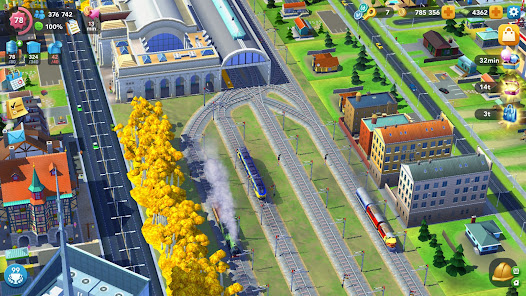
This guide covers simcity buildit gameplay overview with practical steps for mobile players.
Quick answer: SimCity BuildIt is a mobile city builder where you zone residential, commercial, and industrial areas, supply them with power, water, and services, and upgrade buildings by delivering goods produced in your factories and shops. Progress comes from population, which comes from upgrading houses. There is no combat and no fail state: the challenge is logistics, storage management, and keeping a growing city supplied.
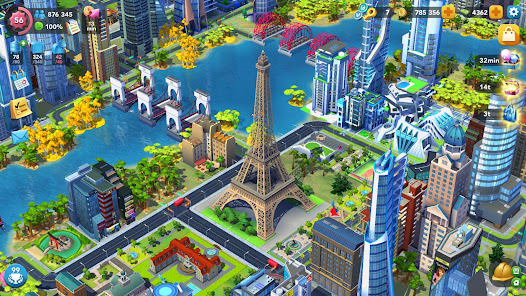
What is the core loop?
You produce materials in factories, turn them into goods at commercial buildings, and deliver those goods to houses to upgrade them. Upgraded houses hold more residents, and residents generate the tax income that funds everything else.
Everything in the game feeds that loop. Power and water let houses function, services keep them satisfied, and roads let the traffic move. None of it is decoration; each system exists to support population growth.
The pace is set by timers. Factories and shops run on schedules rather than instantly, so the rhythm of play is queue, wait, collect, deliver. Understanding that rhythm is the difference between a session that feels productive and one that feels like watching a progress bar.
What ties them together is storage. Every system produces something that has to be held somewhere, and the storage limit is what forces you to keep spending rather than accumulating.
On this page
What are the main systems?
Zoning and housing, utilities, services, production, storage, and the wider map with regions and events. Each interacts with the others, which is why a city can stall for a reason that is several systems away from where the symptom appears.
The systems are introduced gradually, and none is complicated on its own. The difficulty is in holding several of them in mind at once as the city grows.
Because the game is mobile, sessions are often short. The systems are designed around that: most progress happens through queued production rather than continuous attention.
| System | What it does | Failure symptom |
|---|---|---|
| Housing | Generates population and tax | Population stops rising |
| Utilities | Power, water, sewage | Buildings lose function or stall |
| Production | Materials and goods | Upgrades wait indefinitely |
| Storage | Holds materials and goods | Factories cannot deliver |
| Services | Satisfaction and safety | Complaints and slow growth |
Progress is also gated by materials rather than coins. Upgrading storage and expanding land both require specific items, which is why the game pushes you toward trading and clubs rather than purely solo play.
How does progression work?
Two tracks run in parallel. Population unlocks new buildings and features, while city level rises through activity and opens additional content.
Neither is bought directly. You cannot purchase your way to a higher level, which means progression reflects what you have actually built and delivered.
Premium currency sits alongside this as a shortcut for capacity and specific items, but it does not substitute for the underlying progression. A city with a large premium balance and no housing still has no population, and population is what the whole game is measured by.
A useful comparison is with waiting. If you would happily leave the game closed for a day, the timers cost you nothing. If you want to finish something now, the currency is what that impatience costs.
Is it pay to win?
It is playable without spending, and the game gives no competitive advantage to spending beyond speed. The premium currency buys time and capacity rather than power over other players.
That said, the timers are real. A player who spends will progress faster in wall-clock terms, which is the standard model for the genre rather than a flaw specific to this game.
The honest framing is that spending reduces waiting rather than unlocking anything a patient player cannot reach.
It also suits players who like planning more than reacting. The best sessions involve deciding what to queue and what to spend, rather than responding to something urgent happening on screen.
What kind of player enjoys it?
Players who like optimisation and logistics rather than action. The appeal is watching a system become efficient and a city fill in.
It suits short sessions. Checking in, collecting, queueing production, and closing the app is a complete and productive way to play.
It does not suit players who want immediate feedback on every action, because almost everything in the game is measured in waiting.
The visual style is brighter and more compact as well, which suits a phone screen and reads clearly at a glance rather than rewarding long examination of a large map.
How does it differ from the PC games?
It is a different design built for touch and for short sessions. The zoning is simplified, the simulation is lighter, and the timers exist because the format requires them.
That makes it a companion to the series rather than a mobile version of it. Expecting the depth of a desktop city builder will lead to disappointment; expecting a well-made mobile management game will not.
Judged on its own terms, it is one of the more polished entries in the mobile builder space, and it has lasted because the underlying loop is satisfying rather than because the presentation is impressive.
If you are starting out, the most useful habit is to keep production running and storage moving. Almost every early problem traces back to an idle factory or a full warehouse, and fixing those two things solves more than any single purchase.
Frequently asked questions
Is it free to play?
Yes, with optional purchases. The whole game is reachable without spending, more slowly.
Can I play offline?
Some progress continues through timers, but the game is built around being online for trading and events.
Is there combat?
No. Disasters exist as optional challenges rather than as threats to defend against.
How long does a city take?
There is no ending. Cities keep growing as long as you keep upgrading and expanding.
Do I need to play the PC games first?
No. It is a standalone game with its own progression.
For systems in detail, see the SimCity BuildIt hub.
Official game information: www.ea.com.