This guide covers hay day gameplay overview with practical steps for mobile players.
Quick answer: Hay Day is a farming game where you grow crops, raise animals, produce goods and sell them through orders, a roadside shop and a newspaper. Progress comes from upgrading buildings, unlocking new produce and joining a neighbourhood for derby events. It is built for short sessions, and the routine of planting, feeding and filling orders is the whole of the game.
Hay Day is one of the older farming games still running, and its design shows the benefits of that age. The systems are simple, the loop is well tuned, and there is very little that a new player can do wrong that cannot be undone in a week. That makes it unusually forgiving for the genre.
What do you actually do in Hay Day?
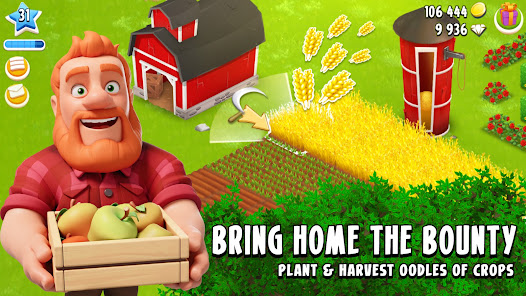
You plant crops in fields, feed animals for produce, and turn raw ingredients into goods at production buildings.
Those goods are sold through orders, the roadside shop and the newspaper, which pay coins and experience.
Coins fund buildings and upgrades; experience unlocks new levels and new produce. The two currencies pull you in slightly different directions, which is where most of the decisions live.
Everything runs on timers, which is why the game suits short check-ins rather than long sessions.
Levels also unlock the machines that make higher-value goods, which is why experience matters more than it first appears. A player who ignores orders levels slowly and unlocks slowly.
Storage upgrades deserve early priority once materials allow, because capacity is what lets every other system run without stopping.
Materials are the gate that catches everyone. Upgrading storage needs specific items, and the specific items are usually the ones you donated yesterday.
On this page
How does progression work?
Mostly through levels and building unlocks. Each level opens new crops, animals or production options, and each new building needs coins and materials.
Materials come from orders, events and the newspaper, which means progression is tied to participation rather than to a single activity.
Upgrading existing buildings matters as much as unlocking new ones, since capacity limits what you can produce at once.
The result is a broad progression rather than a linear one, and players who spread their attention tend to do better than those who chase a single track.
What is the neighbourhood for?
It provides the derby, which is the main competitive event and a significant source of rewards.
It lets you request goods from other members, which is the fastest way to fill a gap you cannot produce yourself.
And it gives you a chat channel, which is where coordination happens and where the group’s health is visible.
All three depend on activity, which is why a small engaged group is worth more than a large quiet one.
How do the selling channels differ?
Orders pay well and are predictable, but they occupy a vehicle and take time.
The roadside shop is passive: you list goods and other players buy them at your price.
The newspaper is immediate but unpredictable, since requests come from other players.
Using all three keeps your barn moving, and using only one usually leaves stock sitting while you wait.
There is no leaderboard for farm strength, which removes most of the pressure that drives spending in other games. The comparison you make is with your own farm a week ago.
Diamonds are best saved for storage and for the moment a single missing material blocks a large upgrade. Spending them on speed-ups returns very little by comparison.
The gentler framing is that spending buys convenience. Nothing in the game is locked behind payment, and no content requires it.
Is it pay to win?
It is playable without spending, and the game does not block progress behind a paywall.
Spending accelerates things that would otherwise take time, which is the standard model for the genre.
Because the game is slow by design, a patient player can reach most of the content without paying, just more slowly.
What money buys is time, and time is what the game is built around.
Who is it for?
Players who like routines, gentle progression and short sessions with a clear task list.
It is less suited to players who want a challenge or a story. There is no failure state and almost no narrative.
It is well suited to playing alongside something else: a few minutes to plant, feed and fill orders, then close it.
If that rhythm appeals, the game will keep offering it for years.
If you are deciding whether to start, the honest answer is that it depends on whether you want a routine. Hay Day is very good at being a small part of a day and rather poor at being a weekend project.
One thing that defines the experience is how forgiving it is. There is no failure state, nothing is lost by logging off, and a badly organised farm can be rearranged at no cost. That makes it a rare example of a game you cannot play badly, only slowly.
It also means the game is what you make of the routine. Players who check in twice a day and keep queues running progress steadily; those who log in once a week find a farm full of unharvested crops and idle animals.
Neither approach is wrong, and the game does not punish either. It simply rewards the first more, quietly, over months.
That patience-shaped design is why the game has lasted as long as it has, and why it suits people who want something calm rather than something demanding.
None of this is complicated, which is the point. Hay Day is a game about doing simple things consistently rather than doing difficult things well.
It is also worth knowing that the game has been running long enough to have a great deal of content. That is good for a long-term player and slightly overwhelming for a new one, since many systems unlock gradually rather than all at once.
Take them in order. The game introduces each one when it becomes relevant, and rushing ahead only means managing systems you do not yet need.
Frequently asked questions
Is Hay Day free?
Yes, and it is playable without spending. Purchases accelerate progress rather than unlocking it.
Can I play without a neighbourhood?
You can, but you lose derby rewards, goods requests and help with orders.
How often should I log in?
Two or three short visits a day keeps crops, animals and production running without gaps.
What should I spend coins on first?
Production buildings and capacity upgrades. They increase what you can make, which funds everything else.
Is there an ending?
No. The game is open-ended, and progress is measured in levels and unlocked content rather than in a finish.
For the basics, read how to earn coins, or return to the Hay Day hub.
Official game information: supercell.com.