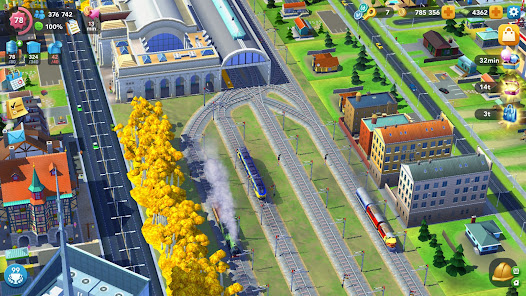
This guide covers simcity buildit how to earn simoleons with practical steps for mobile players.
Quick answer: Simoleons in SimCity BuildIt come from taxes on population, from selling materials and goods at the trade depot, and from completing city tasks and event objectives. The biggest and steadiest source is tax collection, which scales with the number of upgraded houses you own, so raising population is the most reliable way to raise income. Selling surplus is the second lever, and it costs you nothing but the materials you were not using.

Where does tax income come from?
Every occupied house generates tax revenue at intervals, and you collect it by tapping the tax icon when it is ready. The amount depends on how many residents you have and how developed their housing is, so an upgraded house pays more than a basic one.
That makes population growth the foundation of your economy. A city with many improved houses collects substantially more per cycle than one with many basic houses, and the difference compounds because the extra coins buy the utilities that allow further upgrades.
Collect regularly rather than letting it accumulate. Uncollected tax is not lost, but it is also not buying anything, and the early game is usually limited by cash flow rather than by total income.
On this page
How much does selling materials earn?
Materials sell for modest amounts individually, but surplus accumulates constantly because factories produce on a timer whether or not you need the output. Selling that surplus converts a wasted resource into coins at no cost beyond the trip to the depot.
Produced goods sell for more than raw materials, so turning materials into items before selling is usually better value, provided the commercial building is not needed for upgrades. The trade-off is time: goods take longer to make than the raw material takes to produce.
Do not sell items you need for an upcoming upgrade. The coins from a sale are easy to replace; the production time you then have to repeat is not, and it delays the population growth that generates your real income.
| Source | Reliability | Best for |
|---|---|---|
| Tax collection | Steady, scales with population | Long-term income growth |
| Selling raw materials | Constant but small | Clearing surplus storage |
| Selling produced goods | Higher value per item | Converting spare production |
| City tasks | One-off rewards | Early boosts and specific needs |
| Event objectives | Seasonal | Bursts of coins and premium items |
Are city tasks worth doing?
Yes, especially early. Tasks ask for small deliveries or simple actions and pay coins for completion, which is exactly what a new city needs. They also introduce the game’s systems one at a time, so completing them is a form of tutorial.
The rewards become less significant as your tax income grows, but the habit of clearing them is still worthwhile because they often unlock features and buildings that are otherwise unavailable.
Check the task list before spending materials on something else. A task asking for the item you were about to sell is a task you can complete for free, which converts a wasted sale into a reward.
Why does income feel slow at higher levels, and should you chase volume?
Because costs scale faster than tax revenue. Utilities, roads, and expansions all become more expensive, while each new house adds a smaller marginal amount of tax than the last one did relative to its cost.
The answer is not to stop upgrading but to upgrade more selectively. Improving houses that are already connected to existing utilities is cheaper per resident than expanding into a new area that needs new power and water infrastructure.
It also helps to stop buying decorations. Anything that does not produce income or increase capacity is a cost, and at higher levels those costs compete directly with the utilities that keep the city running.
What are the common income mistakes?
Letting tax sit uncollected is the first, and it is the easiest to fix. The second is hoarding materials that could be sold, which blocks storage and stalls the factories that produce them.
The third is spending coins on decorations before utilities. The fourth is expanding the city outward faster than the utilities can support, which produces complaints and loses the population you were trying to grow.
The fifth is ignoring events entirely. Seasonal objectives pay well for actions you would take anyway, and skipping them leaves a significant income source unused.
How does premium currency fit into the economy?
SimCash is separate from Simoleons and should not be treated as a faster version of the same thing. It buys permanent capacity, storage upgrades, and items that are otherwise slow to obtain, which makes it a tool for removing bottlenecks rather than for buying income.
The worst use is speeding up a production timer. A speed-up returns a few minutes, while a storage upgrade returns capacity that pays back every day afterwards. Judged that way, almost every timer in the game is worth waiting out.
The best use is the moment when a single missing item is the only thing between you and a large upgrade. Spending premium currency there converts a delay of days into an immediate gain, which is exactly what the currency is for.
Volume usually wins early, because the limiting factor is how much you can produce and sell before storage fills. A steady supply of cheap goods that always sells beats a slow, valuable item that clogs a warehouse slot for hours.
Later, the balance shifts. Commercial buildings unlock more valuable products, and the coins per unit start to matter more than the turnover, particularly once storage capacity can absorb the waiting time.
The practical approach is to keep one or two buildings on continuous fast production for steady income, and let the rest work on whatever the next upgrade needs. That combination provides cash flow and progress at the same time.
Frequently asked questions
What is the fastest way to earn Simoleons?
Upgrading houses to raise population, then collecting tax regularly. Selling surplus is a useful supplement.
Should I sell raw materials or goods?
Goods sell for more, but only if the commercial building is not needed for upgrades.
Do I lose uncollected tax?
No, it accumulates. But it is not earning anything while it sits there.
Are events worth the effort?
Yes. They pay coins and premium items for actions that overlap with normal play.
Why am I always short of coins?
Usually because expansion is outrunning utilities, or because coins are going into decoration.
For the wider economy, see the SimCity BuildIt hub.
Official game information: www.ea.com.