This guide covers good pizza great pizza how to interpret vegetarian orders with practical steps for mobile players.
Quick answer: A vegetarian order in Good Pizza Great Pizza means no meat and no fish, but everything else stays normal. Keep the dough, sauce and cheese, then add vegetable toppings the customer mentions or that clearly fit. The mistake to avoid is stripping the pizza down to plain cheese, which reads as ignoring the request rather than respecting it.
What counts as vegetarian in this game?
Vegetarian means the customer does not want anything that came from an animal that was killed for the pizza. Meat toppings and fish toppings are both out. Dairy is usually fine, so cheese stays on the pizza unless the customer says otherwise.
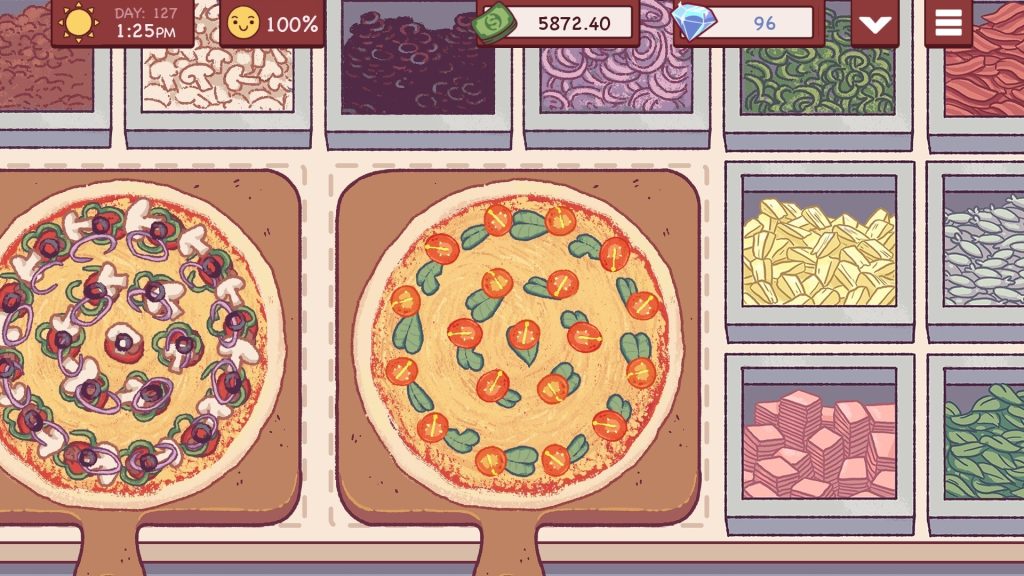
The distinction matters because players often hear vegetarian and immediately build the plainest pizza on the menu. That is not what was asked for. The customer wants a full pizza with vegetables, not an absence of toppings, and serving an empty base usually reads as a mistake.
Some orders use the word vegetarian directly, and some hint at it through a character’s preferences established earlier. Either way, the rule you apply is the same. Remove the meat, keep everything else, and let the vegetables carry the pizza.
It also helps to know that vegetarian and vegan are different requests in this game. Vegetarian allows cheese and other dairy, while vegan removes them. Treating the two as the same thing is the most common way players fail both orders in the same shift.
On this page
Which toppings should you avoid?
Anything that reads as meat is out. Pepperoni, sausage, ham, bacon and similar cured meats are the obvious ones. If a topping’s name describes an animal product, leave it off without hesitating, even if the customer mentioned it in passing.
Fish toppings count as well. Anchovies and shrimp are not vegetarian, and a customer who asked for a vegetarian pizza will not accept them just because they are not red meat. This is where a lot of players slip, because fish does not feel like the same category as pepperoni.
Watch the compound toppings too. A topping that sounds vegetable-based but is described as coming with meat, such as a mixed topping, should be treated as unsafe. When in doubt, leave it off and let the vegetables you are confident about carry the order.
Nothing else needs removing. Cheese, sauce, herbs and every vegetable you have unlocked are all fair game. Your job is subtraction of the meat, not subtraction of flavour, and the difference shows in whether the customer is satisfied.
How do customers phrase vegetarian requests?
Some customers say the word directly. Others describe what they do not eat, which is the same thing phrased differently. A customer who mentions they do not eat meat is giving you a vegetarian order whether or not they use the term.
Others frame it as a preference rather than a restriction. They might say they are not a meat person, or that they want something lighter. Those are softer signals, and the safe response is to build vegetarian rather than to gamble on a meat topping they did not explicitly forbid.
Regular characters in the story sometimes have established preferences, and the game expects you to remember them. If a character has previously refused meat, treat every later order from them as vegetarian unless they clearly change their mind in dialogue.
When the phrasing is genuinely ambiguous, choose the interpretation that cannot offend. A vegetarian pizza served to someone who would have accepted meat is a minor loss. A meat pizza served to a vegetarian customer is a failed order and a lost tip.
What about cheese and sauce?
Cheese stays. Vegetarian diets generally include dairy, and the game treats cheese as a standard component rather than a meat product. Only remove it when the customer specifically asks for no cheese, which is a separate request from vegetarian.
Sauce also stays. There is no vegetarian issue with tomato sauce, and removing it would give you a dry base that no customer asked for. Keep the normal build and focus your attention on the topping selection instead.
The one exception is when a customer combines requests. A vegetarian order with no cheese is a real thing, and it means you remove both the meat and the cheese. Read the whole sentence rather than acting on the first keyword you recognise.
This is where careful reading pays. Two orders can both contain the word vegetarian and require different builds, because one also contains a dairy restriction. The customer’s full sentence is the specification, not the single label.
How do you avoid getting vegetarian orders wrong?
Slow down at the topping stage. The build screen invites fast tapping, and fast tapping is how a pepperoni ends up on a vegetarian pizza. Place the vegetables deliberately, then check the finished pizza before it goes into the oven.
Use the visual check rather than your memory. Look at the pizza and ask whether anything on it came from an animal. That single question catches almost every error, and it takes less time than rebuilding a rejected order after the customer complains.
Do not assume that a previous order tells you what this one wants. The same customer can order differently on a later visit, and a vegetarian request is specific to the pizza in front of you. Treat every order as new information.
Finally, keep your topping layout consistent so mistakes stand out. If meat always sits in one area and vegetables in another, a stray meat topping is visible immediately. Consistency is a checking tool, not just a habit.
How should you handle an ambiguous vegetarian order?
Ask yourself what the customer would complain about. If the complaint would be that there is meat on the pizza, then the safe build is vegetarian. If the complaint would be that the pizza is too plain, then you have under-built and should add vegetables.
Lean towards inclusion of vegetables. A vegetarian pizza with several vegetables reads as a considered choice, while one with a single vegetable reads as an afterthought. The customer asked for a restriction, not for a lesser pizza.
If the order arrives during a busy stretch and you genuinely cannot resolve it, build the safer version and accept the smaller tip. Losing a little money on one order is better than losing the sale and damaging your reputation in the same moment.
After the shift, think about which phrasings caught you out. The game reuses its order language, so a phrasing you decode once will appear again, and the second time you will build it correctly without hesitating.
Frequently asked questions
Does vegetarian mean no cheese?
No. Cheese stays unless the customer separately asks for no cheese. Vegan is the order that removes dairy.
Are fish toppings vegetarian?
No. Anchovies and shrimp are animal products and should be left off a vegetarian pizza.
Should I serve a plain cheese pizza for a vegetarian order?
Only if they asked for plain cheese. Otherwise add vegetables, because the customer restricted the toppings rather than asking for an empty pizza.
What if the customer only hints at it?
Build vegetarian. The risk of an unwanted meat topping is worse than the risk of a pizza that is slightly too plain.
Do regular customers keep the same preference?
Usually yes. If a character has refused meat before, assume the same until their dialogue clearly says otherwise.
For the dairy-free version of this order, see the vegan order guide, and the Good Pizza Great Pizza hub collects the rest of the order-reading guides.
Official game information: www.goodpizzagreatpizza.com.