This guide covers good pizza great pizza how to use decorations with practical steps for mobile players.
Quick answer: decorations in Good Pizza, Great Pizza are cosmetic items that change how your shop looks without affecting how it performs. Use them freely, because there is no mechanical cost to decorating, and prioritise the areas customers actually see. They exist to make the shop feel like yours, which matters more in a game you return to daily than it might sound.
Decorations are the one part of the game with no numbers attached. They do not make pizzas faster, earn more money or unlock anything.
That makes them easy to skip and easy to enjoy, depending on what you want from the game.
What do decorations actually do?
They change the appearance of your shop. That is the whole effect.
There is no mechanical benefit and no penalty for ignoring them.
In a game built around orders and money, that makes decoration an outlier.
It is there for the pleasure of making the place look a certain way.
Nothing more and nothing less.
That is worth stating plainly because cosmetic systems in mobile games are often not cosmetic at all. They frequently carry stat bonuses, or they are the visible reward for spending money, or they exist to signal status to other players. None of that applies here.
The decoration in this game changes only what you see, and it changes it for nobody’s benefit but yours. There is no one to impress and no comparison to make, which makes the whole thing unusually restful.
You decorate because you want the shop to look a certain way, and the game is content to leave it at that.
On this page
Should you spend money on them?
Only when the shop is running comfortably. Money spent on decoration is money not spent on the menu or upgrades.
That is a real trade early on, when every purchase competes.
Later, when income is steady, the trade stops mattering and decoration becomes a reasonable use of spare funds.
The order is menu first, decoration second.
That is the same order as everything else in this game.
There is a useful way to judge the moment. If you can afford the decoration without delaying an upgrade you were saving for, you can afford the decoration. If buying it means the upgrade waits another week, the upgrade matters more.
That test is honest and it takes a second. It also removes the guilt that comes with spending on something purely aesthetic, because you have already established that nothing important is being postponed.
Spend freely once the test passes, and not before.
Which decorations are worth having?
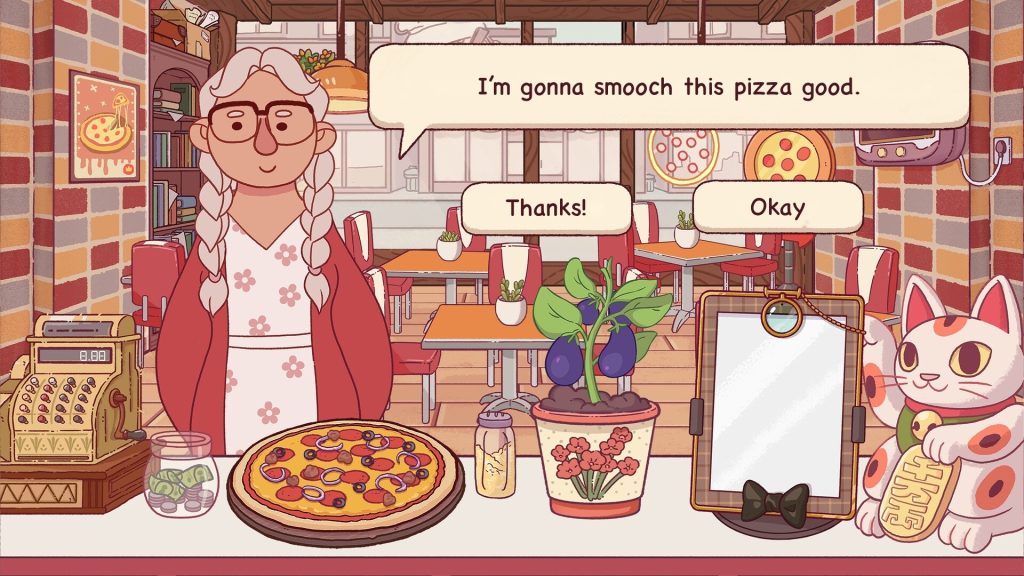
The ones in areas you look at. If the shop has parts you never notice, decorating them does nothing for you.
Focus on the counter and the space customers occupy, since those are what you see most.
That gives you the most visual change for the least money.
It also keeps the shop coherent rather than cluttered.
Do not decorate what you never look at.
There is a practical way to find your own priorities. Next time you serve a customer, notice where your eyes go. That is the part of the shop that decoration will actually change for you, because it is the part you experience.
Everything else is scenery you paid for and will not see. A back corner that only appears when you are rearranging is not worth a purchase, however nice it looks in the shop menu.
Spend on the view you actually have, and the money goes further.
Do decorations affect customers?
They do not appear to change orders, prices or how customers behave.
What they change is your experience of the game, which is a different kind of effect.
A shop you like looking at is easier to return to.
That matters over a long playthrough.
It is the same reason people personalise anything.
That is worth taking seriously rather than dismissing as a soft benefit. This is a game you might play for weeks, and the difference between a shop you like and a shop you tolerate is a real difference across that span. It affects whether you open the app.
Cosmetics that support that are doing more work than their label suggests, even if it never shows up in a number.
How do decorations fit the story?
The story is about your shop and the neighbourhood around it, so a shop that feels cared for fits the fiction better.
That is not a mechanic, it is just coherence.
Players who engage with the story often find decoration more meaningful for that reason.
It makes the place feel like somewhere rather than a service window.
Which is the point of having the option at all.
What are the common decoration mistakes?
Spending before the menu is ready. Decorating areas you never see. Buying everything available rather than choosing. And assuming decoration will change how the game plays.
The underlying mistake is either overvaluing or undervaluing a cosmetic system.
If you want a rule, decorate once the shop is comfortable and only the parts you look at.
That gives you the pleasure without the cost.
And if you never decorate anything, the game is fully playable and nothing is withheld. You will simply spend your days in a plain shop, which is a perfectly good way to play it.
The option is there for whoever wants it, and that is all it needs to be.
Frequently asked questions
Do decorations affect gameplay?
No. They are purely cosmetic.
Should you buy them early?
Only after the menu and upgrades are comfortable.
Which areas should you decorate?
The ones you look at most, usually the counter and customer space.
Do decorations change customers?
They do not appear to affect orders or behaviour.
Are decorations required?
No. You can ignore them entirely.
Decorate the parts you look at, once the shop can afford it, and enjoy the result. You can also start from the Good Pizza, Great Pizza hub.
Official game information: www.goodpizzagreatpizza.com.