This guide covers good pizza great pizza how to track repeat customers with practical steps for mobile players.
Quick answer: tracking repeat customers in Good Pizza, Great Pizza means noticing who comes back and what they ordered before, so you can serve them faster and more accurately next time. Keep a mental note of regulars and their preferences, greet them by what they like, and build the pizzas they asked for previously without needing the full explanation. Regulars are the cheapest income in the game because you already know the answer.
Repeat customers are easy to overlook because the game does not make a fuss about them. They just turn up again.
But they are the most reliable source of money in the shop, precisely because serving them takes less thought.
How do you recognise a repeat customer?
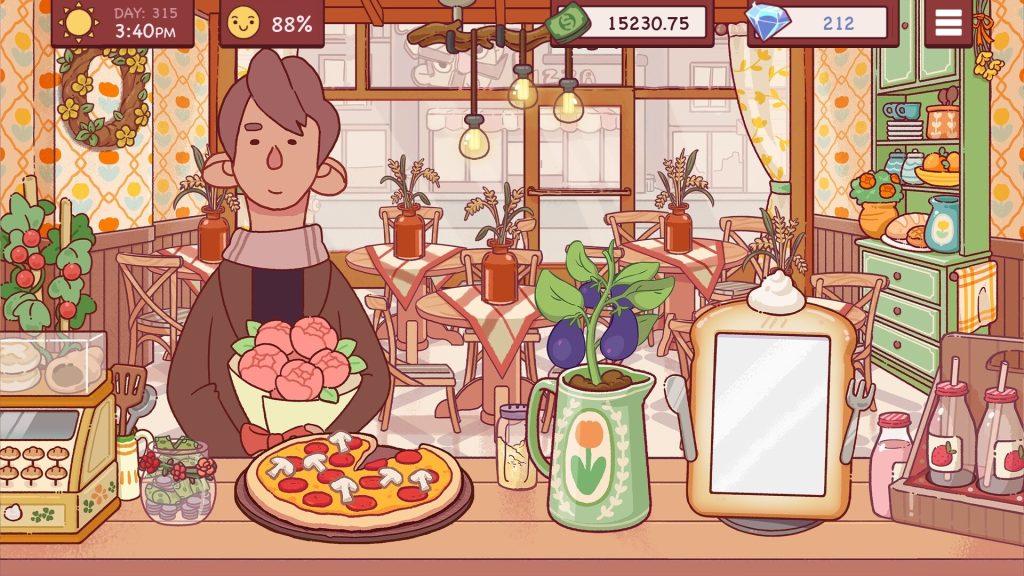
By their appearance and by what they order. Regulars tend to look the same and ask for something consistent.
The game does not label them, so recognition comes from familiarity.
That is a skill you build simply by paying attention across sessions.
After a few days you will start greeting them before they finish speaking.
That is the moment the system clicks.
There is a useful way to speed up the process. Instead of reading each order from scratch, start by looking at who is standing there. If you recognise them, you can begin building before you have finished reading, which is the whole advantage of a regular.
Players who read the pizza and ignore the person take the same time on every order forever. Players who read the person first get faster every week.
The difference across a long session is substantial, and it costs nothing to adopt.
On this page
Why do regulars matter?
Because they reduce the cost of each order. A new customer requires reading and interpretation; a regular requires recognition.
That saves you time, which in a busy stretch is the scarce resource.
They are also more forgiving, in the sense that you already know what they want and are less likely to get it wrong.
Both effects compound across a day of service.
The shop feels easier when you know the faces.
That is worth taking literally rather than as a soft claim. The game’s difficulty comes almost entirely from interpreting orders, and recognition removes that difficulty for the customers you know best.
A shop full of regulars is a shop where most orders are easy and a few are interesting, which is a much better rhythm than one where everything is a fresh puzzle.
Familiarity is the closest thing this game has to a difficulty setting.
How do you remember their orders?
By associating the order with the person rather than the other way around. Remember the customer, and the pizza follows.
That is how memory works naturally, and the game is designed to let it.
If someone is hard to remember, their order is probably unusual, which makes it easier to attach to them.
You do not need notes. You need enough attention across a few visits.
Most players remember more than they expect.
That is because the game gives you repeated exposure rather than a single introduction. The same few faces appear often enough that recognition happens without effort, and the order attaches to the face naturally.
You are not building a database. You are just paying attention to who is in front of you.
Players who worry about forgetting are usually the ones who have not tried, and the ones who try find it easy.
Should you serve regulars first?
If you can, yes, because they are faster and you know the answer. Clearing them quickly makes room for the harder orders.
That is a reasonable prioritisation and it is not unfair to anyone, since everyone gets served.
In a rush, order of service matters less than throughput.
Doing the easy ones first is simply efficient.
It also keeps the queue moving, which helps everyone.
Do regulars unlock anything?
They appear to be part of the game’s texture rather than a system with rewards attached.
What they give you is familiarity, which is a mechanical advantage in a game about reading orders.
They also make the shop feel populated by people rather than by requests.
That matters for the same reason decoration does: it makes the place worth returning to.
Both effects are real and neither shows up in a number.
It is worth noticing that this is the same pattern as decoration. The game repeatedly chooses atmosphere over advantage, and the things that make it memorable are the things that do not affect the numbers.
Regulars are part of that. They make the shop feel like a place with people in it, which is a different pleasure from optimising a menu.
What are the common repeat customer mistakes?
Not noticing them at all. Re-reading their order every time instead of remembering. Treating every customer as new. And ignoring the ones who come back most.
The underlying mistake is playing each order in isolation rather than building a picture of the shop over time.
If you want a rule, remember the customer and the pizza follows.
That single habit makes the whole game faster.
The most reliable signal is what a customer orders, not how often they appear. A returning customer who always asks for the same two toppings is telling you something you can act on, while a familiar face who orders at random is not.
It also helps to notice who stops appearing. A regular going quiet for several days usually means something changed, and checking whether their order became impossible to fill explains most of those disappearances.
Finally, resist the urge to treat every regular as a friend. Repeat business is a pattern in the orders, and a player who reads the pattern makes better choices than one who only remembers the face.
Frequently asked questions
Are repeat customers marked?
Not explicitly. You recognise them by appearance and by what they order.
Do regulars pay more?
They do not appear to, but they are faster to serve.
Should you keep notes?
You can, but most players remember more than they expect.
Should you serve regulars first?
If you can, since they are quicker and free up time.
Do regulars unlock anything?
They appear to be part of the game’s texture rather than a reward system.
Notice who comes back, remember what they asked for, and greet them before they finish. You can also start from the Good Pizza, Great Pizza hub.
Official game information: www.goodpizzagreatpizza.com.