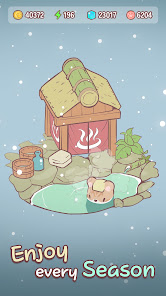
This guide covers cats and soup beginner guide with practical steps for mobile players.
Quick answer: Cats and Soup is an idle cooking game where cats prepare dishes at stations in a forest clearing, and your job is to keep those stations producing while you spend the earnings on upgrades. The three things that matter most are collecting finished dishes regularly, reinvesting gold into facility upgrades rather than hoarding it, and unlocking new recipes so your production has somewhere to grow. Play it as a game of compounding small improvements rather than a game you sit and grind.
The game looks passive and is actually about attention. Everything produces on a timer, and the difference between a well-run forest and a neglected one is whether you show up often enough to collect and reinvest. Players who check in briefly several times a day will always outgrow players who open the game once and expect progress to happen without them.
That is the frame for everything below. Your stations are the engine, gold is the fuel, recipes are the ceiling, and the cats are the workers who determine how fast any of it moves. Understanding how those four pieces fit together is most of what separates a smooth start from a slow one.
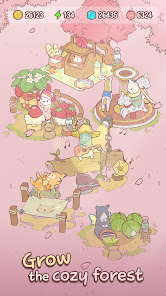
What are you actually doing in Cats and Soup?
You run a small cooking operation. Cats work at stations preparing dishes, each station produces on its own cycle, and tapping a finished station collects the dish and earns currency. The currency buys upgrades, and upgrades make the stations produce faster or produce more valuable dishes, which is the loop you will repeat for as long as you play.
Around that core sits a layer of decoration and collection. You furnish mini rooms, dress cats in costumes, unlock new cats and complete daily tasks. None of that is strictly required to progress, and all of it is where the game’s charm lives for players who stay past the first week.
The loop is deliberately gentle. There is no fail state and no way to lose progress by being away, which is why the game works as something you check between other things rather than something you dedicate an evening to. It asks for minutes, not hours, and it is designed to be put down.
Understanding this early matters, because players who expect a management challenge often bounce off in the first hour. The challenge here is optimisation over weeks, not decision-making under pressure, and the rewards arrive slowly enough that impatience reads as a flaw in the game rather than a flaw in the approach.
It is worth saying plainly that this is a game about returning, not a game about staying. The most efficient way to play is in short visits spread across a day, and the most enjoyable way is whatever fits around the rest of your life. Nobody who plays this well is sitting with it for three hours, and the design actively discourages that by making everything wait on timers you cannot rush without paying.
On this page
How should you spend your first gold?
On production upgrades, almost without exception. A faster or more valuable station earns more, which funds the next upgrade, which earns more again. That is the compounding loop the entire game is built on, and every early decision should be judged by whether it feeds that loop or interrupts it.
Avoid spending early gold on decoration. Furniture and cosmetics are a real part of the game and there is nothing wrong with enjoying them, but they do not increase your income, and early on your income is the binding constraint on everything else you might want to do.
The specific order matters less than the principle. Pick the station that produces most often and upgrade it first, then move to the next, rather than spreading small upgrades evenly across everything. Concentrated upgrades give you a visible return that funds the following purchase, while scattered ones leave you with a forest that is uniformly mediocre.
If you are unsure where to start, upgrade whatever you collected from most recently. That station is already producing at a rate you can measure, and improving it gives you a return you will notice within a session rather than a speculative benefit you have to take on faith.
Why do recipe points matter so much?
Because recipes are the ceiling on your income. A station can only produce the dishes you have unlocked, and better dishes are worth more. Without new recipes, upgraded stations eventually hit a limit where extra speed simply produces more cheap food, and your gold per hour stops climbing even though you keep investing.
Recipe points come from playing consistently rather than from a single action, which means they reward the habit of checking in. That is a deliberate design choice and it shapes how you should approach the game: the player who logs in for three minutes twice a day will accumulate recipe progress faster than one who plays for an hour once a week.
Spend recipe points as soon as you can rather than saving them for a perfect choice. A new recipe available now produces value for every hour until you would have chosen differently, and that accumulated value almost always beats the marginal benefit of a theoretically better pick made later. The exception is when two options are close and one clearly suits your current stations, in which case a short delay to decide is reasonable.
Keep an eye on which recipes your stations can actually produce. Unlocking something your forest cannot make yet is not progress, it is a plan, and plans do not earn gold while you wait for the facilities to catch up.
How do the cats fit into progression?
Cats are your workforce and your collection. Each cat has skills that affect how well it performs at a station, and improving those skills improves output. Cats also have individual looks and personalities, which is where most of the game’s appeal comes from for long-term players who have already optimised their forest and need another reason to return.
New cats arrive over time as you progress, and collecting them is one of the main long-term goals. Because each cat is visually distinct and can be dressed differently, the collection is the part of the game that keeps people playing after the upgrades stop being novel and the numbers stop feeling like a reward.
Practically, assign your best-skilled cats to your most productive stations. The difference is not dramatic at any single moment, but it compounds across a day of production in the same way that facility upgrades do, and over a month it is the difference between two forests that look similar and perform quite differently.
Do not neglect cats in favour of facilities. Both feed the same output, and a forest full of upgraded stations staffed by neglected cats produces less than it should. The two systems are meant to be developed together rather than treated as alternatives.
What should you do every day?
Collect from every finished station, spend the gold on upgrades, claim any daily rewards and complete the daily missions. That routine takes a few minutes and it is the difference between steady growth and stagnation, because everything in the game is gated behind the income that routine produces.
Check the event tab as well. Events hand out currency and items for doing things you were going to do anyway, and they are the main source of the premium-feeling rewards that free players receive. Ignoring them is the single largest source of missed value in a typical account.
Also collect your offline earnings when you return. The game keeps producing while you are away up to a limit, and claiming that is free value that disappears if you leave it sitting. It is the most generous thing the game does and the easiest thing to forget.
The routine is unglamorous and it is the whole game. Players who do it consistently end up with a forest that looks impossible to a new player, and they got there by pressing the same few buttons every day for weeks rather than by finding a clever trick.
What are the most common beginner mistakes?
Hoarding gold instead of upgrading. Spending early currency on decoration. Ignoring recipe points until stations are maxed. Forgetting to claim offline rewards. And treating the game as something to grind in one long session rather than check regularly, which is the mistake that makes the whole experience feel slow.
The underlying mistake is expecting the game to demand more of you than it does. It is a slow, gentle game, and the players who do best are the ones who accept that pace and let compounding do the work instead of trying to force progress through longer sessions.
If you find yourself frustrated by how slowly something is progressing, the answer is almost always that a station needs upgrading or a recipe needs unlocking, not that you need to play longer. Diagnose the bottleneck rather than adding hours, because adding hours to a bottleneck produces the same output more slowly.
Fix the bottleneck, check back later, and the game rewards you for it. That habit is worth more than any single optimisation, and it is available to every player regardless of how much they spend.
And if you take nothing else from this guide, take the ordering. Collect, upgrade production, unlock recipes, and only then think about decoration. Every player who feels stuck has broken that order somewhere, and every one of them can fix it by going back to the first step and working forward again.
Frequently asked questions
Do you need to spend money to progress?
No. Free players progress steadily by collecting regularly and reinvesting in upgrades.
How often should you open the game?
Several short visits a day beat one long session, because stations stop producing at their limit.
Is there a way to lose progress?
No, the game has no failure state. You can only fall behind by not collecting.
Should you upgrade everything evenly?
No. Concentrate upgrades so you can see the return and fund the next one.
What is the best use of early currency?
Production upgrades, because they increase the income that pays for everything else.
Start by upgrading your best station, unlocking recipes as points allow, and checking in often enough to collect, and the rest of the game opens up from there. You can also start from the Cats and Soup hub.
Official game information: www.hidea.co.kr.