This guide covers cats and soup how to decorate mini rooms with practical steps for mobile players.
Quick answer: mini rooms in Cats and Soup are the small decorated spaces attached to your cats, and they are where most of the game’s decoration happens. Furnish them with furniture coins rather than gold, finish one room before starting another, and choose pieces that suit the cat living there. They have no mechanical effect, but they are the main reason long-term players keep opening the game.
The mini rooms are the part of the game that is purely for you. There is no optimisation to perform and no return to measure, which makes them both the least important system mechanically and the one most likely to keep you playing.
Understanding that helps you spend on them without guilt and without damaging your income.
What are mini rooms for?
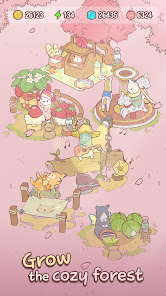
They are small spaces associated with individual cats, which you furnish with decorative items. Each one gives you a place to express a theme, a colour scheme or a mood for that particular cat.
They have no effect on production, recipes or cat skills. Everything they offer is visual, which is unusual in a game otherwise built around numbers.
That purity is the point. In a game where almost every action feeds an optimisation, the mini rooms are somewhere you can simply make something pleasant without justifying it.
Players who engage with them tend to describe the game differently from those who ignore them, and the difference is usually affection rather than efficiency.
On this page
How should you approach furnishing one?
Pick a theme before you buy anything. A colour, a style, a purpose. A room with a clear idea reads as intentional, while a room assembled from whatever was affordable reads as storage.
Then finish it. One completed room gives you more satisfaction than three partially furnished ones, and it also teaches you what the system can do before you commit coins elsewhere.
Choose pieces that fit the cat, if you have a sense of the cat’s character. The game gives each one a personality, and matching the room to it is a small pleasure that costs nothing extra.
Once a room is done, leave it alone. Rooms that keep changing never quite settle into something you like.
Which currency should you use?
Furniture coins, without exception. They exist for this purpose and they come from sources that do not compete with your production budget.
Using gold for decoration is the one genuine mistake available here. Gold is your engine, and every coin of it spent on a rug is income you will not earn back.
Because furniture coins accumulate from daily missions and events anyway, using them on rooms costs you nothing you would have spent elsewhere. There is no trade-off to weigh.
If you are ever tempted to spend gold on furniture, wait a day. The coins will usually arrive and the temptation will pass.
How many rooms should you decorate?
As many as you enjoy, and no more. There is no completion reward and no mechanical benefit, so the correct number is whatever sustains your interest.
Some players decorate one favourite room and ignore the rest. Others gradually furnish every cat’s space over months. Both are reasonable, and neither is more correct than the other.
The only argument for decorating more is that variety keeps the forest interesting, and an interesting forest is one you return to. In an idle game, returning is the whole game.
So decorate enough that you look forward to opening the app, and stop when it starts feeling like a chore.
Do mini rooms affect anything at all?
Not mechanically. They do not change production, they do not improve cats and they do not unlock anything.
What they affect is your relationship with the game. A forest you have made your own is a forest you want to check on, and checking on it is what drives every other system forward.
That is an indirect benefit rather than a direct one, and it is still real. Players who feel ownership of their space play for months longer than those who treat it as a spreadsheet.
So the return on decoration is your own engagement, which is worth more than any single upgrade.
That is a strange thing to say in a guide about optimisation, and it is true anyway. The players who burn out on idle games are usually the ones who optimised everything and found nothing left to enjoy.
Leaving one part of the game unoptimised, purely for pleasure, is a reasonable defence against that.
What are the common mini room mistakes?
Spending gold on furniture. Starting five rooms and finishing none. Buying pieces that do not suit the space or the cat. And avoiding the system entirely because it does not increase income.
The underlying mistake is applying an efficiency mindset to a feature that was never designed for efficiency. The rooms are there to be enjoyed, and judging them by their return misses the point.
Give yourself permission to spend furniture coins on something purely pleasant. That is what they are for, and the game is better for having a corner that is not optimised.
Decorate one room properly and see whether it changes how you feel about opening the app.
It is also worth looking at what other players have done, if the game offers any way to see it. Seeing a themed room someone else built is usually more instructive than any amount of browsing the furniture catalogue.
You do not have to copy anything. What you are looking for is a sense of what is possible, because the hardest part of decorating is usually deciding what the room should be.
Once you have an idea, the pieces are easy. It is the idea that takes thought, and other people’s rooms are the fastest way to find one.
Frequently asked questions
Do mini rooms give bonuses?
No, they are purely decorative with no mechanical effect.
Should you buy furniture with gold?
No. Furniture coins exist for this and do not compete with production.
Can you change a room later?
Yes, though rooms that keep changing rarely settle into something you like.
How many rooms should you furnish?
As many as you enjoy. There is no target or reward.
Are mini rooms worth the time?
They do not increase income, but they make the game more appealing to return to.
Furnish one room properly with furniture coins, choose a theme, and see whether it makes the forest feel like yours. You can also start from the Cats and Soup hub.
Official game information: www.hidea.co.kr.