This guide covers good pizza great pizza how to prepare for story chapters with practical steps for mobile players.
Quick answer: preparing for story chapters in Good Pizza, Great Pizza means keeping your menu broad, your money healthy and your shop upgraded before a new chapter starts. Story progress usually brings new customers and harder requests, so arriving with a thin menu or empty wallet makes it harder than it needs to be. Build up during the quiet stretches rather than during the chapter.
The story is the spine of the game. Chapters introduce characters, conflicts and requests, and they push you to expand.
Because chapters tend to arrive with new demands, the preparation you do beforehand matters more than anything you do once they start.
What happens when a chapter starts?
New customers appear, some with requests you have not seen before. The story moves forward and the shop’s role in it develops.
That usually means a wider range of orders than you were handling before.
If your menu is narrow, those orders become refusals.
The chapter does not wait for you to catch up.
That is why arriving prepared is the whole task.
There is a useful way to think about chapters. Each one is a test of how well you have been running the shop during the quiet periods, not a test of how well you perform under pressure. If you kept the menu broad and the money healthy, the chapter is a series of ordinary orders with new faces attached.
If you did not, every unfamiliar request becomes a refusal and the story stalls while you catch up. The chapter is not harder than the game; it is just less forgiving of the neglect that came before it.
So the question to ask is not how to beat a chapter, but how to be the kind of shop that a chapter cannot hurt.
On this page
What should you have ready?
A menu that covers most common requests. Money in hand for whatever the chapter makes available. And upgrades that keep service fast enough.
Those three cover almost every surprise a chapter can produce.
The menu is the most important, because a missing ingredient is the one problem you cannot solve on the spot.
Money you can earn during the chapter; ingredients you cannot.
Prioritise accordingly.
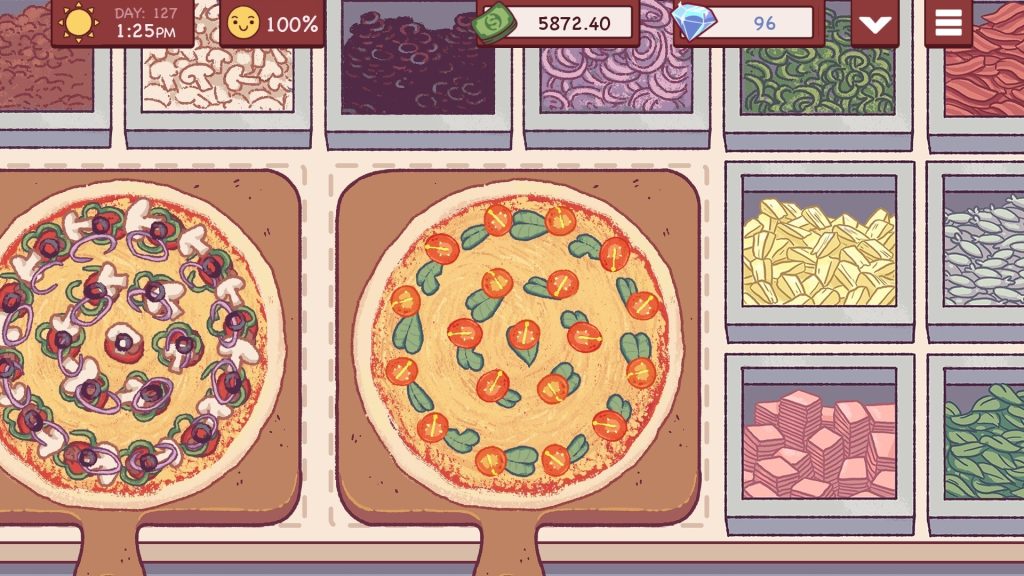
It is worth being concrete about what a broad menu means in practice. You want coverage of the categories customers ask about: the vegetables, the meats, the cheeses and the things people request by mood rather than by name. A menu that is deep in one category and empty in another will keep producing refusals no matter how much money you have.
Breadth is what prevents refusals. Depth is what makes individual pizzas better. Early on you want breadth, and it is not close.
How do you know a chapter is coming?
The game usually signals it. Between chapters there is a stretch of ordinary service, and that is your window.
If the story has been quiet for a while, assume something is coming and use the time.
That is a better use of a quiet period than coasting through it.
Quiet stretches are exactly when preparation is cheapest.
During a chapter you are too busy to prepare.
That is the practical argument for acting early. Preparing during a busy chapter competes with serving customers, and serving always wins because it pays immediately. The result is that preparation keeps getting deferred until the chapter is over, at which point the pressure is gone and it gets deferred again.
The quiet period is the only time when preparation is both cheap and easy. Use it, and the cycle breaks.
If you are not sure whether you are in a quiet period, look at whether you have refused anyone recently. No refusals means you have room to work.
Should you rush the story?
No. Rushing usually means arriving at a chapter under-equipped, which produces refusals and frustration.
The pace is set by your shop, not by the story’s schedule.
Take the quiet periods and use them.
Players who move slowly through the game tend to find it easier than those who push.
There is no prize for finishing quickly.
It is worth saying that the story in this game is genuinely worth reading, and rushing past it costs you the best part. The chapters are where the characters and the humour live, and they are the reason people remember the game rather than just playing it.
Moving slowly means you actually notice them.
So the slow approach is not just safer mechanically; it is the better way to experience what the game is offering.
How does preparation connect to the rest of the game?
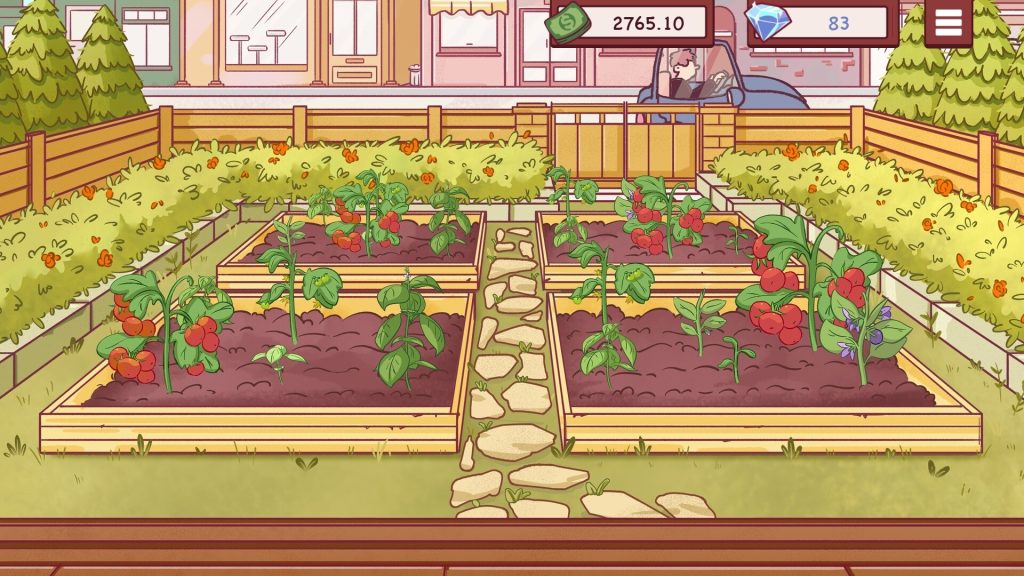
Everything you do outside the story feeds into it. The garden supplies ingredients, the menu determines what you can serve, and upgrades determine how fast.
That means preparation is not a separate activity; it is just the normal loop applied deliberately.
Players who keep the routine running are always prepared without thinking about it.
The ones who struggle are usually the ones who let the routine lapse.
Steady play is the preparation.
What are the common chapter mistakes?
Arriving with a narrow menu. Spending everything right before a chapter. Rushing the story. And ignoring quiet periods instead of using them.
The underlying mistake is treating the story as the main event and everything else as downtime.
If you want a rule, use the quiet stretches to widen your menu and save some money.
Then a chapter is an opportunity rather than a wall.
Frequently asked questions
Do chapters bring new customers?
Usually yes, often with unfamiliar requests.
Should you rush the story?
No. Arriving under-prepared makes chapters harder.
What should you prepare?
A broad menu, money in hand and adequate upgrades.
When is the best time to prepare?
During the quiet stretches between chapters.
Is the story required?
It is the main progression, so yes, but at your own pace.
Use the quiet stretches to widen your menu and save, then meet each chapter with options. You can also start from the Good Pizza, Great Pizza hub.
Official game information: www.goodpizzagreatpizza.com.