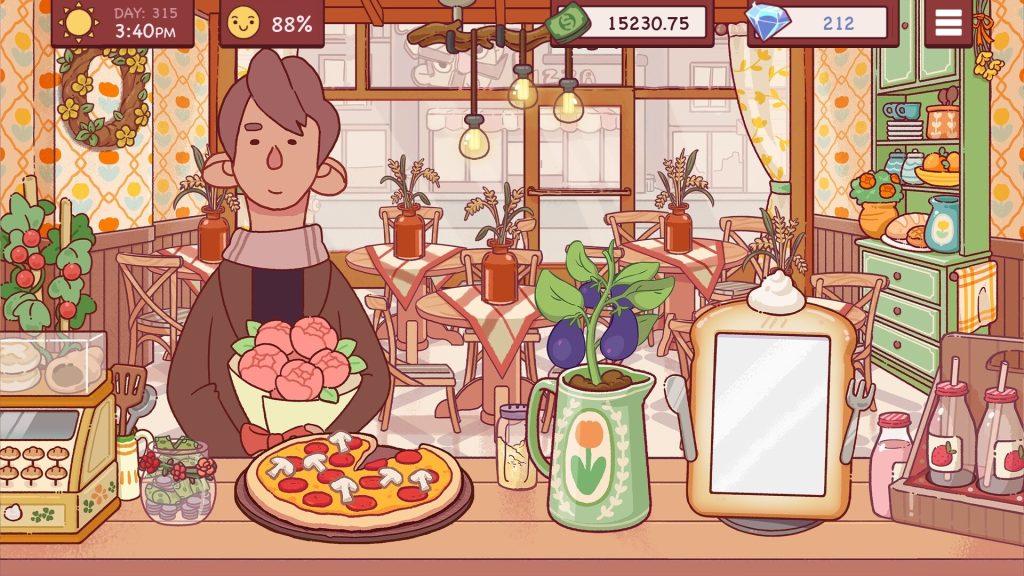
This guide covers good pizza great pizza how to read customer clues with practical steps for mobile players.
Quick answer: customer clues in Good Pizza, Great Pizza are the ways people describe an order without naming it directly, and the skill is taking them literally rather than cleverly. If someone says no meat, they mean no meat, not less meat. Read the wording carefully, build exactly what was asked for, and do not add anything they did not request.
This is the core skill of the game and the source of most of its frustration. Customers describe what they want in ordinary language, and ordinary language is ambiguous.
The good news is that the game rewards a specific kind of reading: literal, careful and uncreative.
What counts as a clue?
Any part of an order that describes rather than names. A customer might mention a dietary preference, a dislike, a mood or an occasion.
Some of those translate directly into ingredients; others narrow the range.
The trick is to treat every word as information rather than decoration.
People in this game do not usually waste words.
If they mention something, it is there for a reason.
That principle is the whole guide in one line. Clues are not flavour text and they are not small talk.
When a customer tells you about their day, the detail usually connects to what they want.
Reading for information rather than for tone is the skill.
It takes practice and it is entirely learnable.
On this page
How literal should you be?
Completely literal. The most common mistake is overthinking an order and producing something cleverer than requested.
If someone asks for a plain pizza, a plain pizza is correct even if it looks boring.
If someone says they do not want a particular thing, leaving it off is the whole answer.
The game is not trying to trick you; it is testing whether you read carefully.
Creativity costs you money here.
That is the hardest lesson for players who like cooking games. You want to make something nice, and the game wants you to make something correct.
Correct pays better.
Once you accept that, orders become much easier and your earnings climb.
How do you handle dietary requests?
Treat them as strict constraints. A vegetarian order means no meat of any kind, and a vegan order goes further still.
That is where most errors happen, because it is easy to forget that a topping you think of as a vegetable might be prepared with something else.
When in doubt, leave it out.
An under-topped pizza that respects the constraint is better than a generous one that violates it.
The customer will tell you either way.
That feedback is useful rather than punishing. A refusal teaches you which constraint you missed.
Over time you build a sense of how strictly these requests are enforced, and it is usually strictly.
Treat every dietary line as a hard boundary and you will rarely go wrong.
When should you ask for clarification?
When the order genuinely does not determine an answer. That happens less often than it feels.
Most apparent ambiguity resolves if you read the whole sentence rather than the first half.
If you still cannot tell, choose the interpretation that includes less rather than more.
Under-delivering on an ambiguous request is usually tolerated; adding something unwanted is not.
That asymmetry is worth remembering.
It applies to almost every order in the game. A sparse pizza that matches the request beats a generous one that does not.
Players who want to be generous with toppings lose money for it.
Save the generosity for when it is asked for.
What happens when you get it wrong?
The customer reacts, you lose the sale or the tip, and you move on.
The cost is real but small, and it is the fastest way to learn.
More useful than avoiding mistakes is noticing the pattern behind them. If you keep misreading the same kind of phrasing, that is the thing to fix.
Most players have one or two recurring blind spots.
Finding yours is worth more than memorising a list.
There is a practical way to find it. After a refusal, ask yourself which single word in the order you ignored. That word is your blind spot, and it will appear again.
Most players have one pattern they consistently miss, and it is usually a negative: something the customer said they did not want. Negatives are easy to skim past because the rest of the sentence carries the meaning.
Reading for exclusions rather than inclusions fixes it, and it takes about three orders to become automatic.
That single adjustment is worth more than any topping list.
What are the common clue-reading mistakes?
Overthinking. Adding unrequested toppings. Missing a dietary constraint. Reading half a sentence. And assuming an order is a trick when it is not.
The underlying mistake is treating the customer as an adversary rather than as someone describing what they want.
If you want a rule, build exactly what was said and nothing else.
That approach gets most orders right and the rest close enough.
It also makes the game calmer. Players who treat every order as a puzzle to solve tend to find the whole thing stressful, while players who read plainly and serve plainly find it relaxing.
The customers are not testing your imagination. They are telling you what they want and waiting to see whether you listened.
Frequently asked questions
Are customer orders deliberately vague?
Sometimes, but usually they are just phrased in ordinary language.
Should you add extra toppings?
No. Only what was asked for.
How strict are dietary requests?
Treat them as absolute constraints.
What if an order is ambiguous?
Choose the interpretation with fewer ingredients.
Do mistakes cost much?
You lose the sale, but the lesson is usually worth it.
Read carefully, build literally, and add nothing that was not asked for. You can also start from the Good Pizza, Great Pizza hub.
Official game information: www.goodpizzagreatpizza.com.