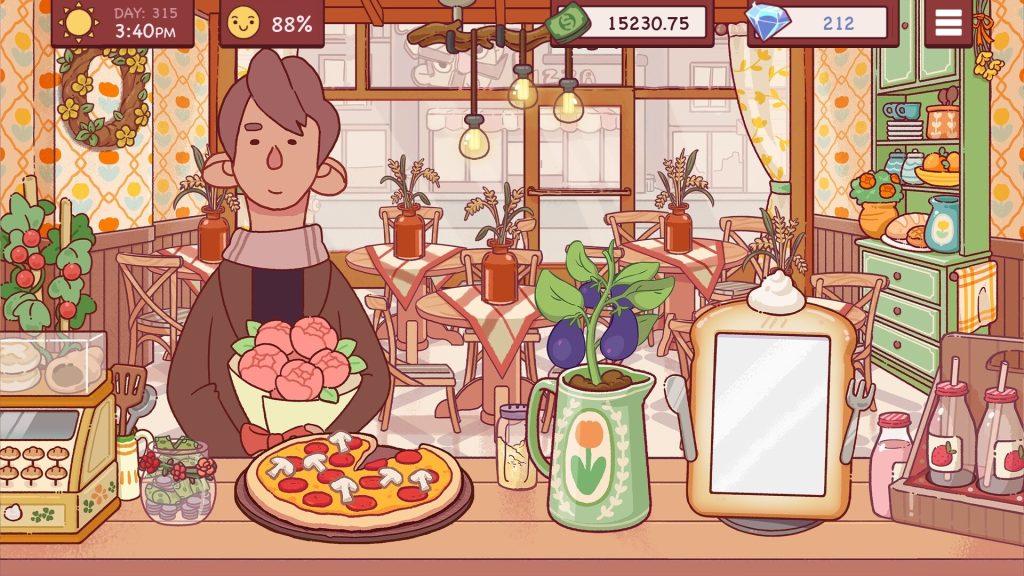
This guide covers good pizza great pizza how to recognize no pain no grain orders with practical steps for mobile players.
Quick answer: No Pain No Grain is a customer who orders in clues rather than plain instructions, and the trick is to translate the riddle into toppings before you start placing anything. Read the whole order first, identify the phrase that names each ingredient, and only then build the pizza. Rushing straight to the oven is how most of these orders get failed.
This order type exists to test whether you are reading or skimming. The clue is not hidden; it is just phrased as a description rather than a list.
Players who fail these orders usually do so because they started cooking before finishing the sentence. The fix is a small change in habit rather than any special knowledge.
Once you have seen a few of them, the pattern becomes obvious and they stop being a problem.
What follows is how to approach them systematically.
Practising the vocabulary
The fastest way to get comfortable with these orders is to replay a few of them deliberately rather than waiting for them to appear at random.
When one arrives, take a moment to write down the phrase and what you concluded it meant. Seeing the mapping written out makes it stick far better than simply getting it right once.
If the game lets you revisit earlier days, use that to encounter the order type in a low-pressure setting where a mistake costs you little.
Even without replaying, paying attention to the phrasing the first time it appears is usually enough. The vocabulary is small and the clues are consistent.
Most players find that after three or four encounters they no longer have to think about it, because the phrases have become familiar rather than puzzling.
That transition from decoding to recognising is the whole learning curve for this order type.
Once you cross it, these orders become a reliable source of income rather than a source of frustration.
On this page
What makes these orders different
Most customers in the game tell you what they want in plain language. This one describes the pizza indirectly, using phrases that reference the ingredients rather than naming them.
The phrasing is consistent once you know it. Each clue maps to a specific topping, and the mapping does not change between visits.
That consistency is why the order type becomes easy after a few attempts. It is a vocabulary problem rather than a logic puzzle.
The difficulty is entirely in the first encounter, when you do not yet know the vocabulary and have to infer it.
After that, it is a reading-comprehension exercise you have already solved.
Worth noting is that the clues describe ingredients rather than quantities. You are not being asked to work out how much, only what.
How to decode a clue
Read the whole order before touching any ingredient. The clues often relate to each other, and understanding the full sentence is easier than decoding fragments.
Look for the noun phrases. Each one usually describes a topping in terms of what it is or where it comes from.
If a phrase is ambiguous, consider which interpretation fits the rest of the order. The clues are designed to be consistent with each other.
When you think you have the full set, check it against the pizza before baking. A moment of verification is cheaper than a remake.
If you are still unsure, serve your best interpretation rather than abandoning the order. A near-miss still earns something, while a refusal earns nothing.
Common phrases and what they mean
The clues tend to reference ingredients by their origin, their appearance or their role in a meal. A phrase about something growing in a field points to a vegetable.
Phrases about the sea point to fish or seafood toppings. Phrases about something being cured or preserved point to a processed meat.
Once you notice the categories, the specific topping usually becomes obvious from the remaining options available to you.
You do not need to memorise a list. You need to recognise the category, then pick the ingredient that fits it.
That approach works even for clues you have not seen before, which is what makes it reliable.
Why players get these wrong
The most common cause is starting to build before reading the full order. The first clue is understood, the hands move, and the second clue is missed.
The second cause is overthinking. Players look for hidden meanings when the clue is a straightforward description.
The third is misreading a single word and committing to the wrong ingredient without checking.
Notice that all three are about pace rather than knowledge. Slowing down for two seconds solves most of them.
If you are failing these orders repeatedly, the answer is almost certainly to read twice and build once.
Building good habits around them
Treat the order text as part of the job rather than as an interruption. Reading is not wasted time; it is the task.
Keep the ingredient list visible while you work so you can map clues to options without searching.
When you get one wrong, note which phrase misled you. That single habit turns each mistake into permanent knowledge.
Over a few days, the vocabulary becomes automatic and these orders stop slowing you down at all.
At that point they become one of the more satisfying order types, because you are being tested on attention rather than speed.
Frequently asked questions
Do the clues change between visits?
The phrasing is consistent, so what you learn carries over. Treat each new phrase as vocabulary to acquire.
What happens if I serve the wrong pizza?
You lose the payment and the tip. The customer leaves unhappy, but nothing permanent is lost.
Should I guess if I am unsure?
Serve your best interpretation. A near-miss earns something, while not serving earns nothing.
Are these orders common?
They appear regularly enough that learning the vocabulary is worth the effort.
Is there a way to skip them?
Not really. The practical approach is to read carefully and build the habit.
For more, see reading customer clues and solving all dressed orders. More coverage is on the Good Pizza, Great Pizza hub.
Official game information: www.goodpizzagreatpizza.com.