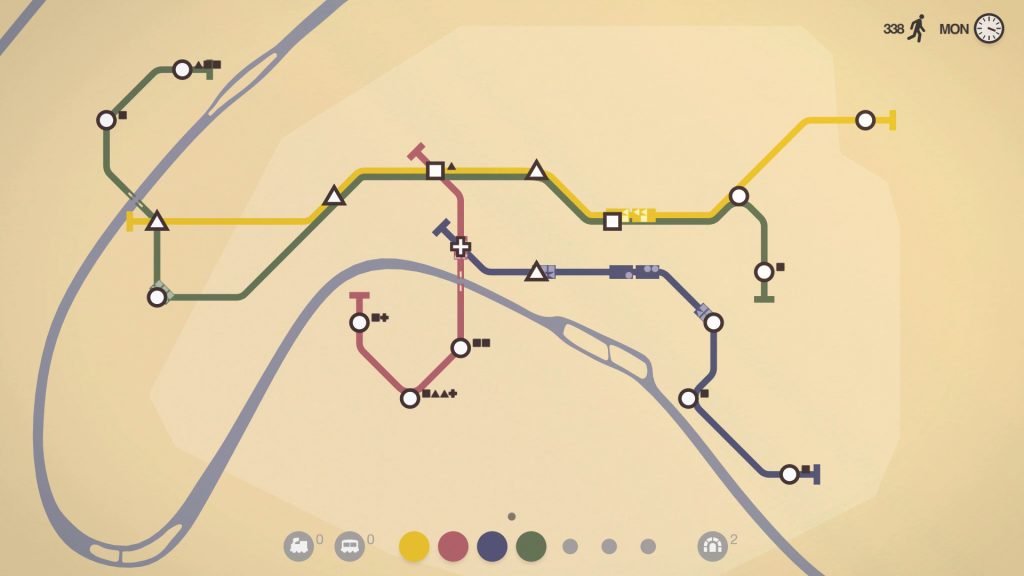
This guide covers mini metro normal vs extreme mode with practical steps for mobile players.
Quick answer: Normal mode in Mini Metro lets you pause, edit lines freely, and recover from mistakes. Extreme mode removes those safety nets: you cannot pause, editing lines costs you, and the pressure is higher throughout. Learn the maps in normal mode first, then switch to extreme once you can read a network without stopping to think.
The mode is selected at the start of a run, so decide before you begin rather than after a mistake.
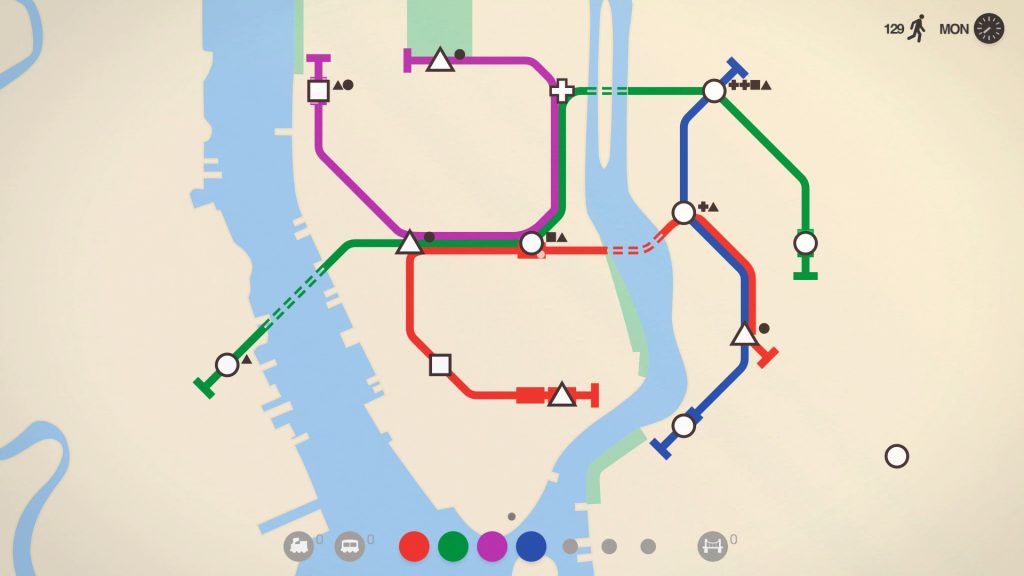
What changes in extreme mode?
Extreme mode is the same game with the safety nets removed. The most immediate difference is that you cannot pause, which means decisions happen while the network is running.
Line editing is also restricted. In normal mode you can reroute freely and experiment; in extreme mode, changes carry a cost that makes you commit.
That turns the game from a puzzle you can study into one you have to read in real time.
The maps are the same, which is why experience on them transfers directly.
What changes is how much time you have to apply that experience.
It also changes what you are practising. With a pause, you practise analysis; without one, you practise recognition.
Both are useful, but recognition only develops after analysis has been done many times.
On this page
Why does pausing matter so much?
Because the game is fundamentally about reading a situation and choosing a response. Pausing turns that into a calm decision; no pause turns it into a reflex.
In normal mode you can stop, scan every station, and plan a reroute. In extreme mode the stations keep filling while you look.
That makes normal mode the better teacher and extreme mode the better test.
Players who learn with the pause available build the same understanding, just with more time to form it.
Removing the pause tests whether that understanding became instinct.
| Feature | Normal mode | Extreme mode |
|---|---|---|
| Pause | Available | Not available |
| Line editing | Free | Restricted |
| Forgiving of mistakes | Yes | No |
| Learning value | High | Low until experienced |
| Test of skill | Moderate | High |
Watch how often you use the pause. If you barely touch it, you are ready to try without it.
That is a better readiness test than completing a certain number of runs.
If you find yourself restarting constantly in extreme mode, the answer is not more attempts but more time in normal mode.
Should a new player start in extreme mode?
No. The lack of pause makes it very difficult to learn anything, because you cannot study a failure before it happens.
Start in normal mode, learn each map’s geography, and get a feel for how quickly stations fill.
Once you can look at a network and know which station will fail first, you are ready.
That instinct is what extreme mode actually tests, and it cannot be rushed.
Switching too early just produces frustration without teaching anything.
Play each map at least a few times in normal mode. The second run always reveals something the first did not.
Geography takes repetition to learn, and there is no shortcut around it.
How should you prepare for extreme mode?
Learn each map in normal mode until you know where the demand concentrates. Geography is the part that does not change.
Practise keeping one upgrade in reserve, since you will not be able to pause and plan when a crisis appears.
Build the habit of scanning the whole map regularly rather than focusing on one area.
And practise short lines, because long routes are far harder to manage without pausing.
Those four habits are what make the transition survivable.
The shift is mostly psychological. In extreme mode you play the network you have rather than the one you were planning to build.
That is a different mindset from normal mode, where planning ahead is usually correct.
Conservative play also means accepting slower growth. An extreme run that lasts longer but scores lower is usually the better attempt.
What changes about strategy?
Everything becomes more conservative. You take fewer risks, extend less ambitiously, and prefer fixes you know will work over fixes that might.
That usually means more trains and fewer new lines, since a train is a predictable improvement while a new line is a commitment.
Interchanges become even more valuable, because they solve routing problems without requiring you to extend anything.
And keeping a reserve matters more, because the moment you need to react arrives without warning.
Extreme mode rewards the cautious version of every decision.
Normal mode is for learning and extreme mode is for testing. Playing them in that order is the only reliable path between them.
Frequently asked questions
Is extreme mode harder?
Yes. The maps are the same, but the lack of pause and restricted editing raise the pressure considerably.
Can I switch modes mid-run?
No. The mode is chosen when the run begins.
Does extreme mode change the maps?
No. The geography is identical, so map knowledge carries over directly.
Is extreme mode worth playing?
Yes, once you can read a network quickly. Before that it teaches very little.
Which mode should I learn on?
Normal mode. The pause is a teaching tool rather than a crutch.
The sixth is expecting the same score. Extreme runs end sooner, and that is the mode working as intended.
Comparing the two directly is a good way to feel worse about both.
The seventh is forgetting that the pause is gone during a crisis, when the instinct to stop and think is strongest.
What are the common extreme mode mistakes?
Starting there as a beginner is the first, which produces frustration rather than learning. The second is editing lines recklessly, which costs you in a mode that punishes it.
The third is extending ambitiously, since there is no pause to recover from a bad reroute. The fourth is failing to scan the map, which is fatal without a pause.
The fifth is playing it like normal mode and expecting the same freedom.
That expectation is the main reason people bounce off extreme mode, because everything they learned to rely on has been taken away.
For mode comparison, see the Mini Metro hub.
Official game information: dinopoloclub.com.