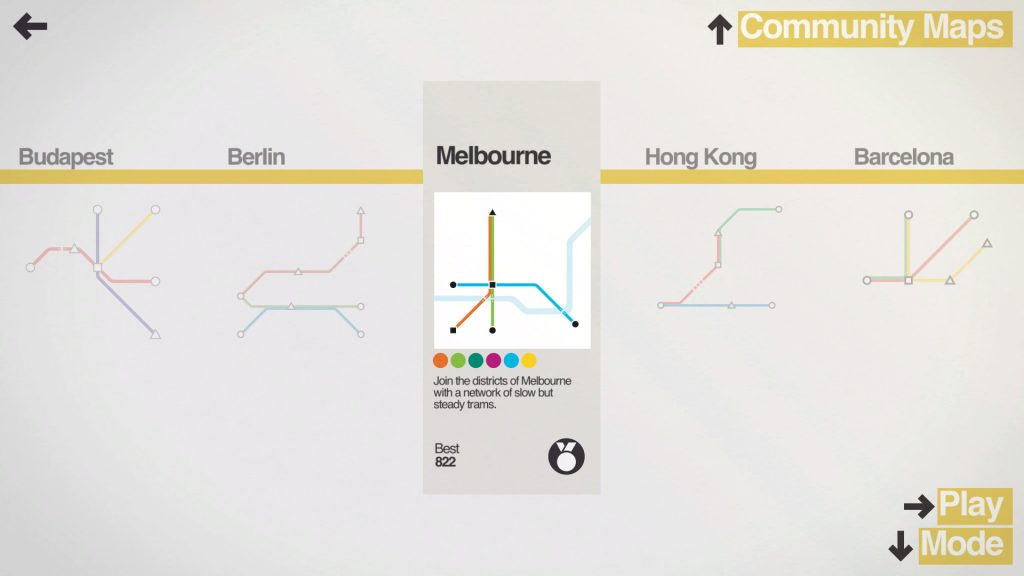
This guide covers mini metro vs railbound with practical steps for mobile players.
Quick answer: Mini Metro and Railbound share a calm, minimalist look but are different kinds of game. Mini Metro is a live network game where pressure builds until the system fails, while Railbound is a puzzle game with fixed solutions and no timer. Choose Mini Metro if you want escalating pressure and repeated attempts, and Railbound if you want to solve something and move on.
It also affects how you play. Metro rewards peripheral attention; Railbound rewards focused staring at a small board.
Those are different mental states, and most people want one or the other on a given evening.
What does each game actually ask of you?
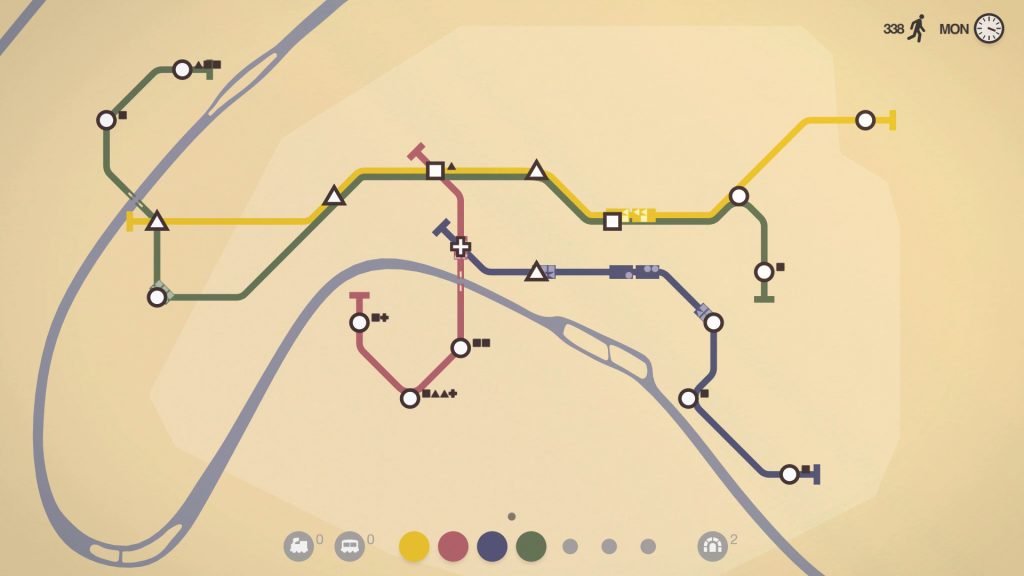
Mini Metro asks you to manage a growing network in real time. Stations appear, passengers accumulate, and you respond with limited resources until the pressure overwhelms you.
Railbound asks you to arrange track so a train can reach its destination. Each level has a solution, and finding it is the whole task.
One is a system you maintain; the other is a problem you solve.
That distinction shapes everything else, from session length to how failure feels.
They look similar in screenshots and feel completely different in play.
That difference changes how you feel about a mistake. In Metro you feel the loss of a run; in Railbound you feel a small puzzle click into place.
Neither is better, but they produce very different sessions.
Both games use clean lines, soft colours and a limited palette, which is why they get compared so often. The similarity is almost entirely visual, and the moment you start playing they diverge sharply.
On this page
How does failure work in each?
In Mini Metro, failure is gradual and cumulative. Stations fill slowly, the warning rings grow, and you usually see it coming.
In Railbound, failure is immediate and binary. The train either reaches the end or it does not, and you undo and try again.
That makes Metro the more stressful of the two, because you are managing a decline rather than solving a puzzle.
Railbound’s failure costs nothing but a moment of thought, while Metro’s costs the run.
Players who dislike pressure will notice that difference immediately.
| Factor | Mini Metro | Railbound |
|---|---|---|
| Format | Live network | Fixed puzzle |
| Pressure | Escalating | None |
| Failure | Run ends | Undo and retry |
| Content | Repeatable maps | Authored levels |
| Feeling | Tension | Contemplation |
Consider what you want your hands doing. Metro keeps them busy drawing and rerouting; Railbound keeps them mostly still.
For some people, busy hands are the relaxing part.
The pressure difference matters more than anything else. Mini Metro asks you to survive a system that keeps growing, while Railbound asks you to solve a problem that stays the same size until you finish it.
That makes them suit different moods. One is for players who enjoy juggling, the other for players who enjoy working something out.
Which is better for relaxing?
Railbound, clearly. There is no clock and no consequence, so you can sit with a level as long as you like.
Mini Metro is calm in tone but not in effect, because the network is always deteriorating while you watch.
That makes it a different kind of relaxation: absorbing rather than soothing.
If you want something to settle your attention after a long day, Railbound does that more reliably.
If you want something to occupy it completely, Metro does.
Railbound also has the advantage of being shareable. You can hand a solved level to someone else and watch them think.
Metro is harder to share, because the experience is in your own head.
That said, Railbound levels can be revisited for a tidier solution, which extends it slightly beyond the first completion.
Failure also feels different. In Mini Metro a collapse is gradual and often self-inflicted, as lines that worked a minute ago stop working. In Railbound a wrong answer is simply wrong, and you can see it immediately.
Which has more replay value?
Mini Metro, because its maps are generated systems rather than authored levels. You can play the same city repeatedly and get different pressure each time.
Railbound has a fixed number of levels, and once solved they are solved. That gives it a clear end point.
Some players prefer that. Finishing something is satisfying in a way endless repetition is not.
Others find authored puzzles less interesting once the trick is known.
Neither is wrong, but the two games have very different longevities.
Both are fair. Metro never cheats you and Railbound never hides the rules, which is why neither feels frustrating.
They are difficult in ways that respect the player, which is rarer than it should be.
They also differ in how much they ask you to hold in mind at once. Metro asks for a whole map; Railbound asks for a few pieces at a time.
Neither game is long. Mini Metro’s value comes from repeated attempts on the same few maps, while Railbound’s comes from working through a fixed set of puzzles.
That means replay habits differ. Mini Metro rewards a five-minute session, while Railbound rewards a deliberate hour with a chapter.
Which is harder?
Mini Metro is harder in the sense that it cannot be beaten. You will always eventually fail, and the skill is in lasting longer.
Railbound is harder in the sense that some levels require real thought, but every one has a solution that can be found.
That makes Railbound’s difficulty finite and Metro’s infinite.
Which you find more satisfying depends on whether you prefer solving or enduring.
Both are legitimate, and both games are good at what they do.
If you are unsure, ask whether you want to be doing something or thinking about something.
That question will point you at the right one faster than any comparison.
Buying one to try costs less than most evenings out, and the other will still be there if the first does not fit.
Consider what you want after a hard day. A game that removes lines and adds them back with no consequence is more relaxing than one where the whole network collapses because you misjudged a weekday.
Which should you choose?
Choose Mini Metro if you want escalating pressure, repeatable maps, and a game you can return to indefinitely.
Choose Railbound if you want calm puzzles with clear solutions and a definite end.
If you enjoy both moods, owning both makes sense, because they fill different moments rather than competing.
If you are new to either style, start with whichever matches the mood you are in today.
Both are inexpensive and neither asks for much of your time.
Both games are short, calm, and inexpensive, which makes the choice low-stakes either way.
If you enjoy both, they complement each other well. Mini Metro handles short bursts, and Railbound handles the evening where you want to think rather than react.
Frequently asked questions
Is Railbound timed?
No. There is no clock and no penalty for taking your time.
Does Mini Metro have levels?
It has maps rather than levels. Each is a system you play repeatedly.
Which is longer?
Mini Metro, because it has no end point. Railbound has a fixed set of levels.
Which is more relaxing?
Railbound, since nothing deteriorates while you think.
Are they by the same developer?
No. They are separate games that happen to share a visual style.
For the network game, see the Mini Metro hub.
Official game information: dinopoloclub.com.