This guide covers mini motorways beginner guide with practical steps for mobile players.
Quick answer: Mini Motorways is a game about drawing roads, not about building a city. Every coloured house needs a road to a destination of the same colour, and your job is to keep that traffic flowing as the map grows. Draw short direct routes, leave yourself room to expand, and spend your upgrades on capacity rather than on tidier layouts.
The game looks like a drawing toy and behaves like a pressure system. Houses appear, cars start moving, and the moment a queue at any house grows too long the run is over. Everything you do is an attempt to delay that moment by a few more deliveries.
That framing matters because it changes what a good road looks like. A beautiful network is worthless if it cannot absorb a new house appearing on the far side of the map. A slightly ugly network that stays flexible will always score higher.
What is Mini Motorways actually asking you to do?
You draw roads on a grid. Each coloured house sends cars to a matching destination, and each completed trip scores points. The game spawns more houses and more destinations as you play, so the network has to keep growing.
The pressure comes from queues. A house with nowhere to send its car builds a waiting line, and a small ring around the house fills as the wait gets longer. When that ring completes, the run ends immediately.
So the real objective is never “connect everything”. It is “keep every house moving”. Those are different goals, and confusing them is the most common reason new players end runs early.
You have a limited supply of road tiles, and you earn more by completing trips. That makes every tile a small decision. Spending them on a shortcut now may leave you short when a cluster appears somewhere inconvenient.
Tools arrive as upgrades. Roundabouts, traffic lights, motorways and bridges each solve a specific kind of congestion, and learning which one applies to which problem is most of the skill in the game.
None of this requires fast tapping. Mini Motorways rewards planning and restraint more than speed, which is why it works so well on a phone in short sessions.
On this page
Why do runs end, and how do you delay it?
Runs end because one house waited too long. It is almost never a global collapse; it is a single bottleneck that you did not notice until the ring was nearly full.
That means your attention should be on queues rather than on the map as a whole. Sweep your eyes across the houses regularly and look for any small ring that has started filling.
Delaying the end is about removing friction before it becomes a queue. If two roads merge awkwardly, one car will eventually stop, and everything behind it stops with it. Small awkward junctions become run-ending jams later.
The other lever is capacity. More road tiles and better tools mean you can add routes without compromising existing ones. That is why upgrades matter more than aesthetics.
Finally, accept that the run will end. Mini Motorways is a score chase, not a build that survives forever. The goal is to push the ending further away each time you play.
| What you see | What it usually means | What to do |
|---|---|---|
| A house ring filling slowly | The route is too long or too congested | Shorten the route or add a parallel path |
| Cars stopped in a line | A junction is blocking flow | Add a roundabout or split the merge |
| A destination far from its houses | Trip times are long | Consider a motorway connection |
| Two colours sharing one road | Competing traffic | Separate the networks |
How should you lay out your first roads?
Start short and direct. A house next to its destination needs a two or three tile road, not a scenic loop. Short roads mean short trips, and short trips mean queues clear quickly.
Leave gaps. The most expensive mistake in the early game is filling the space between clusters with road, because new houses need somewhere to appear and new routes need room to pass.
Keep colours apart where you can. Two colours sharing a single corridor will compete for the same space, and one of them will eventually block the other. Separate networks cost more tiles but fail less often.
Think about where growth will happen. Houses tend to appear near existing development, so the middle of your network will get denser. Build the middle with room to add lanes later.
Do not obsess over symmetry. The grid invites tidy shapes, but tidy shapes often route traffic through a single point. A slightly offset layout that keeps flows separate will outperform a neat one.
Which tools should you learn first?
Roundabouts are the best first tool to understand. They let traffic pass through a junction without stopping, which fixes the most common early bottleneck: two roads meeting at a point where cars must take turns.
Traffic lights are the second. They are not a general improvement; they help where a busy road crosses another busy road and neither can yield. Placed badly they make things worse by adding stops to a road that was flowing.
Motorways are the third. They carry traffic quickly across long distances, which matters once your clusters are far apart. The catch is that a motorway takes specific entry and exit handling, so it is not a solution for short local congestion.
Bridges and tunnels come later and solve terrain problems rather than traffic problems. They are worth learning because several cities are built around rivers or hills that split the map.
A useful rule is to identify the problem before choosing the tool. Ask whether the issue is a junction, a crossing, a distance, or terrain. Each answer points to a different upgrade.
How do upgrades work and how should you choose?
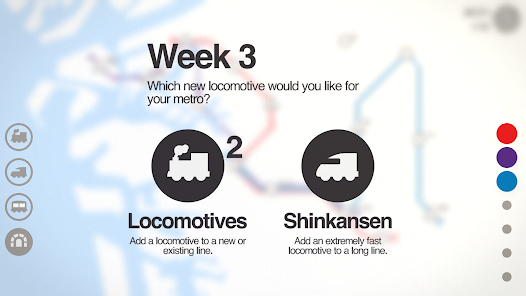
You earn upgrades by delivering trips, and you are offered a choice between options rather than a single fixed reward. That choice is where runs are won or lost, because the wrong tool sits unused while the right one would have saved you.
Take capacity when you are unsure. More road tiles are never wasted, while a specialised tool you do not need occupies a slot in your thinking as well as your inventory.
Take the tool that solves your current bottleneck, not the one that solves a hypothetical future one. If your map has no river, a bridge is a wasted choice however elegant it looks.
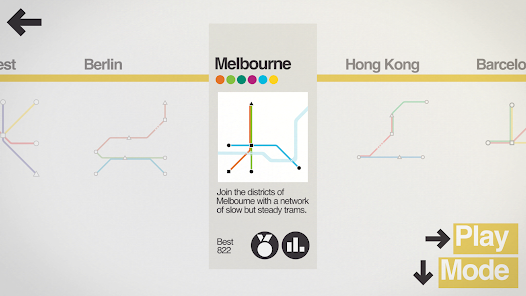
Look at the shape of your map before choosing. Cities with dense centres reward junction tools, while cities spread across long distances reward motorways. The same choice is correct in one city and wrong in another.
Do not hoard. An unused upgrade is the same as no upgrade, and the run will end before the perfect moment arrives.
What mistakes end runs early?
Building too much road too early is the first. New players fill the map because they can, then discover they have no tiles left when a cluster needs connecting.
Ignoring the queue rings is the second. The game tells you exactly which house is in trouble, and a single glance every few seconds is enough to catch it in time.
Routing everything through one corridor is the third. It feels efficient because it conserves tiles, but a single shared corridor becomes a single point of failure.
Misusing traffic lights is the fourth. Adding a light to a flowing road creates a queue where none existed. Lights solve crossings, not congestion.
Chasing a high score before learning the map is the fifth. Each city has geography that changes what works, and treating them all identically wastes runs.
The single most useful habit in Mini Motorways is to look at the whole map before you draw anything. New houses appear over time, and the ones that arrive near an existing cluster cause trouble because they will want a destination that is already busy. Giving yourself room between clusters at the start is worth more than any clever piece of road design later.
Road tiles are the resource that decides how ambitious you can be, and you earn them by completing trips. That means the fastest way to afford a big piece of infrastructure is to keep the traffic you already have moving. A jam that stops deliveries stops your income, so clearing a blockage is not tidying up, it is the thing that pays for the next fix.
It also helps to resist building one beautiful trunk road. A single wide avenue looks efficient and behaves badly, because every car has to share it and one blocked junction stops everything behind it. Several smaller roads reaching the same destinations give you alternatives when one clogs.
Finally, treat each run as a chance to learn one thing rather than to beat a score. Every city has a different shape and a different set of bottlenecks, and noticing which junction fails first on a given map is knowledge you keep for the next attempt.
Frequently asked questions
Does Mini Motorways need fast reactions?
No. It is a planning game. You can pause your thinking between actions, and the challenge comes from layout decisions rather than from speed.
Can I undo a road?
You can remove roads you have drawn, which refunds the tiles. Use it freely when a layout is not working, because a bad road is worse than no road.
Is it better to connect every house immediately?
Not necessarily. A house with a short queue is not urgent. Prioritise the houses whose rings are filling and leave the calm ones alone.
Do all cities play the same way?
No. Terrain, spacing and starting layout differ, which changes which tools matter. A strategy that wins in one city may struggle in another.
How do I improve my score?
Watch your queues, keep routes short, separate competing colours, and choose upgrades that match the bottleneck you actually have rather than the one you expect.
Official game information: dinopoloclub.com.