This guide covers mini motorways dubai map guide with practical steps for mobile players.
Quick answer: The Dubai map in Mini Motorways is mostly open desert divided by a coastline and a few water features, so it looks easy and plays deceptively. There is room to build, which tempts long roads, but the districts spread far apart and every long route slows your vehicles. Build short, direct connections and keep one clear spine per cluster.
Dubai is the map that most rewards restraint. Its openness is the trap: because there is space, it is easy to build a sprawling network that serves every house individually and moves nothing efficiently. The players who last are the ones who build as if space were limited.
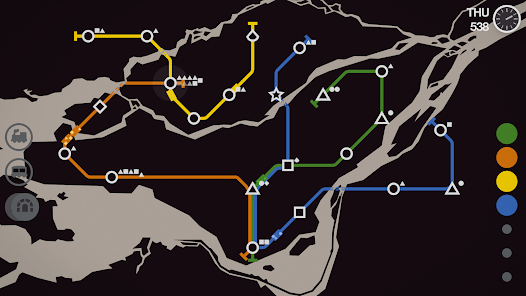
What makes Dubai deceptive?
The buildable area is large and mostly unobstructed. There are few natural barriers, so nothing forces you into a compact layout.
That freedom is the problem. Without a river or a hillside to shape the network, the shape is entirely your decision, and a bad decision is not corrected by terrain.
The districts also spread. Housing and destinations can appear far apart, which makes long routes feel necessary when a shorter arrangement would have been possible.
The map rewards players who deliberately impose structure on open ground rather than building wherever a house appears.
On this page
How should you impose structure?
Decide on a spine per cluster before you build. A clear main road with branches off it keeps the network compact even when the land is open.
Keep routes short between housing and destinations. Distance is the main cost in this game, and Dubai lets you accidentally build long ones.
Avoid connecting every house individually. A branch that serves five houses is efficient; five separate roads to the spine are not.
Leave deliberate gaps between clusters rather than filling the space with roads. Those gaps keep the network readable and leave room to add capacity later.
Treat the open ground as a resource to conserve rather than space to use.
Where should you put crossings?
Where the water actually separates districts that need each other. On a map this open, a crossing placed for convenience rather than demand is wasted.
Keep the approaches short. A bridge that lands in an empty area forces a long detour before it reaches anything useful.
Choose crossings that join existing roads rather than creating new ones. The bridge should connect two networks, not start a third.
Plan for one or two crossings, since Dubai’s water is less divisive than on other maps.
Ignore the edges unless districts sit there. On an open map, the temptation to bridge a distant shore is strong and almost always wrong.
How do you keep traffic fast on open ground?
Fewer, straighter roads. A direct route moves vehicles faster than a network of short segments that approximates the same distance.
Keep junctions spaced out. On an open map it is easy to create many small intersections, and each one slows the flow.
Use roundabouts sparingly. With low junction density, a few well-placed ones are enough; scattering them adds delay.
Watch the average trip length rather than the queue. If trips are long, the layout is the problem and no junction control will fix it.
Rebuild rather than patch. On open ground, rerouting a road is cheap, and a cleaner layout beats an increasingly tangled one.
What are the common Dubai mistakes?
Building long roads to individual houses is the first. The open map invites it, and it is the fastest way to lose.
Filling the space with roads is the second, which produces a dense network with no clear routes.
Bridging distant shores for convenience is the third.
Adding junctions everywhere is the fourth, which slows the whole network for no gain.
Never rebuilding a bad layout is the last. Dubai’s openness makes a clean rebuild affordable, and players rarely take advantage of it.
How do you extend a Dubai run?
Add capacity along the routes that actually queue, not across the map. The open ground makes it tempting to build everywhere.
Use motorways to connect distant clusters directly, which suits a map with long distances between them.
Keep each cluster self-sufficient where possible, so short trips never reach the main routes.
Prune roads that serve almost nothing. On an open map, redundant roads are pure cost.
Accept the ceiling. Even an open map eventually saturates, and the goal is to delay it.
One useful discipline on open ground is to pick a grid and stay on it. Even a loose grid keeps the network predictable, and predictability is what lets you add capacity later without rebuilding everything.
It also helps to leave a buffer of empty land between clusters. Roads built through empty space serve nothing, and reserving that ground gives you somewhere to put a parallel route when one is needed.
Finally, resist the urge to connect a new house immediately. Sometimes the better move is to wait until a cluster forms and then connect all of it with one road.
Frequently asked questions
Is Dubai an easy map?
It looks easy and is not. The openness removes the constraints that would otherwise shape a good layout.
Should I build many roads?
No. Fewer, straighter routes move traffic faster than a dense network.
How many bridges does Dubai need?
Usually one or two, since the water is less divisive than on other maps.
Do roundabouts help here?
Sparingly. With few junctions, a couple well placed is enough.
What ends a Dubai run?
Long trips accumulating until destinations time out, usually because the layout sprawled rather than concentrated.
For the basics, read how to handle growing destinations, or return to the Mini Motorways hub.
Official game information: dinopoloclub.com.