This guide covers pocket city 2 vs pocket city with practical steps for mobile players.
Quick answer: Pocket City 2 is the sequel and the larger of the two games, adding walkable free roam, more building types and a sandbox mode on top of the original’s zoning loop. The first game is tighter and simpler, and it is still a good starting point. Play the original if you want the loop without the extra systems, and the sequel if you want the same idea with more to do.
Both games are premium mobile city builders without timers, and both are built around zoning rather than placing individual buildings. The difference is scope, and scope in a city builder is not automatically an improvement.
What does the sequel add?
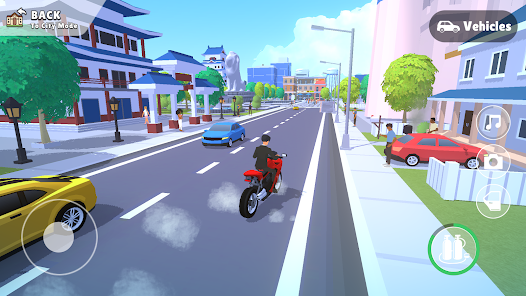
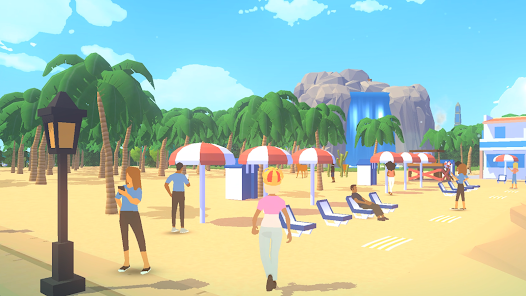
Free roam. You can walk or drive your city as an avatar, which turns the map into a place and makes access problems visible in a way the overhead view never manages.
More building types and more systems. The sequel has a wider range of services and facilities, which gives a growing city more to manage and more ways to solve a problem.
Sandbox mode. The first game’s economy is always on; the sequel lets you turn it off and build freely, which suits players who want to design rather than manage.
Multiple save slots make the extra scope manageable, because you can keep experiments separate from the city you care about.
On this page
Is the first game still worth playing?
Yes. It is smaller, faster to understand and cheaper, and it teaches the same fundamental loop without asking you to learn several systems at once.
Its constraint is also its strength. With fewer building types, every decision is clearer, and a new player can see the consequences of a layout choice without wondering whether some other system caused the result.
If you have already played the sequel, going back is surprisingly pleasant. The reduced scope makes the loop feel cleaner rather than lesser.
If you have not played either, the original is a reasonable place to start and a reasonable place to stop.
Which is better for a new player?
The sequel, for most people, because it teaches its systems through quests and it forgives mistakes completely. There is no way to lose either game, but the sequel’s extra systems are introduced rather than assumed.
The original suits a player who wants the loop without the extras. It is the shorter, more focused version, and it ends when you stop rather than expanding into free roam and sandbox play.
Cost is a factor. The original is usually cheaper, and for a game this gentle, the cheaper entry point is often the sensible one.
Either way, playing one tells you whether you want the other, which is the useful thing about a series this consistent.
How do the two compare directly?
| Aspect | Pocket City | Pocket City 2 |
|---|---|---|
| Core loop | Roads, zones, utilities, services | The same, with more building types |
| Free roam | No | Yes, on foot or in vehicles |
| Sandbox mode | No budget-free mode | Yes |
| Scope | Tighter and simpler | Larger, with more systems |
| Learning curve | Very gentle | Gentle, with more to absorb |
| Save slots | Limited | Multiple cities |
| Monetisation | Single purchase | Single purchase |
The table reads as an expansion rather than a reinvention. Nothing in the first game was removed; the sequel added layers around it.
Does the sequel make the original redundant?
Not quite. A tighter game is not an obsolete one, and the original’s smaller system set makes it easier to see what your decisions are doing.
There is also a practical argument for the original: it is shorter, cheaper and asks less of your attention, which suits a game you play in short sessions.
The sequel is better value if you intend to keep a city for months. The original is better value if you want to understand the loop quickly.
Neither answer is wrong, and neither game punishes you for choosing the other.
What should you actually buy?
If you have never played either, buy the sequel. It is the more complete game and it teaches itself well.
If you played the original and liked it, the sequel is a clear upgrade with more to do and a walkable city.
If you played the original and found it slight, the sequel will not change your mind; the additions are more of the same rather than a different experience.
And if you only want a cheap way to find out whether this kind of game suits you, the original is the cheaper experiment.
One difference that matters more than it sounds is the tutorial. The original explains its systems in a linear sequence, while the sequel spreads them across quests that appear as the city grows. The second approach is gentler for a returning player and slightly more confusing for a completely new one, who may not realise a system exists until a quest mentions it.
Neither approach is wrong, and both are better than a wall of text.
The practical advice is the same either way: play the one that costs less first, and let it tell you whether you want more.
Whichever you choose, the series is consistent enough that the skills transfer completely. Zoning, coverage and road shape work the same way in both, so nothing you learn in one is wasted in the other.
That also means there is no urgency. If you start with the original and enjoy it, the sequel will still be there, and it will feel like more of something you already understand rather than a new thing to learn.
Both are worth owning eventually. Buy whichever is cheaper today, and let the other wait until you want more.
Neither game is expensive, and neither takes long to understand, so the cost of choosing wrong is a few pounds rather than an evening.
Frequently asked questions
Does the sequel include the first game?
No. They are separate purchases with separate cities.
Is free roam worth having?
Yes, if you like seeing your city as a place. It is optional and it makes access problems easier to spot.
Which is harder?
Neither can be lost. The sequel has more systems, so there is more to keep balanced.
Do save files transfer?
No. Each game keeps its own cities.
Which is better on a small screen?
Both work well. The original is simpler to operate, and the sequel’s extra menus suit a tablet.
For the sequel’s systems, start with the zoning guide, or return to the Pocket City 2 hub.
Official game information: pocketcitygame.com.