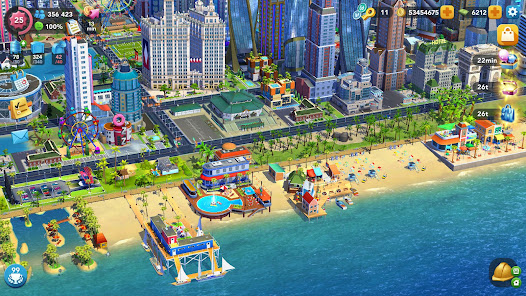
This guide covers simcity buildit beginner guide with practical steps for mobile players.
Quick answer: Start SimCity BuildIt by building residential zones and keeping their power and water supplied, because population is what unlocks everything else. Produce materials in factories and turn them into goods at commercial buildings to upgrade houses, and never let your storage fill so completely that you cannot collect new material. Roads matter more than new players expect: congestion complaints appear early, and upgrading roads is usually cheaper than rebuilding a district.
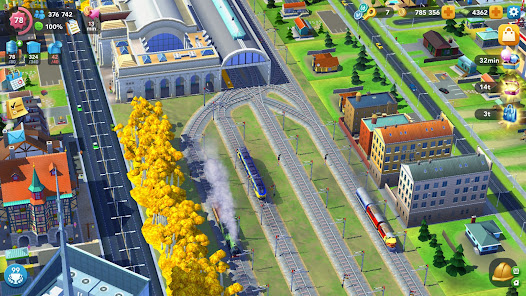
What should you build first?
Residential zones come first, but only as many as you can keep supplied. Each house needs power, water, and later sewage and services, so a district of unsupported houses produces complaints rather than population. Build a small cluster, connect it properly, and only then expand.
Factories and commercial buildings follow immediately. Factories produce raw materials on a timer whether or not you are watching, and commercial buildings turn those materials into the goods required to upgrade houses. Without both, your residential zones sit at their lowest level and your population stops growing.
Keep the three zone types separated rather than interleaved. Residential next to industry creates pollution complaints, and commercial buildings placed badly generate traffic that you will spend coins fixing later. A simple grid with industry on one edge and shops between industry and housing avoids most early problems.
One practical habit is to check the utility overlay before building anything new. It shows supply, demand, and the radius each plant covers, so you can see whether a district is genuinely connected or merely close. Buildings just outside a radius look fine on the map and behave as though they have no power at all, which is the most confusing early failure in the game.
Do not upgrade houses faster than you upgrade utilities. Every residential upgrade increases demand, so a district of improved houses can overwhelm a plant that was comfortable a day earlier. When you plan a batch of upgrades, plan the matching power and water capacity first, or you will spend the following session chasing outages instead of building.
On this page
How do power and water actually work?
Power plants supply a radius, and every building inside that radius draws from the plant’s capacity. If demand exceeds supply, the buildings furthest away lose power, and those houses stop producing population and start producing complaints.
Water works the same way through water towers and pumping stations. The temptation is to build one large plant and cover half the map with it, but a single point of failure means one upgrade or one demand spike darkens an entire district.
Build smaller, distributed utilities as your city spreads. Two modest power plants on opposite sides of the city are more resilient than one large one, and they also reduce the distance that pipes and lines have to travel, which keeps the layout readable.
| Utility | What it does | Common failure |
|---|---|---|
| Power plant | Supplies buildings within its radius | Capacity exceeded, outer buildings cut off |
| Water tower | Supplies clean water in a radius | Demand outgrows supply after upgrades |
| Sewage works | Handles waste water | Added too late, blocking further upgrades |
| Fire and police | Coverage reduces complaints | Radius gaps between districts |
| Health clinic | Keeps residents satisfied | Ignored while chasing population |
Queue production before you queue upgrades. If three houses all need the same item, produce that item in a single long run rather than making it three times in small batches, because the setup time is the same and the collection is faster. Commercial buildings produce specific goods, so matching the building to the requirement is the whole job.
Keep one commercial building producing goods you always need and let the others serve immediate upgrade requirements. Constant demand for a few staples means a permanent queue is worth more than a flexible one, and it removes the decision every time you open the game.
How do you upgrade a house?
Upgrading requires specific goods, usually a small set of items produced at commercial buildings. Tap the house to see what it wants, then produce those items and deliver them. When the requirements are met, the house upgrades and its population increases.
Different house levels ask for different goods, and the requirements get more complex as you go. Early upgrades might need only nails or planks; later ones want items from several commercial buildings, which is why expanding your commercial capacity matters as much as expanding housing.
The constraint is almost always production time rather than money. Factories and shops run on timers, so the efficient approach is to queue long production runs before closing the game and collect the finished goods when you return.
Watch which materials actually fill the warehouse. Usually two or three item types accumulate while the rest are consumed quickly, and the fix is to stop producing the ones you cannot spend. Factories run on their own schedule, so a factory left on a material you do not need is actively harmful rather than merely idle.
When storage is full and nothing can be spent, sell. The trade depot takes surplus at a modest price, which is far better than blocking collection entirely. Coins from a cheap sale buy the utilities that keep the city running, and a running city earns more than a hoard of materials ever will.
Why is storage always full?
Because materials accumulate faster than you spend them. Every factory produces on a timer, every shipment and reward adds items, and the warehouse cap is deliberately lower than the total you would like to hold.
A full warehouse blocks new material from being collected, which stalls production at the source. The fix is to spend rather than hoard: turn raw materials into goods, use goods to upgrade houses, and sell surplus at the trade depot when nothing else needs it.
Upgrading warehouse capacity is worthwhile but should not be the only answer. If you upgrade capacity without changing how you spend, the new space fills just as quickly and you are back where you started with less money.
Traffic complaints are usually a symptom of layout rather than of road width. A district with one entrance forces every vehicle through the same junction, and upgrading that road only postpones the problem until the next building opens. Adding a second connection often solves it permanently for less than another upgrade.
Leave space for future roads when you first lay out a district. It is much easier to build a street through empty ground than to demolish houses later, and the coins you save on demolition pay for the road itself. Cities that feel cramped at level twenty were usually planned badly at level five.
How should you handle roads and traffic?
Traffic complaints appear when roads cannot carry the vehicles generated by your buildings. The usual cause is a long single route serving everything, so every vehicle shares one congested corridor.
Upgrading a road to a wider type increases its capacity and usually resolves the complaint faster than rearranging the city. Do this before adding more buildings to a district, because a congested road gets worse with every new zone.
Design with loops rather than dead ends where possible. A grid with several connections between areas spreads traffic, and it also makes future expansion easier because you are not permanently boxed in by a single access road.
Resist buying specialisation buildings early. Landmarks, entertainment venues, and decorative districts raise happiness, but happiness is not your bottleneck in the first weeks. Population growth is, and population comes from upgraded houses supplied with utilities, which is where the coins should go.
A simple rule is to spend on anything that increases production or capacity before spending on anything that increases appearance. That covers utilities, roads, commercial buildings, and storage, and it postpones decoration until the city can afford it without slowing down. There is no penalty for an ugly productive city and a large one for a beautiful stalled one.
Where should a new player spend resources?
Spend coins on utilities and roads first, because those keep the population you already have. Then spend on commercial capacity, because that is what turns materials into upgrades. Only after both are stable should you buy decorative specialisation buildings.
Save premium currency for storage upgrades and for the moments when a single missing item blocks a large upgrade. It is easy to burn on speed-ups, and speed-ups return very little compared with permanent capacity.
Join a club early. Club members can trade materials, and trading is by far the fastest way to obtain the specific item an upgrade is waiting for, which removes the most common early bottleneck.
One last piece of advice concerns patience. SimCity BuildIt is built around timers, and the players who progress fastest are the ones who set long production runs before closing the game rather than checking every few minutes. A session that queues materials, collects finished goods, and spends them on one upgrade will always beat a session spent watching a progress bar.
That also means the game rewards planning over intensity. Decide what the next three upgrades need, queue those items, and leave. Returning to a warehouse full of exactly the goods you wanted is the most efficient moment the game offers, and it costs nothing but the discipline to plan before you close the app.
Do that consistently and the early game stops feeling like a grind, because every session begins with something already waiting to be spent rather than with an empty warehouse and a decision to make.
Frequently asked questions
What should I build first?
Residential zones with power and water, then a factory and a commercial building to produce upgrade goods.
Why do my houses have no power?
Demand has exceeded the plant’s capacity, or the building sits outside the supply radius.
How do I increase population?
Upgrade houses by supplying the goods they request. Each upgrade raises the population that building holds.
Should I upgrade storage or buy buildings?
Storage first if it is blocking collection, otherwise buildings that increase production.
Is it worth joining a club?
Yes. Trading with members is the fastest way to obtain specific materials and goods.
For more on the game’s systems, see the SimCity BuildIt hub.
Official game information: www.ea.com.