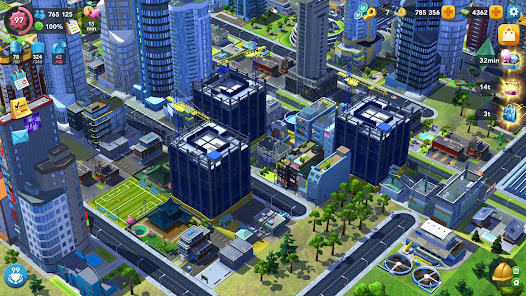
This guide covers simcity buildit how to manage storage with practical steps for mobile players.
Quick answer: Storage in SimCity BuildIt holds the raw materials and produced goods your city needs, and it fills faster than you expect because factories produce on a timer regardless of demand. Manage it by spending materials on upgrades rather than hoarding, selling genuine surplus at the trade depot, and upgrading warehouse capacity only when you are already spending efficiently. A full warehouse blocks collection, which stalls every factory at once.

What actually counts against storage?
Raw materials from factories and goods from commercial buildings both occupy warehouse space. Each item type has its own limit within the total, so you can be blocked from collecting one specific material while having plenty of space overall.
That per-item cap is the detail that confuses new players. Seeing a half-empty warehouse while unable to collect more metal looks like a bug and is actually the item limit working as intended.
Knowing which item types you are near the cap on tells you which factory to leave idle and which to run. That is a far more useful habit than watching the total storage number, because the total tells you almost nothing about which production you should pause. Check the individual bars before you queue a long run, and you will stop wasting overnight production into a store that cannot accept it.
On this page
Why does a full warehouse stop everything?
Because factories cannot deliver their output into a full store, so they stop working. They do not queue the excess; they simply wait until space appears, which means the production time is lost rather than banked.
That cascades through the city. No new material means no new goods, no goods means no upgrades, and no upgrades means no population growth, which means no additional tax income.
The frustrating part is that nothing announces the problem. There is no error message, only a city that has quietly stopped progressing while the player assumes they need to wait longer for a timer. Once you know the symptom, the diagnosis takes seconds: open the warehouse, look at which bars are maxed, and you have found the stall.
| Situation | Effect | Fix |
|---|---|---|
| Total storage full | No collection from any source | Spend or sell to free space |
| One item at its cap | That factory stalls, others fine | Spend that item or sell it |
| Goods piling up | Commercial buildings idle | Deliver to houses, or sell |
| Constant overflow | Production wasted every session | Upgrade capacity or stop producing |
How should you spend materials rather than store them?
Deliver them. Materials exist to be turned into goods and goods exist to be delivered to houses, so anything sitting in the warehouse is a step you have not finished rather than an asset you are accumulating.
When no upgrade needs a material, turn it into goods anyway. Goods are more valuable and more useful, and converting a raw material into a product frees the raw slot for the next production run.
When even goods are surplus, sell. The trade depot takes them at a modest price, which is still better than blocking production entirely and losing the material you could not collect. A cheap sale is not a loss of value; it is a conversion of something stuck into something spendable, and coins buy the utilities that keep the rest of the city producing.
When is upgrading capacity the right answer?
When you are already spending efficiently and still running out. If you sell and deliver consistently and the warehouse fills anyway, your production genuinely exceeds your capacity and an upgrade is justified.
Upgrading while hoarding is a mistake. Extra space fills with the same unused materials, and you have spent coins that utilities or commercial buildings needed. Capacity is only useful if the contents are moving.
Prioritise capacity upgrades before large construction projects. The expansion you are planning needs materials in storage at the same time as your normal production, and running out mid-project is more expensive than upgrading first.
How do you handle storage during events?
Events demand specific items in quantity, which puts pressure on exactly the slots you need for normal production. Clear space before an event starts rather than discovering the shortage when the objective appears.
Produce event items in a single long run rather than in parallel with normal goods. The event reward is usually worth more than the routine production you pause, and splitting capacity between the two satisfies neither.
After the event, sell whatever surplus remains. Event goods often have little use afterwards, and leaving them in storage occupies space that normal production needs immediately.
A final habit worth building is to treat the warehouse as a pipeline rather than a pantry. Materials should move from factory to commercial building to house in a continuous flow, and anything that stops moving has become a blockage. Once you look at storage that way, the question changes from how much you have to how fast it is moving.
That perspective also makes capacity upgrades easier to judge. Extra space is worth buying when the pipeline is already moving and still backing up; it is not worth buying when the contents are static, because the new room will simply hold more of the same stalled material.
What are the common storage mistakes?
Treating the warehouse as a savings account is the first and most damaging. Materials are inputs, not wealth, and hoarding them converts a productive resource into a blocked factory.
The second is upgrading capacity to solve a problem that selling would have solved for free. The third is ignoring per-item caps, so you keep producing the material you cannot store.
The fourth is forgetting to check storage before queueing long production runs overnight. A run that finishes into a full warehouse has produced nothing at all, and because it happens while you are away you lose the whole cycle without ever seeing it. Make the storage check part of your closing routine, alongside collecting tax and restocking the trade depot.
One habit that prevents most storage problems is to check the warehouse before accepting a large reward. Rewards and event payouts arrive whether or not you have room for them, so clearing a slot in advance is the difference between collecting the full amount and watching the excess vanish.
Frequently asked questions
Why can I not collect materials with space free?
That specific item has reached its own cap within the total storage.
Does selling lose value?
You get less than the item is worth in upgrades, but more than you get from a blocked factory.
Should I upgrade storage early?
Only once you are spending materials efficiently. Otherwise the new space fills with the same hoard.
Do goods and materials share storage?
They occupy the same warehouse with separate limits per item type.
What should I do with event surplus?
Sell it. It rarely has use after the event and it occupies space you need.
For city management, see the SimCity BuildIt hub.
Official game information: www.ea.com.