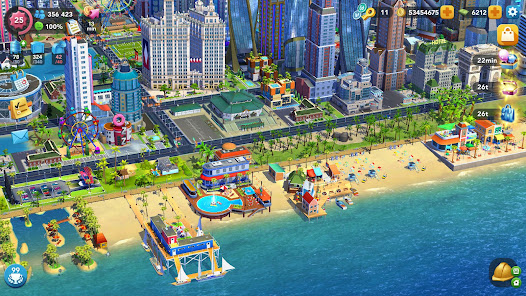
This guide covers simcity buildit how to use city specializations with practical steps for mobile players.
Quick answer: City specialisations in SimCity BuildIt are themed building sets, such as landmarks, entertainment, gambling, beach and mountain, that you place in dedicated zones. They raise the value and attractiveness of the area around them and give you a way to develop a district beyond basic housing. Pick one or two specialisations and place them together, because scattered themed buildings give no bonus over plain housing.
What is a specialisation actually?
A specialisation is a category of buildings that belong together thematically. Placing several of the same category in one area creates a distinct district, and those buildings contribute to the city’s overall appeal.
The buildings in a specialisation are usually expensive and do not house residents themselves. Their value is in what they add to the surrounding area rather than in what they produce directly.
That makes them a mid-to-late game investment. Early on, coins are better spent on utilities and housing, which generate the population that funds everything else. A landmark bought at level ten is a coin sink; the same landmark bought into a developed district is a genuine improvement.
On this page
Which specialisation should you choose?
Choose based on what the city needs rather than on what looks impressive. A specialisation that raises satisfaction in an area where housing is struggling is worth more than one placed in a district that is already comfortable.
Also consider the terrain. Beach specialisations need coastline, mountain specialisations need elevated ground, and both require the corresponding area to be unlocked before you can build there.
Do not attempt several at once. A single well-developed district with one theme produces a visible result; five half-built themes scattered across the map produce nothing but an untidy city.
Finishing one theme completely also makes the city easier to read. You can see at a glance which area is the entertainment district and which is residential, and that clarity helps when you are deciding where the next investment should go.
| Specialisation | Requires | Best placed |
|---|---|---|
| Landmarks | Space and coins | City centre or districts needing appeal |
| Entertainment | Space near housing | Residential areas |
| Gambling | Space and later unlock | Dedicated district |
| Beach | Unlocked coastline | Waterfront |
| Mountain | Unlocked elevated ground | Hills and slopes |
How do bonuses actually work?
Specialisation buildings add appeal to the area around them, and grouping them amplifies the effect. A cluster of themed buildings in one district produces more than the same buildings spread across the city.
That is the key mechanic: adjacency matters. Placing one landmark in each of five districts wastes the opportunity, while placing five in one district creates a destination.
The bonuses contribute to satisfaction and to the city’s overall development, which is why specialisations are usually built to support housing rather than as isolated decoration. A landmark that no residents can see, because it is surrounded by empty plots, gives you very little for the coins it cost.
When should you start building them?
When your basic city is stable: utilities are adequate, houses are upgrading steadily, and you have coins that are not needed for the next production building.
Starting earlier usually backfires. Specialisation buildings are expensive, they occupy plots that could hold housing, and the bonus they provide means little while the surrounding area is still underdeveloped.
A reasonable trigger is a fully upgraded district with spare plots. At that point a specialisation turns land that would otherwise sit idle into something that contributes to the city.
When you do start, build the smallest buildings first. Many specialisations have a cheap entry item that gives a modest bonus, and placing several of those lets you test whether the district responds before committing to the expensive centrepiece. If the appeal effect is not what you hoped, you have spent a little rather than a great deal.
It is also worth checking what the district already has. A neighbourhood that is comfortably satisfied gains less from added appeal than one that is struggling, so the best place for a new specialisation is often the area with the most complaint icons rather than the one with the nicest view.
Do specialisations replace housing?
No. They support housing by raising satisfaction and appeal, but they do not house anyone. Population still comes from residential buildings, which means a city of nothing but landmarks has an impressive skyline and almost no residents.
The healthy ratio is a residential core with specialised districts attached to it. The housing pays the taxes and the specialisation makes the area attractive enough to keep developing.
Think of them as a multiplier on housing rather than a substitute for it. Without the housing there is nothing to multiply, and without the specialisation the housing develops more slowly. That is why the order matters: population first, appeal second, and the two reinforce each other once both exist.
What are the common specialisation mistakes?
Building one of each theme and spreading them across the map is the first, and it produces no grouped bonus at all. The second is buying specialisation buildings before utilities are adequate, which leaves the city short of power and full of decoration.
The third is ignoring terrain requirements and buying a beach building before the coastline is unlocked. The fourth is treating landmarks as an income source when they produce nothing directly.
The fifth is building them in a district that is not yet developed, where the satisfaction bonus has little to work on. The sixth is forgetting that these buildings occupy land, which in a compact city is the scarcest thing you own and the hardest to get back once it is spent.
Frequently asked questions
Do specialisation buildings produce income?
Not directly. They raise appeal and satisfaction, which supports housing that does produce income.
Can I mix specialisations?
You can, but grouping the same theme gives a stronger effect than scattering different ones.
When do beach and mountain unlock?
Each requires the corresponding area, which becomes available through play. Check the map for the unlock conditions.
Are landmarks worth the coins?
Once the city is stable, yes. Before that, utilities and housing give better returns.
Do they need roads and power?
They need road access like other buildings. Check the specific building’s requirements.
For city development, see the SimCity BuildIt hub.
Official game information: www.ea.com.