This guide covers pocket city 2 how to zone a new city with practical steps for mobile players.
Quick answer: To zone a new city in Pocket City 2, draw roads first, then paint residential along one side and commercial on the other, with industrial land kept further out. Zones only develop when they have road frontage and utility coverage, so connect power and water to the district before you expect buildings to appear. Start small and extend the same grid rather than scattering zones across the map.
Zoning is the core verb of the game and the one most beginners get subtly wrong. The mistake is rarely the zone type; it is the order of operations, because zones placed before roads and utilities simply sit there looking like a plan that never happened.
What order should you build in?
Roads, utilities, then zones. A zone needs a road edge to develop and power and water to keep its buildings occupied, so placing it first means waiting for the other two anyway.
The practical sequence is a straight road, a power plant, a water tower, and then a strip of residential and commercial along the road you just drew. That produces visible buildings within a short session.
If you prefer to zone first as a plan, that is fine, but expect empty land until the infrastructure arrives. Nothing is wasted; the zone is recorded and will develop once the conditions are met.
The one order that genuinely fails is zoning a large area with no road at all. Land without frontage never develops, no matter how much power and water you supply to the area around it.
On this page
How should you mix the three zone types?
Keep residential and commercial close together and industrial further away. Residents need shops within reach, and shops need customers, so adjacency between those two types is the single most useful thing you can do with a map.
Industry is different. It supplies the city and employs people, but it also generates pollution, and pollution makes nearby residents unhappy. A buffer of roads or parks between industry and housing prevents most of that.
A rough balance matters more than an exact ratio. If shops have no customers, you have over-zoned commercial; if residents complain about having nowhere to work, you have under-zoned it.
Watch what actually develops. The game fills zones according to demand, so a district that stays half empty is telling you the mix is wrong rather than that the land is bad.
How large should your first district be?
Small enough to service with one power plant and one water tower, and large enough to see development happen. A block of residential with a commercial strip is usually the right first size.
A compact district is easier to read. Coverage circles overlap in ways you can see, traffic stays light, and when something is unhappy you can usually spot the cause by looking rather than by opening a menu.
Resist the urge to zone the whole starting area. Wide zoning hides which parts of your layout are working, and it commits you to a shape before you know whether the roads are in the right place.
Growth is cheap once the pattern works. Extending a district that is developing is faster than repairing a district that never did.
Why is zoned land staying empty?
Check access first. A zone tile needs frontage on a road, and a zone that is landlocked will not develop however well it is serviced.
Check utilities second. Power and water have coverage radii, and a district outside those radii will not attract occupants even though the land is zoned and connected.
Check demand third. If you have zoned far more residential than your commercial and industrial base can support, the surplus stays empty until the rest of the city catches up.
Check pollution last. A residential zone beside heavy industry can stay under-occupied because nobody wants to live there, which looks like a bug and is actually the simulation working.
How do you zone for traffic as well as growth?
Think in short trips. Mixed districts where people live near where they shop generate less traffic than separated districts that force every journey onto the same road.
Leave room for a second route. A district with one access road works until it does not, and by then the fix involves demolishing something you have built on.
Zone along both sides of a road rather than down one side only. That halves the distance between the two halves of a district and gives traffic two directions to use.
Industrial zones need access for goods movement, so keep them on the edge of the grid with a road that leads out rather than through the residential streets.
What does good zoning look like later?
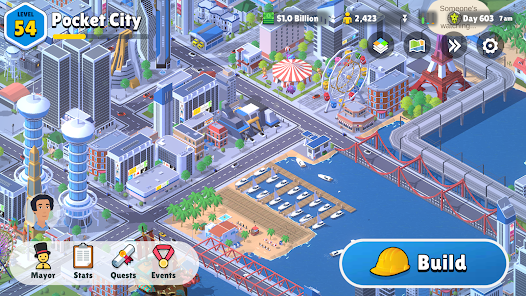
It looks like a patchwork rather than a set of separate quarters. Small residential blocks with commercial corners, industry on the perimeter, and parks filling the awkward gaps between them.
That pattern scales because each district is self-sufficient for everyday needs, so the road network only carries longer journeys rather than every trip in the city.
It also makes services efficient. A single police station placed at the junction of several small districts covers all of them, which is far cheaper than one station per zone type.
The result is a city that grows without needing to be rebuilt, which is the practical definition of good zoning in this game.
One last habit worth forming is to zone in strips rather than patches. A long thin strip along a road develops evenly and is easy to extend, while a scattered patch leaves gaps that later roads have to weave around.
Frequently asked questions
Do zones need to touch a road?
Yes. Land without road frontage will not develop, regardless of utilities or demand.
Should industry be far from housing?
Yes. Industry generates pollution, and residents close to it become unhappy even when services are good.
What is the right ratio of residential to commercial?
There is no fixed number. Watch which zone fails to develop and adjust the mix in that direction.
Can I change a zone later?
Yes. You can repaint an area with a different zone type, though existing buildings may need to be cleared first.
Why did my zone stop developing?
Usually demand, access or a service gap. Check road frontage, then utilities, then the balance of zone types.
For the next step, read how to provide power, or return to the Pocket City 2 hub.
Official game information: pocketcitygame.com.