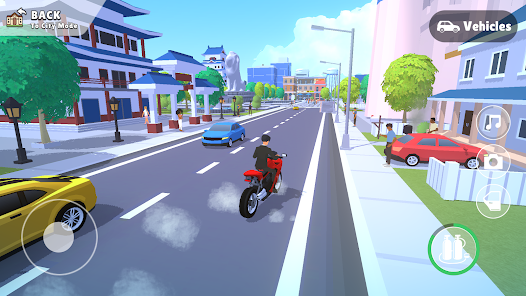
This guide covers pocket city 2 how to increase population with practical steps for mobile players.
Quick answer: To increase population in Pocket City 2, zone more residential land that has road frontage and full utility coverage, then make the surrounding city worth living in. People arrive when there are homes and jobs, and they stay when services, parks and traffic are tolerable. Growth is limited by whichever of those is weakest, so check the complaint list rather than simply zoning more.
Population is the number most players watch, and it is the least direct thing to control. You cannot build residents; you can only create the conditions in which they choose to move in and remain.
What actually limits population growth?
Three things at once: available housing, available jobs, and the quality of the area. Housing comes from residential zoning, jobs from commercial and industrial zoning, and quality from services, parks and traffic.
Growth stalls at whichever is lowest. A city with plenty of housing but no jobs will not fill; a city with jobs but no housing has nowhere to put the workers; a city with both but poor services will fill slowly and then empty.
That is why simply zoning more residential rarely works on its own. It raises one of the three constraints while leaving the other two where they were.
The complaint list is the fastest diagnostic. It names the specific thing residents are unhappy about, and that thing is usually the constraint you have hit.
On this page
How should you zone for population growth?
Zone residential and commercial together in the same district. Jobs within walking distance make an area attractive, and they reduce the traffic that would otherwise push residents away.
Zone in small increments and let each develop before adding more. A district that fills completely tells you the conditions are right; a district that stays half empty tells you which condition is wrong.
Keep industrial land separate but connected. Industry provides jobs, and those jobs need to be reachable without routing goods traffic through residential streets.
Leave room for parks inside the residential blocks. Population growth and happiness are the same problem seen from two angles, and green space is the cheapest way to improve the second.
Why does population stall at a certain number?
Usually because one utility or service no longer reaches the edge of the built-up area. As a city grows, the outer blocks fall outside circles that used to cover everything, and those blocks stop developing.
The second common cause is traffic. A city that has grown beyond its road network produces long journeys, and long journeys make districts less attractive regardless of how well they are served.
The third is pollution. If residential land has grown toward an industrial zone, the newly affected blocks will not fill no matter how much housing you zone there.
In each case the answer is to fix the specific constraint rather than to zone more land, which would simply extend the area that cannot develop.
How do services and parks affect population?
They determine whether residents stay. A city can attract people with housing and jobs and then lose them again if the services are missing, and the loss shows up as a population that rises and falls.
Parks are the cheapest lever. Distributing small ones through residential districts raises the average happiness of the whole area, which is what turns a filling district into a full one.
Services need to be placed for coverage rather than symmetry. One station covering every block is worth more than two that overlap in the centre and leave the edges bare.
Growth therefore has a ceiling set by the weakest service, and raising the ceiling is usually cheaper than adding more housing.
How does the road network limit population?
Every new district adds traffic, and traffic slows every journey in the city. Past a certain point, the congestion itself becomes the thing preventing further growth.
The fix is a network with alternatives. A grid gives drivers several routes, so adding a district does not concentrate all its traffic on one road.
Mixing zones also helps, because residents who can walk to a shop generate no vehicle trips at all. That is the cheapest capacity increase available.
If you find yourself widening roads repeatedly to keep growth going, the network shape is the real problem rather than the capacity.
What are the common population mistakes?
Zoning huge residential areas at once is the first. It produces empty land, a misleading income projection and no clear signal about what is wrong.
Ignoring jobs is the second. Residents need somewhere to work, and a purely residential city will not fill.
Letting services fall behind growth is the third. The ceiling arrives quietly and looks like a demand problem.
Building industry beside housing is the fourth, which caps population in exactly the districts you were trying to grow.
Never building parks is the last, and it is the cheapest of all these mistakes to fix.
Frequently asked questions
Why is my population not growing?
Check housing, jobs and happiness in that order. Growth stops at whichever is lowest.
Does zoning more residential always help?
No. Without jobs, services and road access, extra residential land simply stays empty.
Do parks increase population?
Indirectly. They raise happiness, which makes districts fill and keeps residents from leaving.
Is there a population cap?
The limit is practical rather than fixed: coverage, traffic and pollution set the ceiling your layout can support.
Should I raise taxes to slow growth?
No. Taxes reduce happiness and therefore population, which is the opposite of what growth needs.
For the zoning decisions behind this, read how to zone a new city, or return to the Pocket City 2 hub.
Official game information: pocketcitygame.com.