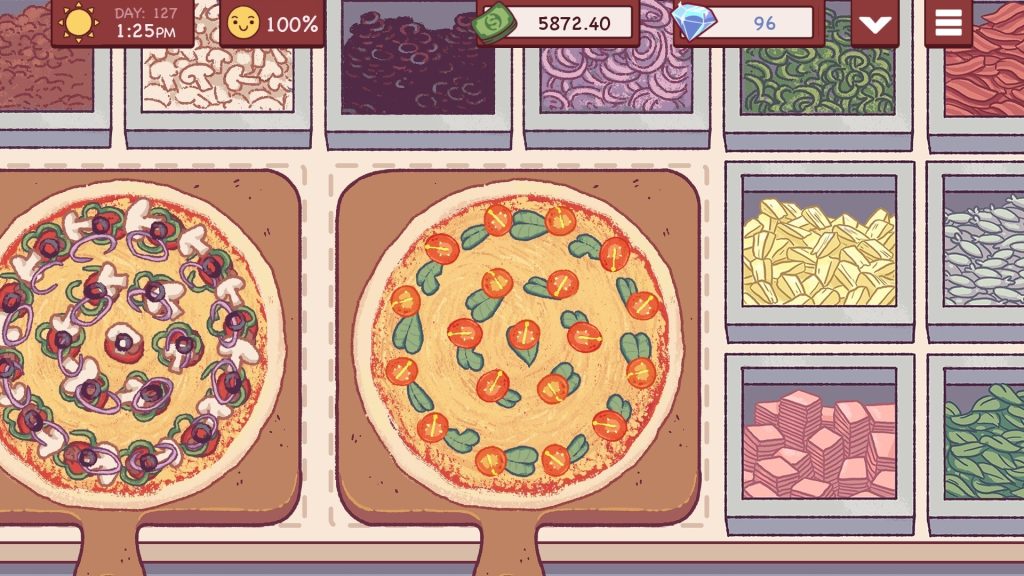
This guide covers good pizza great pizza how to reduce ingredient waste with practical steps for mobile players.
Quick answer: Ingredient waste in Good Pizza Great Pizza mostly comes from buying toppings ahead of the orders that need them and from over-loading every pizza. Keep a lean stock that matches the current chapter, place only what the customer asked for, and check the order card before adding anything extra. Fewer ingredients used means more coins for the oven.
What causes ingredient waste in the game?
Most waste starts with buying rather than with cooking. Players unlock or purchase toppings because they are available, not because the current orders call for them.
A topping that sits unused is coins you cannot spend on something that would help. That is the real cost of stocking ahead of the story.
The second cause is over-topping. Adding extra pieces to make a pizza look generous uses stock the order never asked for.
Third is rebuilding. A pizza made wrong is thrown away along with every ingredient on it, which is waste you never see on a receipt.
Fourth is running out mid-shift. Checking stock only when it is empty forces rushed purchases later at a worse moment.
Fifth is ignoring the order card. Ingredients go onto the pizza before the request is fully read, and the extras become waste.
None of these are dramatic individually. Together they quietly drain the coins you need for the oven and decorations.
On this page
How does over-topping cost you?
Every topping placed costs stock, whether or not the customer wanted it. A pizza with eight pieces instead of six uses more for the same payout.
The customer also judges what they see. Extra toppings that were not requested can read as a mistake rather than generosity.
Over-topping slows you down as well. More placement means more taps, and those seconds accumulate when several orders are waiting.
It crowds the pizza, which makes the requested toppings harder to see. A clean build looks deliberate and is faster to check before baking.
On a split order the problem doubles. Extra pieces on one half break the divide the customer specifically asked for.
The habit is easy to break once you notice it. Place what the card lists, then stop and look before the oven.
Generosity is not a strategy here. Accuracy is what earns tips, and accuracy means matching the order rather than exceeding it.
How do you keep stock in line with orders?
Watch what the current chapter actually asks for. If the last ten orders used three toppings, those three are your working stock.
Buy toward that list rather than toward the full menu. The menu is a catalogue, not a shopping list for every session.
Check your stock at the start of each session rather than mid-rush. A quick look before the first customer prevents surprises later.
Keep a small buffer of anything that appears often. Running out mid-shift costs more than holding a little extra.
Avoid stocking ingredients for orders you have not yet seen. The story introduces toppings alongside the customers who want them.
Review after each chapter. New orders change the working set, and so should your stock.
Treat stock as a tool that follows demand. It should track the orders in front of you, not the whole catalogue.
Which ingredients are worth keeping?
Keep the base ingredients that every pizza uses. Dough, sauce and cheese are consumed constantly, so a shortage there stops everything.
Keep the two or three toppings your current chapter mentions most. Those carry most of the orders and deserve the stock space.
Keep one cheap vegetable for filling out a build. It covers gaps without costing much when it goes unused.
Skip anything expensive that only one rare order needs. The coins are better spent on the oven until that order appears regularly.
Skip duplicates. Two toppings that serve the same role give you options you will never use in the same session.
Reassess whenever an order fails for a missing ingredient. That is a signal the buffer was too thin, not that the lean approach was wrong.
The goal is a small set that covers most orders. Breadth feels safe but costs coins you could invest in speed.
How do you plan a shopping trip?
Look at the orders you are about to take before spending. Knowing the next few customers tells you exactly what to stock.
Buy the base ingredients first, then the toppings those orders need. That order of priority prevents a full pantry with no dough.
Leave a coin reserve for daily costs. Spending to zero on ingredients leaves you unable to cover something small an hour later.
Compare the ingredient price with what the order pays. A topping that costs more than the tip it earns is not worth stocking.
Buy in the quantity a session needs rather than the maximum. Leftovers that spoil or sit unused are wasted coins.
If a purchase feels like a gamble, wait one more order. The next customer usually clarifies whether it was necessary.
A short, deliberate trip beats a big one made in a hurry. Two minutes of planning saves a session of shortages.
How do you recover from a wasted purchase?
Use it rather than writing it off. Any topping can fill space on a pizza when the customer’s request leaves room.
Find the orders that do call for it and take those deliberately. One or two uses recovers most of the cost.
Do not buy more of it to justify the first purchase. That is how a small mistake becomes a habit.
Note which purchase was wasted and why. The reason is usually that you stocked ahead of the story rather than behind it.
Adjust your rule for next time. A simple rule such as only buying what this chapter uses prevents the repeat.
If it was expensive, treat it as tuition. The lesson costs less than repeating it across a dozen sessions.
Move on quickly. Dwelling on one bad purchase costs more attention than the coins were ever worth.
Frequently asked questions
Does unused stock spoil?
Ingredients do not rot on their own, but they tie up coins you could spend on the oven or decorations.
Should I buy every topping when it unlocks?
No. Buy what the current chapter’s orders actually use, and add more when the story demands it.
How many toppings should I keep in stock?
Enough to cover the orders you see regularly, plus a small buffer. A lean set beats a full catalogue.
Why do my pizzas get rejected for extra toppings?
Customers judge what they asked for. Extra pieces can read as a mistake, especially on split orders.
Is it worth restocking mid-shift?
Only if a common ingredient has run out. Otherwise finish the shift and restock deliberately afterwards.
For the wider economy, see the Good Pizza Great Pizza hub, and the topping unlock guide explains when each ingredient arrives.
Official game information: www.goodpizzagreatpizza.com.