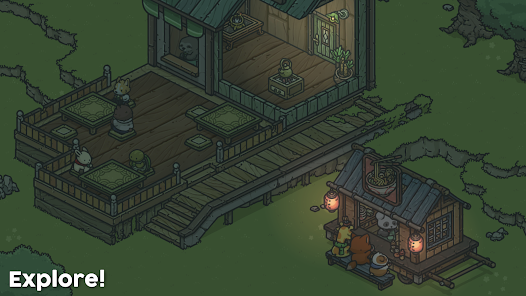
This guide covers tsuki odyssey how to use furniture with practical steps for mobile players.
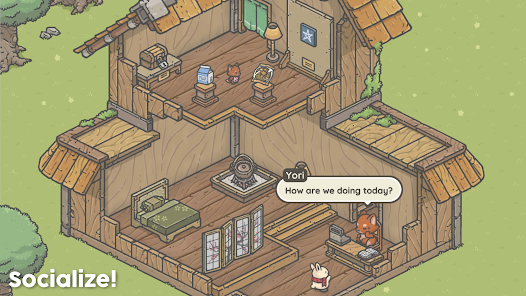
Quick answer: furniture is the main way you make the treehouse feel like yours. You buy pieces, place them where they fit, and rearrange whenever the room stops working. It is almost entirely cosmetic, but cosmetics are the point in a game about building a home rather than optimising a system.
There is no score attached to your room. Nothing rewards a well-decorated treehouse except the pleasure of looking at it.
That is worth saying plainly, because players arriving from other management games often expect furniture to have a mechanical effect.
Here, the effect is on you, not on the numbers.
It helps to think of the treehouse as a place that changes with the seasons of your own interest. What felt right in your first week will feel different once you have seen more of the shop and more of the village.
How do you get furniture?
Most of it comes from the shop, which rotates what it offers.
Some pieces appear through events or as rewards for progress.
A few are tied to specific villagers or locations.
That means building a collection is a slow process rather than a shopping trip.
Check the shop whenever you pass, since stock changes.
Buy what you like when it appears, rather than waiting for a perfect set.
The room comes together through accumulation.
Watch what catches your eye while you are out walking. A piece of furniture that echoes something you saw somewhere else makes the room feel connected to the world rather than assembled in isolation.
On this page
How should you decide what to buy?
Start with what you actually like rather than what seems most efficient.
There is no efficiency here, so preference is the only real criterion.
If two pieces are similar in price, take the one that fits the room you are building.
If a piece does not fit anything yet, it might later.
Buying something you do not want because it is rare is a common early mistake.
Rarity does not matter if the piece sits in storage.
Choose what you will look at.
If a room feels wrong and you cannot say why, try removing something rather than adding. Most crowded rooms improve by taking one object away, not by finding a better object to put in.
Where should furniture go?
Place bigger pieces first, because they anchor a room.
Then fill the gaps with smaller things.
Leave walking space, even though nobody walks anywhere.
Rooms that feel crowded are harder to enjoy than rooms with some emptiness.
Put the things you like most where you see them first on opening the game.
That first glance is most of the experience.
Arrange for that view rather than for symmetry.
Keep a few pieces in reserve rather than forcing everything onto the floor. Having something to swap in makes rearranging enjoyable instead of limiting.
Should you rearrange often?
Yes, whenever the room stops feeling right.
Rearranging is free, which makes experimentation sensible.
Players who place furniture once and never touch it end up with a room that reflects their earliest taste, not their current one.
Do it in a single session rather than gradually, so you can judge the result as a whole.
Then live with it for a while before changing again.
Constant fiddling is as unsatisfying as never changing anything.
Find a rhythm.
There is also a small pleasure in leaving one corner deliberately unfinished, so the room always has somewhere to grow into as you find new things.
Does furniture connect to anything else?
Loosely. Some villagers may comment on your home, though it is a small part of the game.
Some pieces come from the same sources as gifts, which means shopping and friendship overlap.
Mostly, though, furniture sits on its own as the creative outlet.
That is not a weakness. A game needs something that exists purely for the player’s taste.
Furniture is that thing here.
Treat it accordingly and it stays enjoyable.
What are the common furniture mistakes?
Buying for rarity. Storage fills with pieces you never display.
Never rearranging. The room stops matching your taste.
Filling every gap. Crowded rooms are harder to enjoy than spare ones.
Waiting for a complete set. The shop rotates; you may wait a long time.
Spending carrots you needed for upgrades. It is fine occasionally, less so consistently.
None of these ruin anything.
They just make the room less pleasant than it could be.
The most useful habit is to place furniture where you actually walk rather than where it looks best in a screenshot. The treehouse rewards being lived in, and items you pass every day contribute more than items tucked into a corner you never visit.
It also helps to keep a few pieces in storage rather than placing everything immediately. New furniture arrives steadily, and having space to swap something in means you can respond to a visitor or a request without dismantling a room you liked.
Finally, do not ignore small items. A lamp or a stool takes one slot and often does more for a room than a large piece that crowds out the space around it.
Finally, remember that furniture is the part of the game that asks nothing of you. It is there to be enjoyed, not optimised, and treating it that way keeps it fun.
It is worth thinking about furniture as a way of shaping movement rather than just filling space. A rug or a low table in the middle of a room changes where the eye goes, and a room that reads clearly is easier to keep tidy as new pieces arrive.
Grouping items by theme also pays off. A corner with a chair, a lamp and a small plant reads as a place to sit, while the same three items scattered across the room read as clutter, and the tidy version usually suits the game better when visitors arrive.
Try to avoid filling a room before you have the piece you actually want for it. Leaving a gap for a while is cheaper than placing something temporary, deciding it does not fit, and having to move it later.
When you do rearrange, do it in one pass. Moving a single item at a time to see how it looks tends to produce a room built around compromises rather than one built around a plan.
Frequently asked questions
Does furniture affect gameplay?
Almost none. It is cosmetic, and that is intentional.
Can I sell furniture?
Check the shop. Some pieces can be moved on if you no longer want them.
Does more furniture make the room better?
Not necessarily. A few well-chosen pieces usually look better than many.
Is there a theme to follow?
Only the one you choose. There is no scoring for consistency.
Should I save for expensive pieces?
Only if you genuinely want them. Cheap pieces used well look just as good.
For more, see decorating the treehouse and using wall decorations. More coverage is on the Tsuki Odyssey hub.
Official game information: hyperbeard.com.