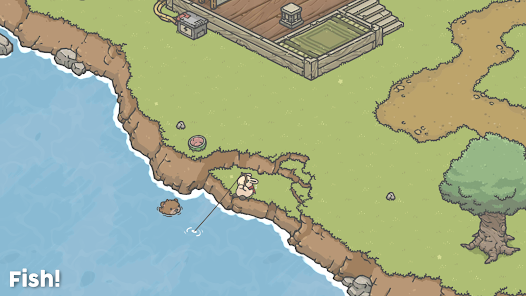
This guide covers tsuki odyssey gameplay overview with practical steps for mobile players.
Quick answer: Tsuki Odyssey is a cozy game about a rabbit living in a treehouse in a small village. You farm carrots, decorate your home, explore the village and take part in seasonal events. There is no combat, no timer and nothing to lose by being away, and the appeal is a quiet place that slowly becomes yours.
The game is best understood as a place rather than a challenge. You visit, you potter about, and you leave.
That framing is what makes sense of the design, from the real-time calendar to the absence of any failure state.
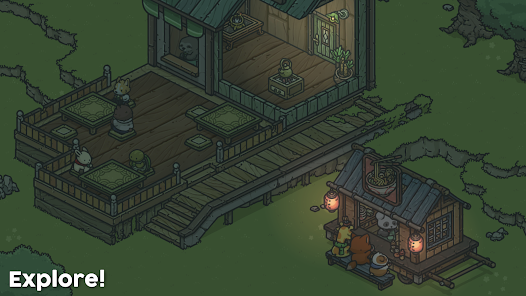
What do you actually do?
You farm carrots, spend them on furniture and decorations, and arrange your treehouse room by room.
Around that core sit shops with rotating stock, seasonal events, a newspaper, and various small activities.
None of it is required and all of it is optional.
You do what you feel like doing on a given day.
That makes the game very easy to pick up and very hard to describe as a list of tasks.
It is worth trying anyway, because the shape of the loop explains everything else. You collect carrots, you spend them on things for the treehouse, and the treehouse is the point.
Everything else supports that. The shops supply it, the seasons decorate it, the newspaper frames it.
Once you see the treehouse as the centre, the rest of the game makes sense.
On this page
How does progression work?
Through accumulation rather than levels. Better farm, more carrots, more decorations, a nicer treehouse.
There is no score and no completion percentage.
That makes progress a matter of what your home looks like rather than what your account says.
For some players that is liberating, and for others it is the reason they stop playing.
Both reactions are honest responses to the design.
There is something clarifying about a game with no score. It removes the question of whether you are doing well, and replaces it with whether you are enjoying yourself.
Some people find that relaxing and others find it aimless.
Neither is wrong, and the game does not try to convert you either way.
What are the main systems?
Carrot farming, which is the income. Decorating, which is the purpose. Shops, which are how you acquire things. And seasonal content, which marks time passing.
Supporting those are the inventory, the newspaper, photos and the daily appearance of the village.
Each is simple on its own and they interlock without much complexity.
Nothing here requires a guide to understand, which is part of the appeal.
The depth comes from taste rather than mechanics.
That is an unusual thing to say about a game. Most have a skill you can improve at, whether that is reflexes or planning.
Here the skill is arranging things well, and it is the same skill you would use in a real room.
Experienced players make better-looking treehouses with the same items available to everyone.
They have simply learned what groups well and how much space a thing needs.
Is it pay to win?
There is nothing to win. There is spending, and it accelerates progress the way most cozy mobile games allow.
What is notable is that the core loop is playable without paying. Carrots come from the farm, and the farm is yours.
Free players progress steadily by checking in and decorating.
Whether the pace suits you is a personal question rather than a judgement about the game.
The design does not appear to gate content behind purchases.
That matters because it means the game is the same experience for everyone, just at different speeds.
A free player and a paying player build the same treehouse; one simply gets there sooner.
Given how little there is to compete over, that seems like the right balance.
How does it compare with similar games?
It is gentler than most management games and roomier than a pure collection game.
Games like Neko Atsume are almost entirely about collecting, while games like Animal Restaurant add more systems to manage.
This one sits in the middle, with more to do than a collection and less pressure than a management game.
That middle position is where its appeal lives.
If you want more systems, look elsewhere; if you want less, there are simpler options.
Who is it for?
Players who enjoy decorating, collecting and gentle progress. People who want something to check on rather than something to play.
It is less suited to anyone wanting challenge or a story. The game offers neither and does not pretend to.
If you have ever enjoyed tending something over time, this will likely hold you.
If you need constant engagement, it will not.
Both responses are reasonable and the game is honest about what it offers.
What it offers, in the end, is a small place that slowly improves and a village that changes with the seasons.
That is either enough or it is not, and no feature list will settle the question for you.
Frequently asked questions
Is there any combat?
No. There is no combat and no fail state of any kind.
Do you need to spend money?
No. The core loop is entirely playable without purchases.
What is the goal?
There is no ending. You build a home and see the village change over time.
How long does progress take?
Weeks and months, which is normal for the genre.
Does it work offline?
The farm and village continue while the app is closed.
It is a game about making a small place nice and visiting it often enough to notice the changes. You can also start from the Tsuki Odyssey hub.
Official game information: hyperbeard.com.