This guide covers tsuki odyssey vs tsuki adventure with practical steps for mobile players.
Quick answer: Tsuki Adventure and Tsuki Odyssey are related games from the same world, but they offer different things. Tsuki Adventure is the earlier game and leans more toward exploring and watching progress accumulate. Tsuki Odyssey adds a treehouse to furnish and makes decorating the main activity. Choose Adventure for a simpler idle experience and Odyssey for a creative one.
The comparison comes up because the two share a character, a tone and a developer. It is easy to assume one replaces the other.
They do not. They are different shapes of the same idea, and which suits you depends on whether you want to explore or to arrange.
What is Tsuki Adventure?
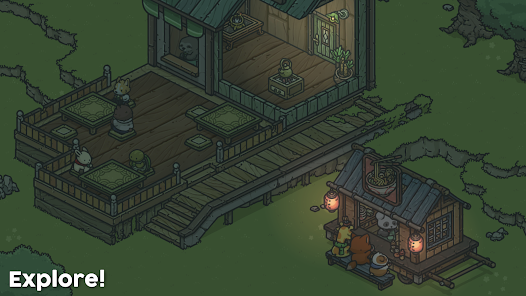
It is the earlier game, built around a rabbit who takes over a carrot farm and potters around a village.
The emphasis is on idle progress and small discoveries rather than on furnishing a space.
You check in, see what has happened, and let the world carry on.
That makes it the simpler of the two, with fewer systems asking for your attention.
It is the version to choose if you want the gentlest possible experience.
There is something to be said for that. A game with fewer systems asks less of you, and asking less is not the same as offering less.
Adventure is the kind of game you open for a minute and close without guilt.
Odyssey asks a little more because it wants you to make decisions about furniture.
Both are legitimate, and the difference is one of appetite rather than quality.
On this page
What does Tsuki Odyssey add?
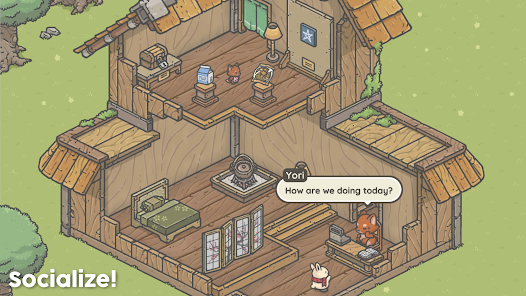
A treehouse to furnish. That single addition changes what the game is about.
In Odyssey the decorating is the centre rather than a side activity, and the shops, inventory and seasons all support it.
That gives the game more to do and more ways to express taste.
It also makes each session a little more deliberate, because you are making choices rather than only watching.
Whether that is an improvement depends entirely on what you want from a cozy game.
That is worth unpacking, because “more features” is not automatically better in this genre.
Every system added is another thing to check, another tab to open and another way to feel you are falling behind.
Odyssey adds those systems and also adds the pleasure of arranging a home.
Most people find the trade worthwhile; some do not.
How do they compare side by side?
| Tsuki Adventure | Tsuki Odyssey | |
|---|---|---|
| Main activity | Exploring and idling | Furnishing a treehouse |
| Focus | Discoveries and progress | Decorating and arranging |
| Systems | Fewer, simpler | Shops, inventory, seasons |
| Creative freedom | Limited | Central to the game |
| Pressure | None | None |
| Best for | Players who want to watch | Players who want to arrange |
Which is better for a new player?
Odyssey, for most people, because it gives you something to do. Adventure is lovely and can feel thin if you want to be active.
That said, thin is not a criticism here. A game that asks almost nothing is exactly what some players want.
If you are unsure, start with Odyssey. It has more to hold your attention, and you can always try the earlier game afterwards.
Starting with the simpler one and moving to the richer one is also fine.
There is no order requirement and no story you will spoil.
That is worth saying because players often assume they should start with the earlier game. In most series that would be true.
Here it is not, because the two are not chapters of one story. They are two takes on the same world.
Start wherever the description appeals more.
Does progress carry between them?
No. They are separate games with separate progress.
That means starting one does not affect the other, which is worth knowing if you were hoping to continue where you left off.
It also means you can play both without any sense of divided loyalty.
They are simply two games rather than two halves of one.
Treat them as siblings rather than as versions.
That framing helps in another way too. If you try one and it does not fit, the other is genuinely different rather than simply older or newer.
Someone who found Odyssey too fiddly may enjoy Adventure’s simplicity.
Someone who found Adventure too passive will prefer furnishing a treehouse.
The two cover each other’s gaps.
Can you enjoy both?
Yes, and they pair reasonably well because they ask for different attention. One is something to watch, the other is something to arrange.
Neither punishes absence, so running both costs two brief check-ins.
The practical risk is that two routines start to feel like chores, which is true of any pair of idle games.
If that happens, keep the one you reach for first.
Neither will mind being left alone for a while.
And if you never try the other one, nothing is lost. Either game stands on its own, and neither expects you to have played the other first.
That is a healthy thing for a pair of games to be.
Frequently asked questions
Which came first?
Tsuki Adventure is the earlier game.
Are they by the same developer?
Yes, they come from the same studio and share a character and tone.
Does progress transfer?
No. They are separate games with separate saves.
Which should a new player start with?
Odyssey for most people, since it gives you more to do.
Is one better than the other?
Neither. They suit different appetites rather than different skill levels.
Pick Adventure to watch a world and Odyssey to arrange one, and either will serve you well. You can also start from the Tsuki Odyssey hub.
Official game information: hyperbeard.com.