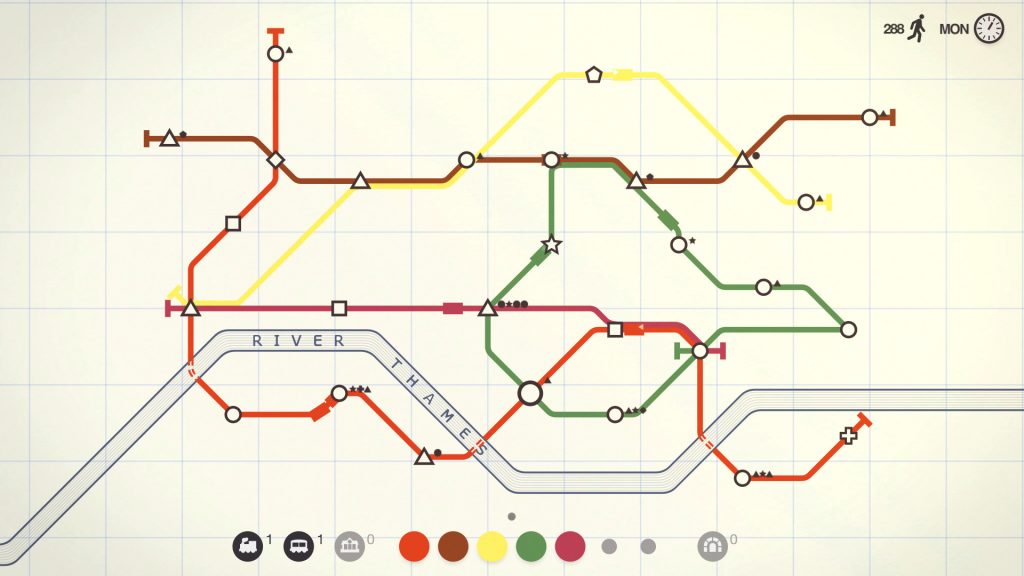
This guide covers mini metro sao paulo map guide with practical steps for mobile players.
Quick answer: The Sao Paulo map in Mini Metro spreads stations across a wide, sprawling city with few natural bottlenecks, so your lines end up long and your trains spend a lot of time travelling. The winning approach is to build a compact core serving the dense centre, then extend outward gradually rather than trying to cover the whole map at once.
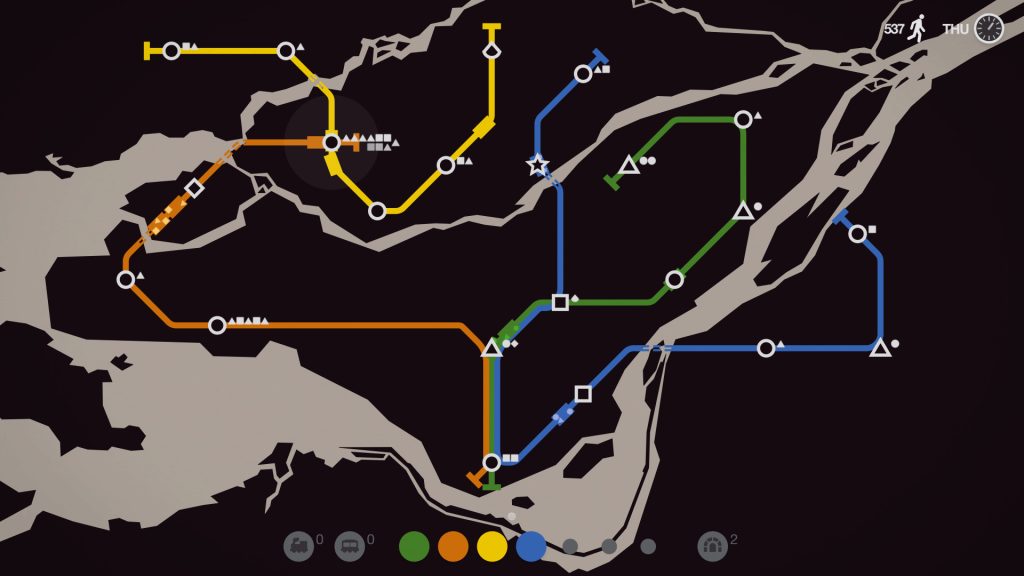
What makes Sao Paulo different?
Most maps give you a river to work around, which naturally concentrates the network into a few dense corridors. Sao Paulo does not, so the stations spread out and the distances between them grow.
That changes the shape of the problem. Instead of managing a crossing, you are managing length, and long lines mean passengers wait longer while trains travel.
The result is a map that punishes ambition. A network that tries to reach everywhere will be slow everywhere.
Players used to river maps often overextend here in the first few minutes and then spend the rest of the run recovering.
Restraint is the defining skill on this map, and it is learned by watching a long line deliver nothing while a short one clears its platforms.
Watch the passenger counter rather than the map. A short line that clears quickly looks unambitious but keeps the board under control.
On this page
How should you shape your first lines?
Start with a short line through the densest cluster of stations. Short means the train returns quickly, which means passengers clear and shapes transfer faster.
Resist the urge to reach the isolated stations on the edges immediately. They generate fewer passengers and cost you a great deal of travel time.
A compact loop or a short straight line serving four or five stations is a better opening than a long line reaching six spread out ones.
Once the core is stable, extend one line outward at a time and watch whether the added length hurts the stations it already served.
If it does, you extended too far and should consider a separate line instead.
| Approach | Effect | Best for |
|---|---|---|
| Short dense line | Fast turnaround, quick clearing | The opening minutes |
| Long line across the map | Slow turnaround, waiting passengers | Late game with spare trains |
| Two medium lines | Balanced coverage | Once the core is stable |
| Interchange hub | Lets passengers change lines | Where two lines meet |
An interchange near a cluster of rare shapes is especially valuable, because those passengers otherwise travel the whole network to reach their destination.
Where should interchanges go?
Put them where your busiest lines cross. An interchange lets passengers change routes without you extending a line, which is the cheapest capacity you can buy.
In a sprawling city, interchanges do the work that a river crossing does on other maps: they concentrate flow through a few points you can manage.
Two well-placed interchanges are worth more than one long line, because they let the network reorganise passengers without extra track.
Place them early if you can. Retrofitting an interchange onto a line that already carries traffic is disruptive.
Watch which stations accumulate waiting passengers and put the interchange next to those.
Rare shapes in remote corners are the hardest problem on this map, and they are worth planning for a few minutes before the crowd builds.
How do you handle the isolated stations?
Leave them until later. A distant station with a rare shape will eventually need serving, but not in the first five minutes.
When you do reach them, use the shortest possible connection to the nearest line rather than extending your main line across the map.
A short branch that feeds into an interchange is more efficient than routing a trunk line out and back.
If a distant station is overcrowding, consider whether you can serve it at all with the resources you have. Sometimes the correct answer is to accept the loss elsewhere.
That sounds harsh, but spreading thin loses the whole map rather than one station, and the run ends either way once the crowding builds.
Keep one upgrade in reserve for the moment a station starts filling. Flexibility is worth more than a marginal capacity gain.
Which upgrades should you take?
Trains first when your lines are long, because a second train halves the wait on an existing route without any new track.
Lines when you have a genuine gap in coverage rather than a gap in capacity. Adding a line you cannot staff just creates another slow route.
Carriages help on the busiest short routes, where the train is full before it finishes its run.
Tunnels matter less here than on river maps, which frees your choices for capacity upgrades.
That relative freedom is one of the map compensations for its sprawl, and it lets you spend those choices on the capacity the network actually needs.
The sixth is treating the map like a river city and waiting for a bottleneck that never appears. The bottleneck here is distance, not water.
What are the common Sao Paulo mistakes?
Building long lines early is the first and most common. The second is ignoring interchanges and trying to solve every routing problem with more track.
The third is reaching for isolated stations before the core is stable. The fourth is taking lines as upgrades when trains would have solved the actual bottleneck.
The fifth is failing to remove or shorten a line that has grown too long, when editing is exactly what the situation calls for.
Sao Paulo rewards a patient opening. Build small, watch what fills, and extend only when the core can absorb the extra length.
Sao Paulo spreads outward rather than crowding into one centre, so the lines that survive are the ones that keep extending rather than the ones that try to serve everything from a single hub.
Frequently asked questions
Is Sao Paulo a hard map?
It is unforgiving of sprawl. Players who build compactly do well; those who try to cover everything struggle.
Do I need tunnels here?
Less than on river maps. Spend those upgrade choices on trains and capacity instead.
When should I extend outward?
Once the core stations clear quickly and you have spare trains to keep the longer route frequent.
Are interchanges worth it?
Yes, particularly in a city without a natural bottleneck. They concentrate flow.
Should I remove long lines?
If a line has grown too long to stay frequent, shortening it or splitting it usually helps.
For map strategy, see the Mini Metro hub.
Official game information: dinopoloclub.com.