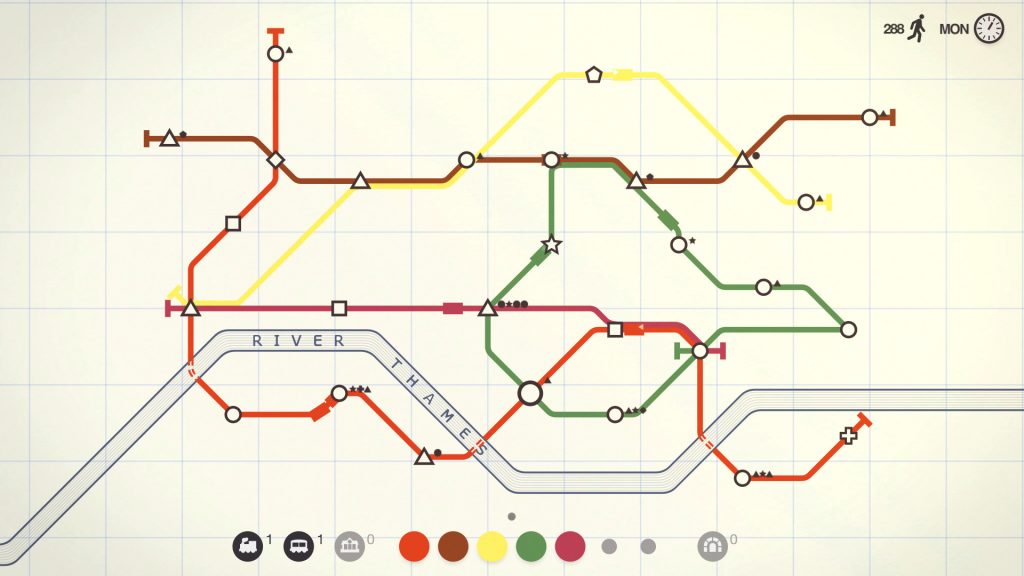
This guide covers games like mini metro with practical steps for mobile players.
Quick answer: If you like Mini Metro, the two closest alternatives are Mini Motorways and Railbound. Mini Motorways applies the same minimal design to roads and cars rather than trains, while Railbound is a puzzle game about laying track. Both share the calm, uncluttered feel, but they test different things, so pick based on whether you want network pressure or a solved puzzle.
Feedback speed matters as much as restraint. A game that takes ten minutes to show you a mistake is teaching you much more slowly.
The best examples in this style make failure obvious within seconds, which is why they feel fair even when they are hard.
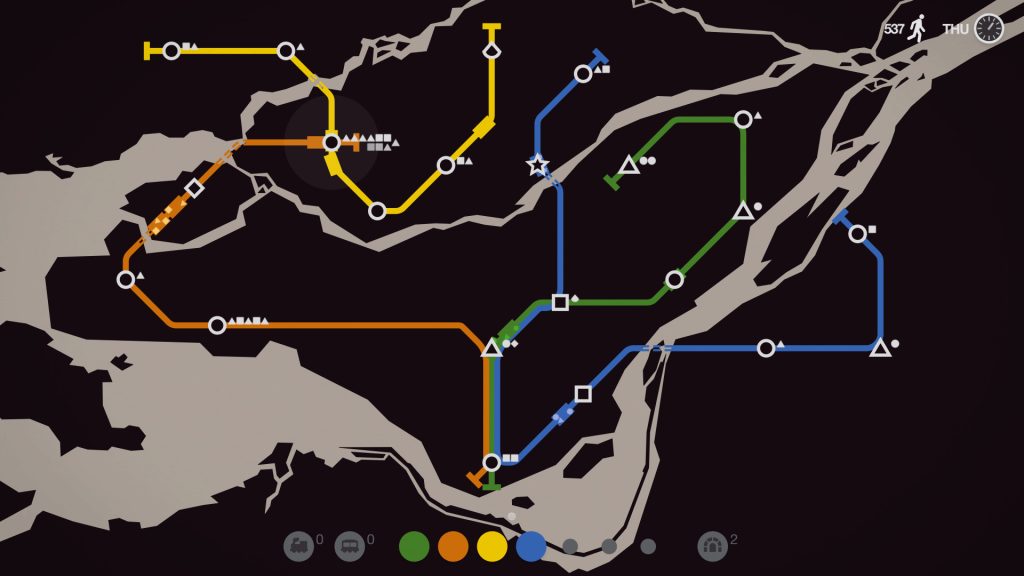
What makes a good Mini Metro alternative?
The same restraint. A game that shares the design philosophy of few elements and clear feedback will feel related, even if the subject differs.
It also needs the same relationship with failure: legible, gradual, and clearly caused by something you did.
Beyond that, the alternatives split into two groups. Some are live network games with pressure building over time, and others are puzzle games with fixed solutions.
Knowing which you want is most of the decision.
They look similar and feel quite different.
It also handles upgrades similarly, offering a choice between resources rather than a fixed progression.
That shared structure is why the two games feel like siblings rather than competitors.
If you bounced off Mini Metro because trains felt abstract, roads may suit you better, since the traffic is easier to picture.
On this page
How does Mini Motorways compare?
It is the nearest relative. The same studio, the same minimalist style, and the same escalating pressure, but applied to road networks and cars.
Instead of drawing lines between stations, you draw roads between houses and destinations, and the traffic builds up in the same way.
Because the underlying design is so similar, the transfer is almost immediate for anyone who has played Mini Metro.
What changes is the shape of the problem. Roads can merge and branch in ways metro lines cannot, which adds a different kind of geometry.
If you want more of the same feeling, it is the obvious next step.
| Game | Subject | Pressure |
|---|---|---|
| Mini Metro | Subway lines | Live network, escalating |
| Mini Motorways | Roads and cars | Live network, escalating |
| Railbound | Track puzzles | Fixed solutions, no timer |
| Transport puzzlers | Various | Usually fixed solutions |
It also has more authored content, since each level is designed rather than generated by a system.
Some players prefer that. A designed puzzle has a definite answer, which is satisfying in a way emergent systems are not.
How does Railbound compare?
Railbound is a puzzle game rather than a live network game. You lay track to guide trains through a level, and the solution is fixed rather than emergent.
That means there is no escalation and no failure timer. You think, you solve, you move on.
It shares the aesthetic calm and the satisfaction of a clean connection, but not the pressure.
For players who find Mini Metro stressful, it is a gentler relative.
For players who like the pressure, it will feel inert.
Consider whether you need to be able to stop instantly. If so, the live network games are more forgiving than a half-solved puzzle.
Leaving a puzzle mid-thought is harder than abandoning a run you were going to lose anyway.
Which is better for short sessions?
Mini Metro and Mini Motorways both fit a few minutes, because runs are quick and restarts are instant.
Railbound also fits short sessions, but for a different reason: a single level is a self-contained problem.
Mini Metro’s advantage is that you can stop at any moment without losing progress, since there is no progress to lose.
That makes it slightly better suited to interruptions.
Railbound rewards a session where you can sit with one puzzle.
Also look at games built around a single map that you learn rather than a set of levels you complete.
That structure is what gives Mini Metro its longevity, and it is rarer than it sounds.
Are there other games in this style?
A small number of minimalist management games share the philosophy, usually built around a single system and a clean interface.
They are worth seeking out if what you enjoyed was the clarity rather than the trains.
The genre is small, which makes the good ones easy to find and the mediocre ones obvious quickly.
Most are inexpensive, so trying one costs little.
Look for games that show you why you failed, because that is the quality that makes this style work.
Trying two is more informative than reading about either, and both are cheap enough that the comparison costs little.
What you notice in the first ten minutes usually tells you which one you will keep.
If you dislike both, the style itself may be the issue rather than the subject, and no alternative will fix that.
Which should you choose?
Choose Mini Motorways if you want more of the same pressure with a different subject.
Choose Railbound if you want the aesthetic without the stress.
If you have not played Mini Metro yet, start there, since it is the clearest statement of the design.
Then move to whichever of the two matches the part you enjoyed.
All three are inexpensive, so the experiment is cheap.
None of these games is long, which means the cost of trying one is measured in an evening rather than a month.
The honest summary is that Mini Motorways is more of the same and Railbound is the calmer cousin. Neither replaces the original.
Frequently asked questions
Is Mini Motorways by the same developer?
Yes, it shares the design lineage and the visual style.
Is Railbound a timed game?
No. It is a puzzle game with fixed solutions rather than live pressure.
Which is hardest?
Mini Metro and Mini Motorways both escalate; Railbound does not.
Are these games free?
No, they are paid titles, though usually inexpensive.
Which is best for a beginner?
Mini Metro, as the clearest introduction to the style.
For the original game, see the Mini Metro hub.
Official game information: dinopoloclub.com.