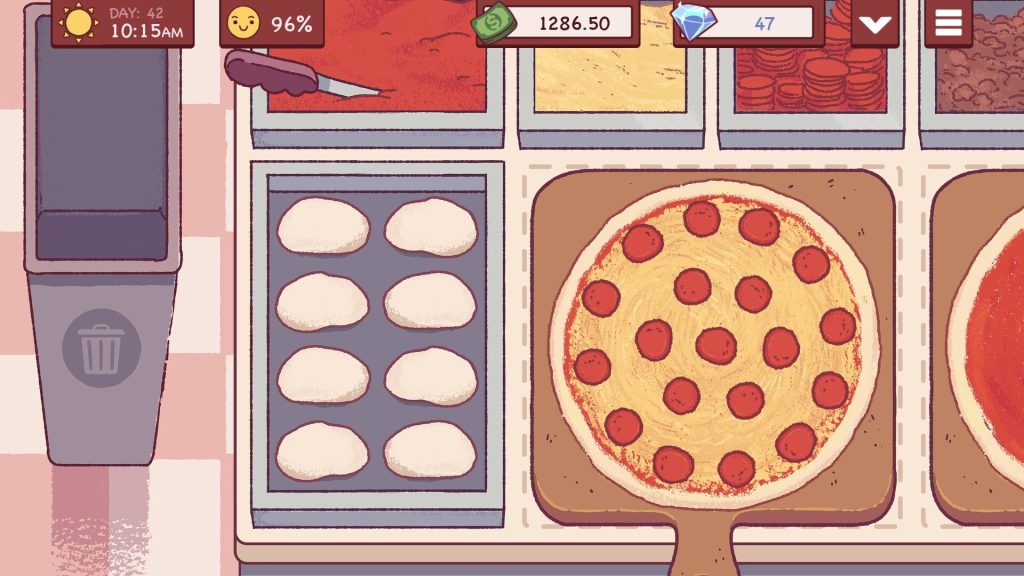
This guide covers good pizza great pizza how to handle half and half orders with practical steps for mobile players.
Quick answer: A half and half order means the customer wants two different sets of toppings on one pizza, one on each side. Read which topping belongs to which half, build each side separately, and keep the divide clean down the middle so neither half bleeds into the other.
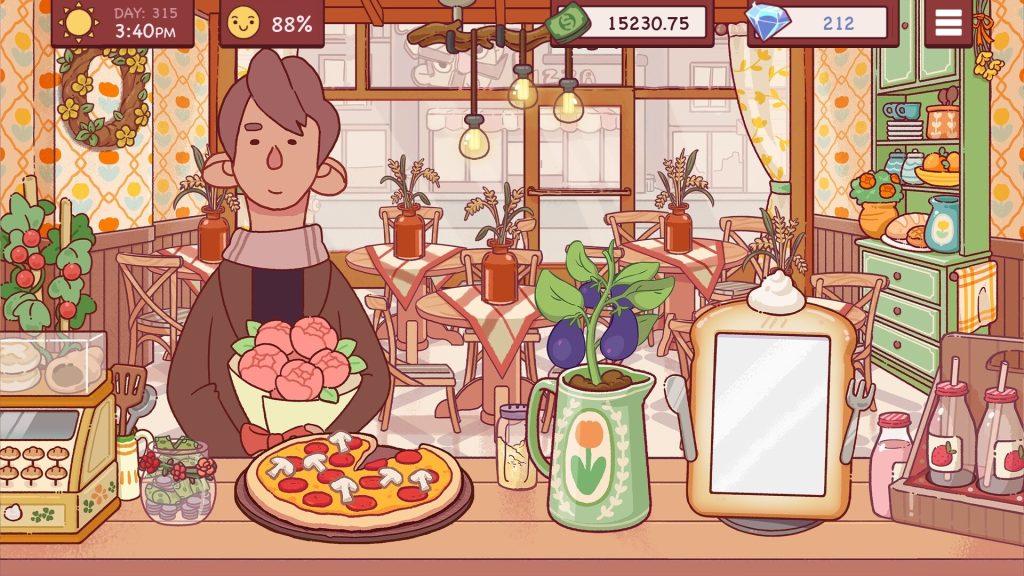
What is a half and half order?
A half and half order puts two different pizzas on one base. The customer names one set of toppings for the left side and another for the right. You still bake one pizza.
These orders appear once your menu has enough toppings to make a split meaningful. They are a test of attention rather than skill, because the build itself is simple if you read it correctly.
The tricky part is that customers describe the split casually. They might say one half this way and the other that way, without naming left or right at all. You have to work out the mapping.
Some orders split only the toppings while keeping the base the same. Others split the cheese as well, which changes the build considerably and is easy to miss on a quick read.
Treat every half and half order as two small pizzas rather than one big one. Thinking in halves keeps your attention on each side and stops you scattering toppings across the whole base.
These orders also take longer to assemble than a uniform pizza, so start them early in your queue. A slow start is the main reason half and half orders fail on patience rather than accuracy.
Finally, remember that both halves must be correct. Getting one side right and the other wrong fails the whole order, because the customer sees a single pizza and judges it as one thing.
On this page
How do you read which side is which?
Listen for any positional word first. A customer who says left, right, top or bottom is giving you the map directly. Use it exactly as stated.
When no position is given, the order of mention usually sets the sequence. The first set of toppings described tends to belong to the first half mentioned, though the phrasing can be loose.
Watch for the word other. A customer who says one half with mushrooms and the other with olives is naming two distinct sets, and both need to be present and separate.
Some requests are phrased as a restriction rather than an addition. A customer might ask for one half without meat, meaning the other half can carry it. Read the negative carefully.
If the wording is genuinely balanced, such as a pizza split between two toppings with no preference stated, either arrangement satisfies the order. Do not waste patience deciding.
Regular characters sometimes have a favoured side or a standing preference from earlier chapters. Remembering that saves you a reading every time they return with a split order.
When you are unsure, repeat the two sets back to yourself before building. Naming them once in your head catches most misreadings before they reach the oven.
How do you keep the halves separate?
Place the first set of toppings before touching the second. Finishing one half completely gives you a clear boundary to work against rather than two half finished sides.
Work from the centre outward on each side. Starting at the middle makes the divide deliberate, while starting at the edge tends to push toppings inward across the line.
Leave a small visual gap down the middle. It costs nothing and makes the split obvious to both you and the customer when the pizza arrives at the counter.
Do not let a topping drift over the divide to balance the look. A stray piece on the wrong half is the mistake customers notice first, because the split is the entire point of the order.
Check the boundary before baking. Once the pizza is in the oven it is too late to separate anything, and a blurred divide cannot be fixed after the fact.
If one side uses a heavier topping, place it last. Heavier pieces shift when you add them first, dragging the divide out of line as you work.
Consistency helps here more than speed. A routine that always builds the same way round means the split becomes automatic rather than a decision each time.
What about cheese and sauce?
Sauce usually goes across the whole base regardless of the split. A half and half order is normally about toppings rather than the base, so do not complicate it without being asked.
Cheese is where splits get interesting. Some customers want cheese on one half only, which means you are building a cheeseless side and a normal side on the same pizza.
Apply cheese before the toppings when both halves take it. Doing it in one pass keeps the surface even and gives you a flat field to place the two topping sets on.
If only one half takes cheese, do it before adding either set of toppings. Cheese added afterwards buries the toppings on the cheesy side and leaves the other side looking bare.
Watch for a customer who asks for extra cheese on one half. That is a quantity split rather than a presence split, and it needs a visibly heavier layer on one side only.
Sauce changes are rare but they do occur. If a customer asks for a different sauce on one half, treat the base itself as split and build the two sides as separate pizzas.
When in doubt, keep the base as simple as the order allows. Most half and half requests are about toppings, and overcomplicating the base is how a straightforward order goes wrong.
What mistakes ruin half and half pizzas?
The most common error is building one side and forgetting the other. The pizza looks finished from one angle and empty from the other, and the customer notices immediately.
The second is a blurred divide. Toppings creep across the middle while you work, and the two halves merge into a single mixed pizza that matches neither request.
The third is misreading which side gets what. A perfectly built pizza with the sets reversed still fails, because the customer asked for a specific arrangement rather than simply both toppings.
The fourth is overloading one half. Trying to match the visual weight of a heavier topping by piling more onto the lighter side makes the pizza uneven and slower to assemble.
The fifth is treating the order as two separate pizzas for timing. It is one pizza with one patience meter, so a careful build still needs to fit inside the normal window.
Finally, do not assume the split is symmetrical in effort. One half may need three toppings and the other only one, and planning that difference stops you rushing the complicated side.
Check the whole pizza one last time before baking. A final glance catches the missing half, the stray topping and the blurred divide in a single second.
How do you serve half and half orders quickly?
Decide both sets before you begin. Knowing the full build in advance means the assembly becomes a sequence rather than a series of small decisions under pressure.
Build the simpler half first. Finishing the easy side quickly gives you momentum and leaves your attention free for the half with more toppings.
Keep your toppings grouped in a consistent place. Hunting through the menu for the second set is where most of the lost time goes on a split order.
Do not re-read the dialogue repeatedly. Read once, fix both sets in your head, and commit, because scrolling through text costs more than trusting your reading.
Serve in patience order like any other pizza. A split order is not a special case and should not drift behind simpler work just because it looks more complicated.
If a rush is building, take the split order before the simple ones. Simple pizzas can be caught up quickly, while a half and half started late is the one that times out.
After the shift, note which phrasings caused confusion. The game reuses its order language, so a split you decoded once is easier the next time it appears.
Frequently asked questions
Does half and half mean two pizzas?
No. It is one pizza with two different topping sets, one on each side, judged as a single order.
What if the customer does not say which side?
Follow the order of mention, or choose either arrangement if the request is genuinely balanced. The requirement is that both sets are present and separate.
Can the cheese be split too?
Yes. Some customers want cheese on one half only, and that split needs to be visible before you add any toppings.
How do I stop toppings crossing the middle?
Build one half fully, work outward from the centre, and leave a small gap down the divide so drift is obvious.
Why do my split orders get rejected?
Usually one half is missing, the sides are reversed, or the divide has blurred into a single mixed pizza.
For other order patterns, see the guides on the Good Pizza Great Pizza hub, and the all dressed order guide covers the busiest build in the game.
Official game information: www.goodpizzagreatpizza.com.