
This guide covers monument valley 2 how to use moving platforms with practical steps for mobile players.
Quick answer: Moving platforms in Monument Valley 2 travel along fixed paths without your input, and your job is to have the character waiting where the platform arrives. Watch a full cycle before acting, tap as the platform reaches the character rather than after it stops, and remember that the route only exists during the window when the moving surface is adjacent. Nothing is timed, so missing a platform costs a short wait rather than an attempt.
Motion is the only mechanic in the game you do not control directly. Everything else, rotation and sliding alike, responds to your input and stays where you put it. A moving platform does its own thing on its own schedule, which turns the puzzle from an arrangement problem into a coordination problem.
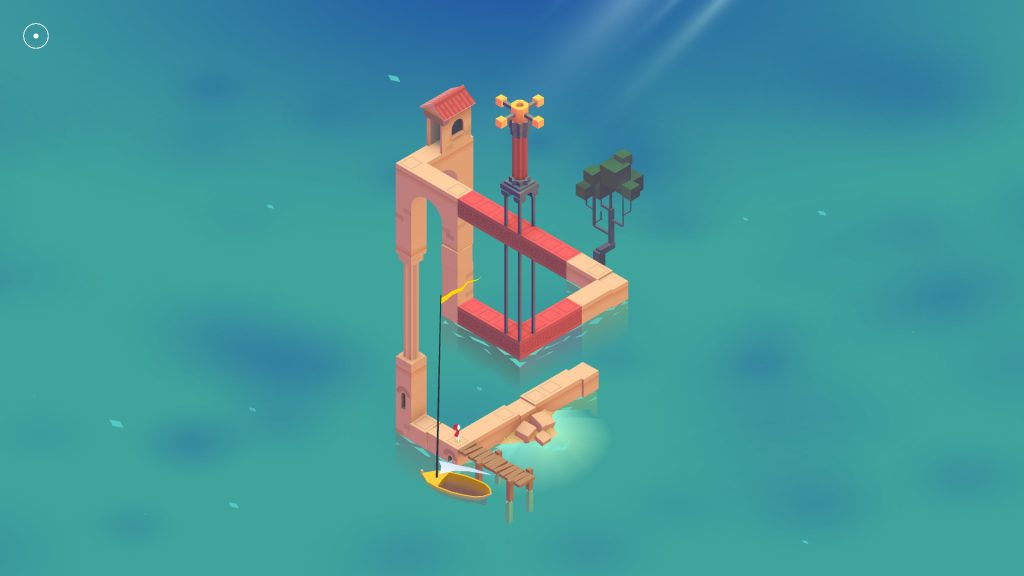
What kinds of moving structures are there?
Platforms that travel along a track and return, surfaces that rotate continuously around a pivot, and pieces that move only when a mechanism triggers them. All three behave the same way from the player’s perspective: they will be in a useful position periodically rather than permanently.
The important distinction is whether the character can ride them. A surface you can stand on carries you to a destination, while a surface you cannot stand on merely changes what a static route connects to when it passes.
Telling them apart is a matter of looking: if the moving piece has a walkable top surface and the character can step onto it, it is a ride. If it is a wall or a pillar in motion, it is a changing connector.
On this page
How do you time a step onto a moving platform?
Watch where it stops, if it stops at all, and identify the point in its path where it comes closest to the character. That point is your boarding position, and everything else in the cycle is waiting.
Then tap as the platform arrives rather than once it has arrived. The character begins walking immediately, so a slightly early tap means they meet the surface instead of chasing it, which is the difference between a boarding and a miss.
If you miss, do nothing. The character waits where they are, the platform completes its cycle, and you try again. There is no penalty and no wasted resource, which is why patience is the correct strategy throughout.
Why does the character get carried past the goal?
Because a moving platform does not know where you want to get off. It travels its full path, and the character rides to the end, which may be beyond the connection you need.
The answer is to prepare the destination while they travel. Rotate or slide the structure during the ride so that the place the platform finishes is connected to the next part of the route, rather than trying to step off early.
This is the chapter’s central technique and it applies to every moving platform in the game. Once you are comfortable arranging a landing during transit, motion stops being a complication and becomes simply another arranging opportunity.
What happens if the platform never comes back?
It always comes back, but not always from the same direction. Some travel a closed loop, so the return pass approaches from a different side and connects to a different surface than the outbound one did.
That is why watching a full cycle matters more than watching the first half. A platform that appears to shuttle back and forth may in fact be circling, and the difference changes which static route you should build at each end.
If the character is stranded somewhere with no route, rotate something to give them an exit. Nothing in the game can leave them permanently stuck, and the platform will return regardless.
How do you combine motion with rotation?
Set the static geometry first. Get the moving piece’s boarding point connected to a platform you can stand on, and get the landing point connected to the route beyond, before the character ever boards.
Then use the travel time. While the platform moves, rotate whatever needs to change at the far end, because the ride gives you a window that would not exist if the character were standing still.
If you have to choose between preparing the boarding and preparing the landing, prepare the landing. Boarding is a matter of timing; landing is a matter of arrangement, and arrangement is the thing you cannot fix mid-ride.
Why does timing feel harder than it is?
Because motion creates an impression of urgency that the game does not actually impose. Nothing is timed, nothing is lost, and a missed platform simply comes around again.
Players who feel rushed tap early, miss, and then tap repeatedly while the platform is out of reach, which produces a sense of a difficult timing challenge where none exists. The remedy is to watch one complete cycle without touching the screen.
Once you have done that, the rhythm becomes obvious and the chapter turns into what it actually is: a sequence of arrangement problems with a waiting period between each one.
Frequently asked questions
Can I stop or reverse a moving platform?
No. You control the structure and the character, not the motion, so your only lever is where and when to step on.
Do I lose anything by missing a platform?
Nothing. There is no timer and no penalty, and the platform returns on its own cycle.
Can I rotate while the character is riding?
Yes, and it is usually the intended solution for platforms that carry the character past the goal.
Why did the platform connect somewhere different on the way back?
Some platforms travel a loop rather than a line, so the return pass approaches from another side.
Is there a section where motion is required?
Yes. Several chapters cannot be completed without riding a moving surface, so the mechanic is not optional.
For related mechanics, see the guide to rotating structures, or return to the Monument Valley 2 hub.
Official game information: www.monumentvalleygame.com.