This guide covers pocket city 2 beginner guide with practical steps for mobile players.
Quick answer: Start Pocket City 2 by drawing a small grid of roads, zoning residential next to commercial so people can walk to work, and placing a power plant and water tower before you zone anything else. Grow in small blocks rather than sprawling outward, and keep an eye on the happiness icon so you fix problems before they cost you population.
Pocket City 2 is a city builder designed for short sessions, which changes the usual priorities. There is no long simulation to nurse through a crisis; you dip in, build a district, complete a quest, and come back later. That makes it forgiving to learn and easy to overbuild, because nothing punishes you immediately.
This guide covers the first few hours in the order the game actually rewards. It assumes no prior Pocket City experience and no interest in optimising a spreadsheet.
What kind of game is Pocket City 2?
It is a city builder for phones and tablets, and it is built around zones rather than individual buildings. You paint areas of land as residential, commercial or industrial, and the game fills them with buildings over time as demand grows.
Around that core sit the systems you would expect: utilities, services, traffic, pollution, taxes and citizen happiness. None of them is deep enough to require a spreadsheet, and all of them interact enough that ignoring one eventually shows up in your population.
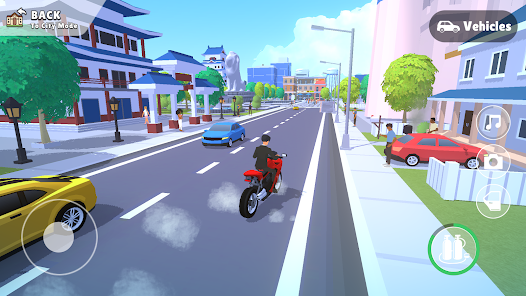
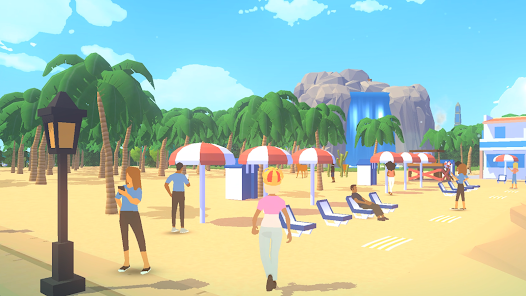
It is also a game you can walk around in. Your avatar can explore the streets on foot or in a vehicle, which turns the city from a diagram into a place. That mode is optional and it is also the best way to see what is actually wrong.
Because it runs offline and is sold as a single purchase, there is no energy meter, no advert break and no timer. You play until you stop, which is a large part of why it feels calm rather than demanding.
The result is a builder that respects short sessions. You can accomplish something in five minutes, and you can also leave the game running while you think about a road layout without anything degrading in the background.
Roads, then power, then water, then zones. That order matters because a zone with no road access will not develop, and a zone with no utilities will not hold residents for long.
Start with a single straight road and a small loop rather than a complex network. Early traffic is light, and a simple grid is easier to extend than a decorative cul-de-sac you have to demolish later.
Place one power plant and one water tower covering the area you intend to zone. Coverage is shown as a radius when you place the building, so position it in the middle of the planned district rather than at the edge where half the circle is wasted.
Then zone a modest residential strip along one side of the road and a commercial strip on the other. Keeping them adjacent means short trips, which keeps traffic light and happiness high without any road engineering.
Do not zone the whole map at once. Zoned land that nobody wants to build on is not a problem in itself, but it hides which parts of your plan are actually working.
On this page
How does zoning actually work?
You choose a zone type and drag over empty land. The game records the area, and buildings appear as demand for that zone type rises. You are setting policy, not placing houses.
Demand comes from the balance between the three types. Residents need shops to work at and industry to supply them, and businesses need customers. Over-zone one type and the others starve, which stalls growth until you correct the mix.
Zone density matters as much as zone type. A compact block of residential with a commercial strip beside it develops faster than a wide sprawl, because the game rewards proximity and suffers from distance.
Roads are the other half of zoning. A zone with no frontage on a road will not develop, and a zone reachable only through a long detour will develop slowly. Draw roads first, then zone along them.
If a zone stays empty, the cause is almost always access or utilities rather than demand. Check the road connection, then the power and water coverage, and only then reconsider the mix.
How do you keep citizens happy early on?
Cover the basics. Power, water and road access are the floor, and once those are in place the happiness indicator responds to services: police, fire, health, education and green space.
Each service has a radius, and overlapping coverage is wasted money. Place one building where it covers the most residents, and add a second only when the first cannot reach the new district you have built.
Parks are the cheapest happiness tool and the one most often forgotten. A small park in the middle of a residential block raises the mood of everything around it for very little upkeep.
Pollution is the happiness killer that arrives later. Industry generates it, and residents who live beside it become unhappy regardless of how well serviced they are. Keep industrial zones away from housing and the problem largely manages itself.
Watch the complaints rather than the number. The game tells you what citizens want, and fixing the specific complaint is faster than adding generic services and hoping.
How do you handle money in the early game?
Income comes from taxes on the buildings that actually exist, and expenses come from upkeep on everything you have placed. That asymmetry is the whole early economy: build only what develops, and the balance stays positive.
The temptation is to buy land and lay infrastructure ahead of demand. It feels like planning and it behaves like debt, because upkeep starts immediately while the tax base does not arrive until the district fills.
Quests are the other early income source. They pay for actions you were going to take anyway, so completing them as they appear is the cheapest way to fund expansion without raising taxes.
Raise taxes only when you can see the effect. Higher rates increase income per building but reduce happiness, and unhappy citizens leave, which removes the tax base you were trying to tax.
Keep a buffer. A city with no reserve cannot respond to a disaster or a sudden service need, and the cost of that inflexibility is usually larger than whatever you saved by spending to zero.
Outward in small steps, following the roads you have already built. A new district attached to the existing grid inherits its access and its services, which makes it far cheaper than a satellite development across the map.
Buy land next to what you have, not in a picturesque location. The land purchase is only the first cost; connecting it is the second, and a distant plot needs a long road before it produces anything.
Expand when your existing zones are full rather than when you are bored. A district that has developed completely is a signal to grow, while a half-empty district is a signal that something in it is wrong.
Keep the shape compact. A roughly circular city with a road grid is easier to serve with coverage radii than a long strip, because every service building reaches more of the population from the same position.
Resist the urge to fill the map. Space is not the constraint in this game; coverage and traffic are, and both get harder as the city spreads.
What should you learn in the first few sessions?
Session one is zoning and utilities. Build a small working district, get power and water to it, and watch buildings appear. That single loop teaches most of the game’s economy.
Session two is services and happiness. Add a police station, a fire station and a park, then watch whether the happiness indicator moves. Learning to read that feedback is more useful than memorising which building does what.
Session three is traffic. Once your city has grown, look at where vehicles queue and try one change, such as a connecting road or a wider avenue. Traffic is the system that punishes sprawl most directly.
After that, free roam. Walking your own streets shows you things the map view hides: a zone with no footpath access, a service building whose radius misses the block behind it, a corner where traffic funnels into one junction.
Only then consider sandbox mode. It removes the budget constraint, which is pleasant and also the worst way to learn what the economy does.
What mistakes should you avoid?
Zoning without roads is the classic beginner error, and it produces the most confusing result: land that is marked for development and simply never develops. Draw the road first and zone along it.
Overlapping service radii is the second. Two police stations covering the same streets cost twice as much and protect the same people, and the money would have covered a district that currently has nothing.
Putting industry next to housing is the third. It looks efficient on a map and it produces unhappy residents who complain about pollution until you move one of them.
Ignoring traffic until it is severe is the fourth. Congestion is easier to prevent with a connecting road than to fix once every route through the district is jammed and you have to demolish something.
Spending the entire budget on land is the last. Land does nothing until it is connected and zoned, and the upkeep clock starts the moment you buy it.
Frequently asked questions
Is Pocket City 2 free to play?
No. It is sold as a single purchase, with no energy timers or advert breaks, and it plays offline.
Do I need to play the first Pocket City?
No. The systems are introduced from scratch, and the cities are separate.
What is free roam for?
Exploring your city as an avatar, on foot or in a vehicle. It is optional, and it is the best way to spot access and coverage problems.
Why is my zoned land not developing?
Usually no road frontage, or no power and water coverage. Check access before assuming demand is the problem.
Can I lose the game?
There is no defeat state in normal play. A badly run city stalls rather than ending, so you can always repair it.
For specific systems, see the related guides in the Pocket City 2 hub, starting with how to zone a new city.
Official game information: pocketcitygame.com.