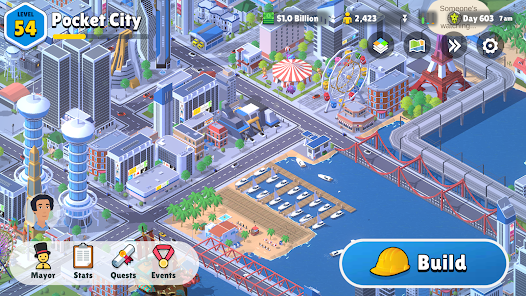
This guide covers pocket city 2 how to fix traffic with practical steps for mobile players.
Quick answer: To fix traffic in Pocket City 2, give congested districts a second route out before widening anything. Most jams come from every vehicle sharing one access road, and a parallel street or a connecting avenue solves more than upgrading the jammed road. Mix zones so people live near shops, and keep industrial traffic on the edge of the grid rather than routing it through residential streets.
Traffic is the system that punishes a city for growing faster than its roads. It is also the one players misdiagnose most often, because a jam looks like a road problem when it is usually a layout problem wearing a road problem’s clothes.
What actually causes traffic in this game?
Two things: the number of vehicles and the number of choices each one has. A district with a single access road forces every journey through one point, which creates a queue regardless of how wide that road is.
Distance is the multiplier. Zones placed far apart generate longer trips, and longer trips occupy road space for longer, so a sprawling city jams with fewer vehicles than a compact one.
Industrial traffic behaves differently from commuter traffic. Goods vehicles move between industry and the rest of the city, and if industry sits in the middle of a residential grid, those journeys cross pedestrian streets unnecessarily.
None of this is visible on the map view. You see a red road and assume capacity; the actual cause is the shape of the network around it.
On this page
How do you diagnose a jam?
Watch it in free roam. Walking or driving to the congested junction shows you which direction the queue forms and where those vehicles are coming from, which the overhead view does not make obvious.
Follow one vehicle mentally. If a commuter has to leave their district, join a main road and come back into the same area to reach a shop, the problem is the zone mix rather than the road.
Check for a single point of failure. One bridge, one junction or one access road serving a large district will always queue, no matter how many lanes you give it.
Then check the edges. Traffic often jams where a fast road meets a slow one, or where a grid street feeds onto an avenue without any merging space.
What fixes work best?
Add a route, not a lane. A second connection between two districts spreads the load immediately and costs less than upgrading the original road to a wider type.
Break up long blocks. A grid with frequent cross streets distributes traffic across many small roads instead of concentrating it on one long avenue.
Separate industrial traffic. Give industry a road that leads out of the city rather than through it, so goods vehicles do not compete with commuters on residential streets.
Shorten trips by mixing zones. A commercial corner inside a residential district removes thousands of journeys that would otherwise cross the city, and it is the cheapest traffic fix available.
Upgrade roads last. Widening helps when the network shape is already good and a specific corridor is genuinely overloaded, but widening a bottleneck just moves the queue.
When should you upgrade a road?
When the route is correct and the volume is simply high. A well-connected avenue carrying traffic between two districts is a legitimate place to spend money on capacity.
Upgrading is expensive relative to a new street, and it only pays if the road is genuinely the constraint. Test the cheaper option first: add a parallel route and see whether the jam moves.
Watch the junctions after upgrading. A wider road feeding a narrow junction creates a new bottleneck at the same place, and the money produces a longer queue rather than a shorter one.
If you do upgrade, upgrade the whole corridor rather than one segment. A single wide section between two narrow ones behaves like a funnel.
How do you plan ahead for traffic?
Design the road grid before you zone. Roads are cheap to draw on empty land and expensive to insert once buildings line both sides, so the layout decision belongs at the start.
Leave gaps for future connections. A short stub of road ending at the edge of a district costs almost nothing and becomes a vital link when the city grows toward it.
Keep blocks a consistent size. Irregular blocks produce awkward junctions and force traffic onto a few through routes, which is exactly the pattern that jams.
Think about where people will want to go rather than where the buildings are. Traffic follows destinations, so a stadium or a large service building will generate trips that the surrounding streets were never designed for.
What are the common traffic mistakes?
Widening first is the most common, and it is expensive. It treats the symptom and leaves the single point of failure intact.
Ignoring the zone mix is the second. A city with separated residential and commercial quarters will always generate more traffic than a mixed one, no matter how good the roads are.
Putting industry in the centre is the third. It looks efficient and it puts goods vehicles on the same streets as everyone else.
Building one access road to a large district is the fourth. It works until the district fills, and by then the surrounding land is built on and the second road is difficult to fit.
Not looking is the last. Traffic problems are visible from the street, and a minute of free roam teaches you more than several minutes of staring at the map.
If a jam persists after you add a route, check whether drivers are choosing it at all. A parallel street that leads somewhere slightly wrong will sit empty while the original road stays congested, and the answer is to fix the destination rather than the capacity.
Frequently asked questions
Do wider roads fix traffic?
Only when the network shape is already good. Widening a bottleneck usually moves the queue rather than removing it.
How do I see where traffic is coming from?
Use free roam. Walking or driving the route shows the flow in a way the overhead view does not.
Does public transport help?
Yes, where it exists it removes car trips, but a badly shaped road network still jams around the remaining vehicles.
Why is traffic bad in a small city?
Usually one access road or a separated zone mix. Both create long trips on a single route.
Should industry be connected to the main grid?
Yes, but with its own route out rather than through residential streets.
For road layout specifics, see how to design road connections, or return to the Pocket City 2 hub.
Official game information: pocketcitygame.com.