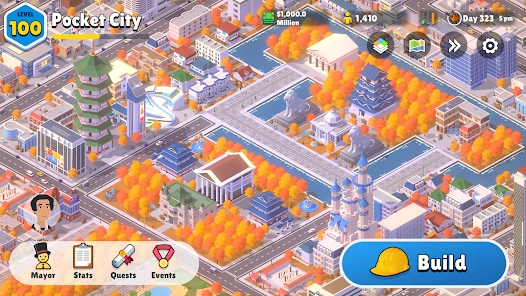
This guide covers pocket city 2 how to manage pollution with practical steps for mobile players.
Quick answer: To manage pollution in Pocket City 2, separate industry from housing rather than trying to offset it. Pollution comes from industrial zones, it drifts beyond the zone boundary, and residents living inside it become unhappy no matter how many services you build. A road’s width of separation, a line of parks, or moving industry to the edge of the grid all work better than adding buildings to compensate.
Pollution is the quietest system in the game because nothing announces it. The happiness indicator falls, the complaint list says something vague about the area, and the actual cause is a factory two streets away.
Where does pollution come from?
Industry. Industrial zones are the source, and they generate pollution whether or not the buildings in them are fully developed, which means the zone itself is the thing to place carefully.
Pollution spreads beyond the boundary of the zone. That drift is what catches players out, because the visible border of the industrial area is not the border of the affected ground.
Other buildings contribute comparatively little. The main source is industry, and dealing with it is a layout decision rather than a technology or upgrade decision.
That is worth stating clearly, because players often look for a building that fixes pollution. The fix is separation, and it costs nothing but planning.
On this page
How far does pollution spread?
Far enough that a factory at the edge of a residential block will affect the houses beside it. The practical buffer is a road plus a strip of non-residential land, or a line of parks between the two zones.
Because the drift is not shown as a hard boundary, the reliable method is to observe. Zone industry, then watch which residential blocks complain, and treat that boundary as the true edge.
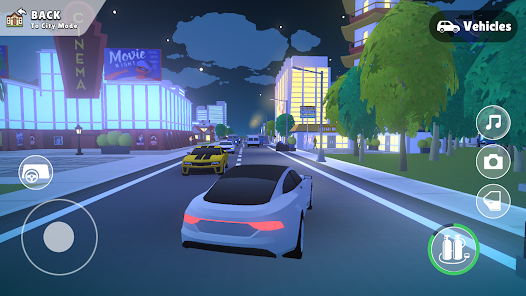
Free roam helps here as well. Walking the residential streets nearest the industrial zone shows you how close the effect reaches before the complaints start.
When in doubt, leave more space than you think you need. Empty ground is cheap, and an extra block of separation prevents a problem that is expensive to fix once buildings exist.
How do you lay out industry to minimise it?
Put industrial zones on the edge of the city with their own road leading out. That keeps goods vehicles away from residential streets and puts the pollution where the fewest residents are.
Keep a buffer between industry and housing. Roads, parks or commercial land all work, and the buffer does not need to be large to be effective.
Do not put industry between two residential districts, even if the map makes it convenient. The pollution affects both sides, and you end up with two unhappy districts instead of one.
Think about prevailing layout rather than prevailing wind. There is no wind direction here, so the only variable you control is distance and what sits between.
Can parks or trees reduce pollution?
They help as a buffer, and they are the cheapest thing to put in the gap. A line of parks between industry and housing improves the area and provides separation at the same time.
They do not eliminate the source. If housing is inside the polluted area, parks beside it will not make the residents happy, because the underlying problem is still there.
Treat greenery as a way of using the buffer land productively rather than as a pollution filter. That framing keeps expectations realistic and produces better layouts.
The real fix remains separation, and the parks simply make the separation pleasant rather than wasted.
How does pollution interact with happiness and growth?
It suppresses happiness, which suppresses population growth, which slows the tax base. A polluted district does not merely look bad; it stops developing.
That can look like a demand problem. If a residential area will not fill despite good services and full utility coverage, check whether it sits inside an industrial pollution shadow.
The effect is also persistent. Cleaning up the layout fixes it over time, but the residents who left do not return instantly, so a polluted district takes a while to recover.
Prevention is therefore much cheaper than repair, which is the general pattern for layout decisions in this game.
What are the common pollution mistakes?
Putting industry next to housing is the first, and it is usually done for convenience while the city is small.
Assuming the zone boundary is the pollution boundary is the second. The drift is what matters, not the painted line.
Trying to fix it with services is the third. No amount of police, health or parks will make a polluted block happy.
Building industry in the middle of the map is the fourth. It puts the pollution where the residents are and the goods traffic on their streets.
Not checking old districts is the last. A district that grew toward an industrial zone can end up inside the shadow without you placing anything new.
One practical way to choose the buffer is to work backwards from the residents. Decide how many blocks of housing you want next to the industrial zone, then leave a gap of at least that width between the two. Building the housing first and the industry later almost always produces a tighter gap than you intended, because the empty land looks wasteful until you need it.
It also helps to zone industry in one contiguous area rather than in scattered pockets. One industrial district with a buffer is easier to manage than five small ones, each of which pollutes its own neighbours.
Finally, do not be tempted to rezone a polluted residential block into industry to solve the complaint. It removes the unhappy residents but it also removes the tax base, and the pollution usually reaches the next block along.
Frequently asked questions
What causes pollution?
Industrial zones. Other buildings contribute little by comparison.
Does pollution spread beyond the industrial zone?
Yes. The affected area is larger than the zone itself, which is why buffers matter.
Do parks remove pollution?
They help as a buffer between zones but do not fix housing that is already inside the polluted area.
Why is my residential zone not filling?
Check whether it sits in an industrial pollution shadow before assuming demand is the issue.
Can I fix a polluted district?
Yes, by moving or separating the industry. Recovery takes time because residents have to return.
For the housing side of the layout, read how to plan industrial zones, or return to the Pocket City 2 hub.
Official game information: pocketcitygame.com.