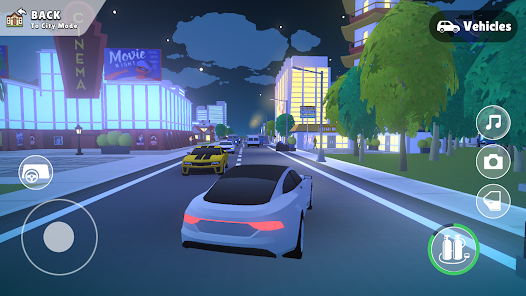
This guide covers pocket city 2 how to place service buildings with practical steps for mobile players.
Quick answer: To place service buildings well in Pocket City 2, put each one where its coverage circle reaches the most residents, not where it looks tidy on the map. Services work by radius, so the skill is geometric: overlap circles at their edges rather than stacking them in the centre, and move a building before confirming rather than repositioning it later.
Service placement is the single largest determinant of both happiness and budget. Every service building costs upkeep forever, so a station in the wrong place is not merely inefficient, it is a permanent tax on a city that gains nothing from it.
How does service coverage work?
Every service building has a radius, shown as a circle while you place it. Buildings inside the circle get the service; buildings outside do not. There is no pipe, cable or road connection required.
That makes the preview the most important tool in the game. Move the building around before you confirm and watch which blocks fall inside the circle, because the difference between a good and a bad placement is usually two or three tiles.
Coverage does not weaken toward the edge. A building on the boundary of a circle is served exactly as well as one at the centre, so the inner area of a circle should never be your priority.
The natural consequence is that circles should meet at their edges and cover a continuous area, rather than overlapping in the middle and leaving the outskirts bare.
On this page
Where should each service go?
Put police and fire where their circles cover the densest housing, since those are the buildings with the most to lose from an incident.
Put health and education slightly differently: they matter most where the population is, which is the same place, but they also have a longer-term effect on how the district develops.
Parks are the exception. They are cheap, they improve the area around them, and they are small enough to fill the awkward gaps between other buildings rather than occupying a prime plot.
Whatever the service, place it at the edge of the area it needs to cover rather than the centre, if that lets its circle reach another district that currently has nothing.
Why is overlapping coverage a mistake?
Because upkeep is charged per building, not per resident served. Two police stations covering the same streets cost twice as much and protect the same people.
The wasted money is not the main cost. The main cost is the opportunity: the second station could have covered a district that currently has no police at all, which means the city is simultaneously over-served and under-served.
Overlap is easy to create accidentally as a city grows, because players add a new station near the new district and place it too close to the old one.
The fix is to place the new building so its circle just touches the existing one, extending coverage outward rather than duplicating it inward.
How do you handle services as the city grows?
Add them at the frontier. When a new district develops beyond your coverage, the next station belongs at the boundary, not in the middle of the city where everything is already served.
Check the old districts occasionally. A district that was fully covered at half its size may now have an outer block outside the radius, and the complaint will tell you before the incident does.
Resist the urge to upgrade centrally. Replacing one station with a larger one in the same place leaves the edges as uncovered as before, and it usually costs more than adding a second station at the frontier.
Keep a rough map in your head of which service covers which district. It sounds fussy, and it saves the cost of a building placed in the wrong place.
How do services interact with happiness and money?
They are the main happiness lever after utilities, and they are the main recurring cost after roads. That makes placement a double decision: it determines both how happy the city is and how much it costs to keep it that way.
Good placement produces a city that is fully covered at a modest cost. Bad placement produces a city that is partly covered at a high cost, which is the worst of both.
The way to tell the difference is the complaint list. If citizens complain about a service you have built, the building is in the wrong place rather than missing.
That is the diagnostic that makes placement manageable: the game tells you when a circle is not reaching the people who need it.
What are the common placement mistakes?
Building in the centre of the map rather than the centre of the population is the first, and it is very common in a new city.
Stacking services in one district while another has none is the second. It feels like thoroughness and it leaves half the city exposed.
Placing on prime frontage is the third. A police station on the best commercial corner is a permanent loss of tax base for a service that could have sat one street back.
Not using the preview is the fourth. The circle is shown for a reason, and confirming without checking it is how overlaps happen.
Never revisiting placement is the last. Cities change shape, and a circle that fitted the city two districts ago may not fit it now.
Frequently asked questions
Do services need road access?
The buildings they serve need road access; the service itself works by radius, so the circle is what matters.
Is a bigger service building always better?
No. A second building at the frontier usually covers more new area than upgrading one in the centre.
Why do citizens complain about a service I built?
The circle is probably not reaching them. Move the building rather than adding another.
How much overlap is acceptable?
A small amount at the edges is fine. Circles that substantially duplicate each other are wasted upkeep.
Should parks count as services?
Yes, in effect. They raise happiness in their radius and they are the cheapest building available for that purpose.
For the happiness system these feed, read how to improve citizen happiness, or return to the Pocket City 2 hub.
Official game information: pocketcitygame.com.