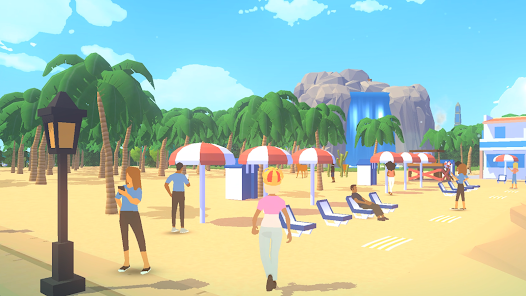
This guide covers pocket city 2 how to use sandbox mode with practical steps for mobile players.
Quick answer: Sandbox mode in Pocket City 2 removes the budget constraint, so you can build and reshape a city without worrying about income or upkeep. Use it to test layouts, to build the city you want rather than the one you can afford, or to learn a mechanic without consequences. It is the wrong place to learn the economy, because the economy is the part it turns off.
Sandbox modes are usually described as a cheat, and that framing undersells them. In a builder, the budget is a pacing device: it decides which decisions matter and in what order. Remove it and you get something different, not something easier.
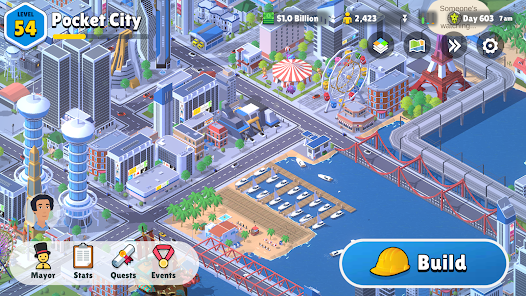
What does sandbox mode change?
It removes the financial pressure. You are not limited by income, upkeep does not force you to economise, and a mistake costs time rather than money.
It does not remove the simulation. Zones still need road access, utilities still have coverage radii, and residents still care about pollution and traffic.
That distinction matters. Sandbox is not a free-build editor where the rules disappear; it is the same city with the money constraint lifted, which means the spatial systems still behave.
So the mode is best understood as an answer to the question “what would I build if I could afford it”, rather than as a different game.
On this page
What is sandbox mode actually good for?
Testing layouts. If you want to know whether a grid works better than a loop, sandbox lets you build both and compare without spending a session recovering from the first attempt.
Learning coverage. Utility and service radii are easier to understand when you can place ten buildings and watch the circles rather than placing one and watching your budget.
Building for the pleasure of it. A game you can walk around in is enjoyable as a place, and sandbox lets you make that place without justifying every tile.
And recovering from a mistake. If a city has grown into a shape you regret, sandbox lets you rebuild it properly rather than patching it.
Why is it a bad place to learn the economy?
Because the economy is the pacing. Income and upkeep decide what order you build in, how much land you can afford, and whether a service is worth its cost.
Without those constraints, you can zone a huge area, place every service and never notice that the mix was wrong, because nothing forces you to read the feedback.
Players who learn in sandbox often struggle when they switch to normal play, because the habit of building whatever seems good is exactly the habit the budget punishes.
The sensible order is normal play first, sandbox second. Learn what the constraints teach you, then spend them on something ambitious.
How do you start a sandbox city?
The same way as any other: roads, utilities, zones. The fundamentals do not change, and starting small still gives you a city that develops visibly.
The difference is what you do next. With no budget constraint, you can plan the whole district before building it, and you can afford to be wrong about the shape.
That makes sandbox a good place to experiment with ideas you would not risk in a normal save, such as a fully separated industrial district or a city built around a single long avenue.
It is also a reasonable place to try a city with no industry at all, purely to see how the simulation responds.
Does sandbox affect quests and progress?
Sandbox is a separate way to play rather than a continuation of the campaign, so progress and quests behave differently from a normal save.
If your goal is to complete objectives and unlock things, normal play is the mode for that. Sandbox has no economy to manage and therefore little for objectives to test.
If your goal is to build, sandbox is the mode. The two intentions are different enough that treating one as a shortcut to the other usually disappoints.
Keeping saves separate is the practical answer: one normal city for progression, one sandbox city for experimenting.
What are the common sandbox mistakes?
Using it to avoid learning the economy is the first. The habits it encourages do not transfer to normal play.
Assuming the simulation is off is the second. Zones, utilities, traffic and pollution all still apply, and a sandbox city can still be unhappy.
Building everything at once is the third. Without a budget you can zone the whole map immediately, and the result is the same empty-land confusion a normal save produces.
Not keeping a normal save is the fourth. Sandbox is more satisfying when it is a break from a city you are actually running.
Expecting it to be faster is the last. Removing money does not remove the time it takes for buildings to develop.
Frequently asked questions
Is sandbox mode cheating?
It is a separate way to play rather than a shortcut. The spatial rules still apply; only the budget is removed.
Do zones still need roads in sandbox?
Yes. Access and coverage behave exactly as they do in normal play.
Can I complete quests in sandbox?
Sandbox is not the progression mode. Use normal play for objectives and unlocks.
Should a beginner start in sandbox?
No. Normal play teaches the economy, and the economy is what makes the decisions interesting.
Can I have both a normal and a sandbox city?
Yes, and keeping them separate is the practical way to use both.
For the economy it removes, read how to manage city finances, or return to the Pocket City 2 hub.
Official game information: pocketcitygame.com.